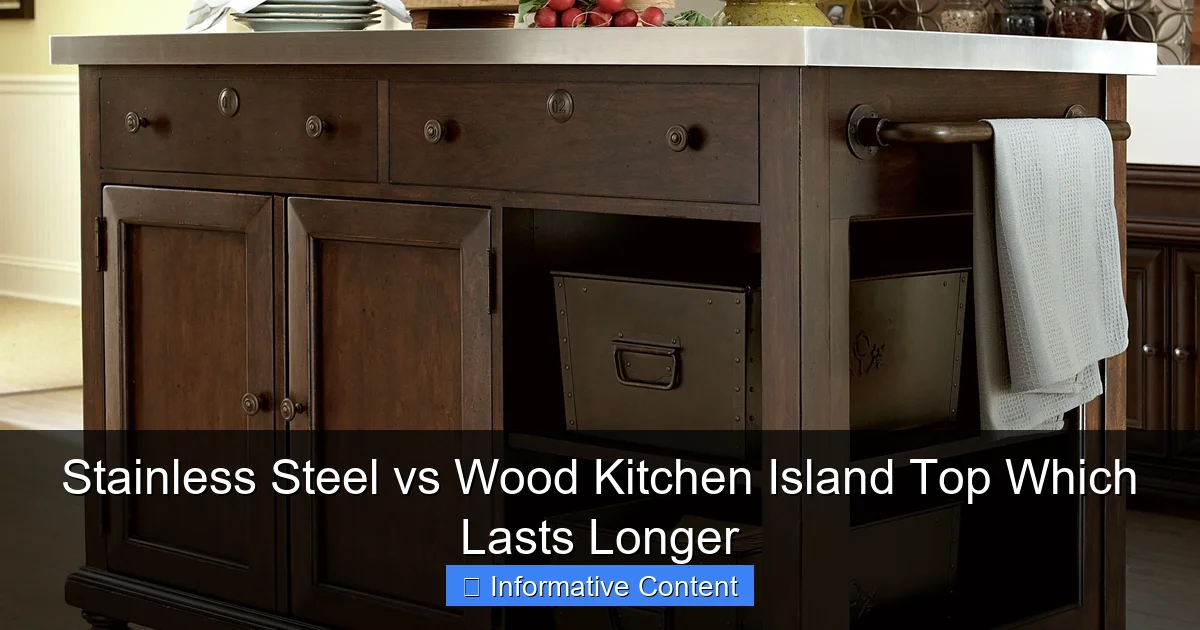
Featured image for stainless steel vs wood kitchen island top
Image source: foter.com
Stainless steel kitchen island tops outlast wood in durability, resisting scratches, heat, and moisture with minimal maintenance. While wood offers warmth and timeless appeal, it demands regular sealing and is prone to warping or staining over time. For long-term resilience and modern practicality, stainless steel is the clear winner.
Key Takeaways
- Stainless steel resists stains and heat better than wood, ideal for heavy-use kitchens.
- Wood offers warmth and style but requires regular sealing to prevent damage.
- Stainless steel lasts decades with minimal maintenance, perfect for long-term durability.
- Wood scratches and dents easily but can be sanded and refinished for renewal.
- Stainless steel is hygienic and non-porous, making it safer for food prep areas.
- Wood expands and contracts with humidity, risking warping in damp climates.
📑 Table of Contents
- The Kitchen Island Showdown: Stainless Steel vs Wood
- 1. Durability: How Each Material Holds Up Over Time
- 2. Maintenance and Cleaning: Effort vs Elegance
- 3. Aesthetic and Design: Matching Your Kitchen’s Vibe
- 4. Longevity and Lifespan: Which Material Ages Better?
- 5. Practical Considerations: Cost, Comfort, and Lifestyle Fit
- 6. The Verdict: Which Lasts Longer—And Which Is Right for You?
The Kitchen Island Showdown: Stainless Steel vs Wood
Picture this: You’re standing in your kitchen, coffee in hand, staring at your island. It’s the heart of your home, where meals are prepped, homework gets done, and late-night chats happen over a glass of wine. Now, you’re faced with a big decision—should your island top be sleek stainless steel or warm, inviting wood? It’s not just about looks. You want something that lasts, something that stands up to the daily grind without losing its charm. I’ve been there, and I know how overwhelming it can feel.
Choosing between stainless steel and wood for your kitchen island top isn’t just about style. It’s about durability, maintenance, comfort, and how the material fits into your lifestyle. Maybe you love the industrial vibe of steel, or perhaps the cozy feel of wood matches your farmhouse aesthetic. But which one truly lasts longer? In this deep dive, we’ll explore the strengths and weaknesses of both materials. We’ll look at real-life scenarios, share practical tips, and help you make a decision that you won’t regret in five years—or even ten.
1. Durability: How Each Material Holds Up Over Time
Stainless Steel: The Tough Contender
Stainless steel is like the superhero of kitchen materials—strong, resilient, and ready for action. It’s incredibly resistant to scratches, dents, and impacts. If you’re someone who chops veggies directly on the countertop or occasionally sets down a hot pan without a trivet, stainless steel laughs in the face of such abuse.
Visual guide about stainless steel vs wood kitchen island top
Image source: image.slidesharecdn.com
- Scratch Resistance: While not entirely scratch-proof, stainless steel hides minor scratches well, especially if you choose a brushed finish. They blend into the grain, making them less noticeable.
- Heat Resistance: You can place hot pots and pans directly on it without worry. No more frantic searches for a trivet when dinner is burning.
- Impact Resistance: Dropped a heavy skillet? Stainless steel can handle it. It won’t chip or crack like some natural materials.
Real Talk: I once had a stainless steel island in my rental kitchen. My roommate was notorious for being clumsy. Between dropped knives and sliding cutting boards, the surface had its fair share of scuffs. Yet, after two years, it still looked presentable. A quick polish, and it was good as new.
Wood: The Warm but Vulnerable Choice
Wood brings warmth and character to a kitchen. A solid wood island top can last for decades with proper care. But it’s not invincible. Wood is more susceptible to damage from moisture, heat, and everyday wear.
- Scratch and Dent Vulnerability: Wood can scratch and dent easily, especially softer varieties like pine. Using cutting boards is a must.
- Heat Sensitivity: Hot pots can leave burn marks. Always use trivets or heat-resistant pads.
- Moisture Damage: Spills need to be wiped up quickly. Prolonged exposure to water can cause warping, cracking, or mold.
Pro Tip: If you love wood but worry about durability, opt for hardwoods like maple, oak, or walnut. They’re denser and more resistant to damage than softer woods. A butcher block made from these hardwoods offers a good balance of beauty and resilience.
Over time, wood develops a patina—a natural aging process that many find appealing. But if you prefer a pristine look, this might not be for you. Regular oiling or sealing can help maintain its appearance, but it’s extra work.
2. Maintenance and Cleaning: Effort vs Elegance
Stainless Steel: Low Effort, High Shine
One of stainless steel’s biggest perks is how easy it is to clean. Spills? Just wipe them up. Grease? A quick pass with a degreaser, and it’s gone. No need for special oils or sealers.
- Daily Cleaning: A microfiber cloth and mild dish soap work wonders. Avoid abrasive scrubbers—they can leave scratches.
- Stain Removal: For tougher stains, a baking soda paste or specialized stainless steel cleaner can help.
- Fingerprint Magnet: Okay, let’s be real—stainless steel shows fingerprints, water spots, and smudges like crazy. If you have kids or pets, you might be wiping it down multiple times a day.
Life Hack: Invest in a stainless steel polish or use a mix of vinegar and olive oil. It helps reduce fingerprints and gives it a nice shine. But remember, it’s a temporary fix—you’ll need to reapply regularly.
Wood: High Maintenance, High Reward
Wood requires more TLC. It’s not just about cleaning; it’s about preserving the wood’s integrity and appearance.
- Sealing and Oiling: Most wood tops need to be sealed or oiled every few months (or as recommended). This protects against moisture and enhances the wood’s natural grain.
- Cleaning Spills: Wipe up spills immediately. Use a damp cloth, not a soaking one. Excess water can seep into the grain.
- Sanding and Refinishing: Over time, scratches and stains may require sanding and resealing. It’s a weekend project, not a quick wipe.
Real Experience: My friend Sarah has a beautiful walnut island top. She loves it, but she’s religious about maintenance. Every three months, she oils it. When a wine spill left a stain, she sanded the area lightly and resealed it. It took time, but the result was worth it. The wood looked renewed, not ruined.
For those who hate constant upkeep, wood might feel like a chore. But if you enjoy the ritual of caring for something, it can be deeply satisfying.
3. Aesthetic and Design: Matching Your Kitchen’s Vibe
Stainless Steel: Sleek, Modern, and Industrial
Stainless steel screams modern and professional. It’s the choice for contemporary, industrial, and minimalist kitchens. It pairs well with other metals, concrete, and high-gloss finishes.
- Visual Appeal: It reflects light, making your kitchen feel brighter and more spacious. Great for smaller kitchens.
- Design Flexibility: Available in various finishes—brushed, polished, satin. Brushed hides fingerprints better than polished.
- Color Match: Works with any cabinet color. It’s a neutral that complements bold or muted palettes.
Tip: If you have stainless steel appliances, a matching island top creates a cohesive look. But if you’re mixing metals (like brass or black fixtures), make sure the contrast works. Sometimes, too much steel can feel cold or sterile.
Wood: Warm, Inviting, and Timeless
Wood brings a sense of warmth and comfort to a kitchen. It’s perfect for farmhouse, rustic, Scandinavian, and traditional styles.
- Natural Beauty: Each piece of wood is unique, with its own grain patterns and knots. It adds character.
- Color Options: Stain it to match your cabinets, or leave it natural for a lighter feel. Dark walnut adds elegance; light maple feels airy.
- Texture: Wood has a soft, tactile quality. It feels good under your hands—something steel can’t replicate.
Design Insight: In my own kitchen, I chose a white oak island top. It contrasts nicely with my navy blue cabinets. The wood tone ties in with the hardwood floors, creating a harmonious flow. Guests always comment on how “cozy” the kitchen feels.
Wood also ages beautifully. Over time, it develops a richer color and deeper grain, telling the story of your home.
4. Longevity and Lifespan: Which Material Ages Better?
Stainless Steel: Built to Last Decades
Stainless steel is incredibly durable and long-lasting. With proper care, it can easily last 20 to 30 years or more. It doesn’t degrade over time like organic materials. It’s resistant to rust, corrosion, and most environmental factors.
- No Degradation: Unlike wood, steel doesn’t absorb moisture or expand/contract with humidity changes.
- Recyclable: At the end of its life, stainless steel is 100% recyclable, making it an eco-friendly choice.
- Resale Value: A stainless steel island can be a selling point for modern kitchens. Buyers often associate it with high-end, professional-grade spaces.
Downside: While it lasts long, it can show wear in the form of deep scratches or dents over time. These are permanent. You can’t “fix” them like you can with wood. Some people find the look of an aged steel surface less appealing than a well-maintained one.
Wood: Lifespan Depends on Care
Wood’s lifespan varies widely based on the type of wood, finish, and how well you maintain it. A well-cared-for hardwood top can last 20 to 50 years—sometimes even longer.
- Refinishing Potential: One of wood’s biggest advantages is that it can be sanded and refinished multiple times. This effectively “resets” its lifespan. A 30-year-old island can look brand new after a refinish.
- Moisture Risks: Poor maintenance leads to warping, cracking, or rot. In humid climates, this is a bigger concern.
- Style Longevity: Wood styles tend to be more timeless. While stainless steel can feel “dated” in 10-15 years (especially if trends shift), wood remains classic.
Real Example: My grandparents’ farmhouse kitchen had an oak island top that was over 60 years old. It was refinished twice in its lifetime. When they sold the house, the new owners loved the “vintage charm” of the wood. It was a feature, not a flaw.
5. Practical Considerations: Cost, Comfort, and Lifestyle Fit
Cost Comparison: Upfront and Long-Term
Here’s a breakdown of typical costs for both materials. Prices vary by region and supplier, but this gives a general idea.
| Material | Average Cost per Square Foot | Installation | Maintenance Costs |
|---|---|---|---|
| Stainless Steel | $75 – $150 | Professional recommended; welding may be needed | Low; occasional polish or cleaner |
| Wood (Hardwood Butcher Block) | $50 – $120 | DIY possible for pre-fabricated blocks; custom may need pro | Medium; oil, sealer, potential refinishing |
Note: Stainless steel is generally more expensive upfront, especially for custom fabrication. But it requires less long-term maintenance. Wood has a lower initial cost but higher upkeep expenses over time.
Comfort and Usability
- Stainless Steel:
- Temperature: It feels cold to the touch, especially in winter. Not ideal for sitting or leaning on for long.
- Noise: It’s loud. Dropping a spoon? It clangs. Rolling a rolling pin? It echoes.
- Sharp Edges: Some steel tops have sharp corners. Not great for kids or clumsy adults.
- Wood:
- Temperature: Feels warm and comfortable. Great for standing or sitting.
- Noise: Quieter. It absorbs sound better than metal.
- Edge Safety: Can be rounded or beveled for a softer feel.
Lifestyle Fit: If you have young kids or entertain a lot, wood might be more comfortable. If you’re a busy professional who values low maintenance and speed, stainless steel could be the winner.
Environmental Impact
- Stainless Steel: Energy-intensive to produce, but highly recyclable. Choose recycled content when possible.
- Wood: Renewable resource, but only if sourced sustainably. Look for FSC-certified wood to ensure responsible forestry.
Eco-Tip: Reclaimed wood is a fantastic option. It’s durable, beautiful, and reduces waste. Plus, it comes with history and character.
6. The Verdict: Which Lasts Longer—And Which Is Right for You?
So, which one lasts longer? Stainless steel wins in raw durability and resistance to damage. It can withstand abuse that would ruin wood. But wood wins in lifespan potential with maintenance and refinishing. A well-cared-for wood top can outlive steel by decades, thanks to its ability to be renewed.
But longevity isn’t the only factor. Let’s break it down by lifestyle:
- Choose Stainless Steel If:
- You want low maintenance and don’t mind a modern look.
- You frequently use the island for heavy-duty prep (chopping, kneading, hot pots).
- You have a busy household with kids or pets who are rough on surfaces.
- You love the industrial or professional kitchen aesthetic.
- Choose Wood If:
- You value warmth, comfort, and a timeless look.
- You’re willing to commit to regular oiling and occasional refinishing.
- You want a material that ages gracefully and can be renewed.
- Your kitchen has a cozy, inviting style (farmhouse, rustic, traditional).
Hybrid Option: Can’t decide? Consider a combination island. Use stainless steel for the prep area and wood for the eating bar. This gives you the best of both worlds—durability where you need it, comfort where you relax.
At the end of the day, both materials can last a long time. The real difference is in how you want to live with your kitchen island. Do you want a surface that’s tough and unchanging? Or one that evolves with your home, gaining character over the years?
Think about your habits, your design preferences, and how much time you’re willing to invest in upkeep. Talk to friends who have each material. Visit showrooms. Touch the surfaces, imagine your life around them.
Remember, your kitchen island isn’t just a countertop—it’s a gathering place, a workspace, a part of your daily life. Choose the material that feels right, not just the one that’s “supposed” to last longer. Because in the end, the best island top is the one you love and can live with happily for years to come.
Frequently Asked Questions
Which material lasts longer: stainless steel vs wood kitchen island top?
Stainless steel generally lasts longer due to its resistance to scratches, moisture, and heat. While wood can last decades with proper care, it’s more vulnerable to warping and water damage over time.
Is a stainless steel kitchen island top harder to maintain than wood?
No, stainless steel is easier to clean—just wipe with a damp cloth and avoid abrasive cleaners. Wood requires regular sealing and oiling to prevent stains and drying out.
Does wood offer better heat resistance than stainless steel for kitchen island tops?
No, stainless steel handles heat better (e.g., hot pots) without damage, while wood can scorch or discolor. However, wood feels warmer underfoot and to the touch.
Which material adds more value to a kitchen: stainless steel or wood island top?
Stainless steel suits modern, high-end kitchens and appeals to buyers wanting low maintenance. Wood offers timeless charm and can increase value in traditional or rustic designs.
Can I DIY a stainless steel or wood kitchen island top installation?
Wood is easier for DIYers with basic carpentry skills. Stainless steel requires precise cutting, polishing, and often professional help to avoid sharp edges and ensure durability.
Which is more eco-friendly: stainless steel or wood island tops?
Wood is renewable and biodegradable, especially if sourced sustainably. Stainless steel is recyclable but energy-intensive to produce, though its longevity reduces long-term waste.