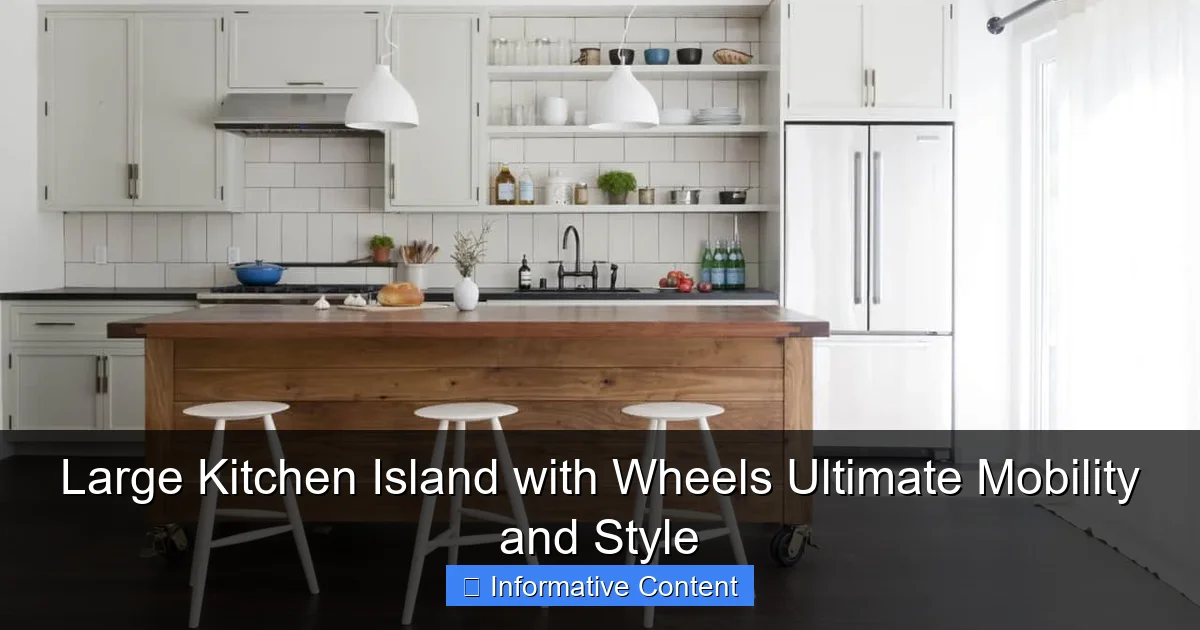
Featured image for large kitchen island with wheels
Image source: cdn.trendir.com
Maximize mobility and style in your kitchen with a large kitchen island on wheels, designed for seamless movement and versatile functionality. Featuring durable construction, ample storage, and sleek designs, these islands effortlessly adapt to your cooking, dining, and entertaining needs while enhancing your space’s aesthetic.
Key Takeaways
- Maximize mobility: Choose lockable wheels for easy movement and stability.
- Prioritize size: Measure your space to ensure a perfect fit.
- Opt for storage: Select designs with shelves or drawers for added utility.
- Match your style: Pick materials and finishes that complement your kitchen.
- Check weight capacity: Ensure it supports your heaviest appliances and cookware.
- Easy assembly: Look for pre-assembled or tool-free setup options.
📑 Table of Contents
- The Ultimate Solution for Modern Kitchens: Large Kitchen Island with Wheels
- Why Mobility Matters: The Real Benefits of Wheels on a Kitchen Island
- Design and Style: Choosing the Right Island for Your Kitchen Aesthetic
- Features That Make a Difference: Must-Have Add-Ons and Upgrades
- Top Picks and Real-World Examples: What Works (and What Doesn’t)
- Maintenance and Care: Keeping Your Island Looking and Working Great
- Making the Most of Your Mobile Island: Final Thoughts
The Ultimate Solution for Modern Kitchens: Large Kitchen Island with Wheels
If you’ve ever found yourself juggling a hot pan, a cutting board, and a missing spice jar in a cramped kitchen, you know the struggle. The kitchen is the heart of the home, but it’s often the most underutilized space when it comes to flexibility. Enter the large kitchen island with wheels—a game-changer for anyone who wants more space, better organization, and the freedom to rearrange on a whim. Whether you’re hosting a dinner party, prepping a weeknight meal, or just trying to keep your counters clutter-free, this mobile marvel brings both function and flair to your culinary space.
What makes a large kitchen island with wheels so special isn’t just its size. It’s the mobility. Unlike permanent islands that anchor your kitchen layout, a wheeled island lets you pivot—literally. Need extra prep space near the stove? Roll it over. Want to open up the room for a family gathering? Tuck it into a corner. It’s like having a kitchen transformer: one minute it’s your prep station, the next it’s a serving bar, and later it becomes a breakfast nook. And let’s be honest—style matters too. Today’s models blend rustic charm, industrial edge, or sleek modern design to match any kitchen aesthetic. From farmhouse chic to urban minimalist, there’s a wheeled island that feels like it was made for your space.
Why Mobility Matters: The Real Benefits of Wheels on a Kitchen Island
Flexibility That Adapts to Your Life
Imagine this: it’s Sunday morning, and you’re making pancakes for the family. The kids are sitting at the kitchen counter, the coffee’s brewing, and you’re flipping batter like a pro. But suddenly, the dog knocks over a glass, and you need to mop the floor. With a permanent island, you’re stuck—either mop around it or risk water damage. With a large kitchen island with wheels, you simply unlock the casters and roll it aside. Problem solved. That’s the magic of mobility.
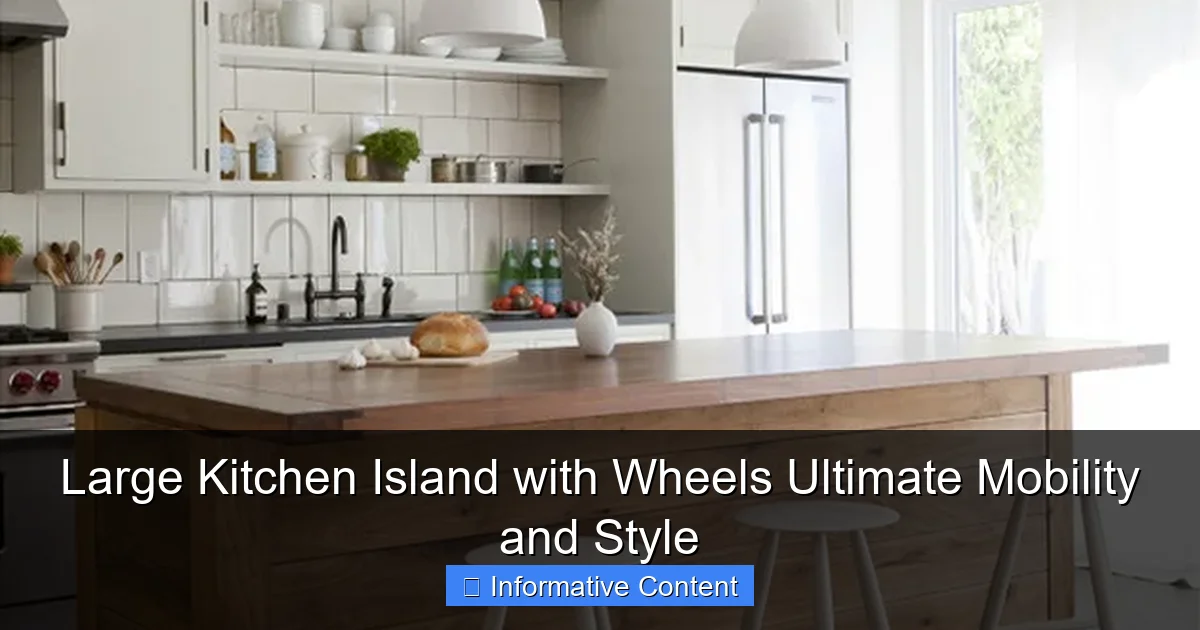
Visual guide about large kitchen island with wheels
Image source: cdn.trendir.com
Wheels turn a static piece of furniture into a dynamic tool. Need to clean under it? Roll it out. Want to open up the kitchen for a party? Push it to the side. Hosting a DIY pizza night? Move it closer to the oven. The ability to reposition your island based on your needs—daily, weekly, or even hourly—makes it one of the most versatile investments you can make.
Space Optimization for Small and Open-Concept Kitchens
Not every home has a sprawling kitchen. In fact, many of us are working with compact galley kitchens or open-concept spaces where every square foot counts. A wheeled island helps you maximize that space without sacrificing style or function.
For small kitchens: Use it as a temporary island. When you need prep space, roll it into the center. When you don’t, tuck it against a wall to free up walking room. Some models even have fold-down sides or nesting stools that store inside, making them ultra-compact.
For open-concept homes: Use the island as a room divider. Position it between the kitchen and dining area to create a natural flow. During meals, roll it closer to the dining table for serving. After dinner, push it back to define the kitchen zone. It’s like having a mobile wall that doubles as extra counter space.
Easy Access to Utilities and Storage
One of the underrated perks of a large kitchen island with wheels is how it simplifies access to storage and utilities. Many models come with built-in cabinets, drawers, and even open shelves—perfect for storing pots, pans, spices, or small appliances. But because it’s on wheels, you can roll it to wherever you’re working. No more walking back and forth to the pantry or digging through a crowded corner cabinet.
Some advanced models even include features like:
- Pull-out trash or recycling bins—roll the island to the sink for easy disposal
- Integrated power outlets—plug in your stand mixer or blender without extension cords
- Adjustable shelves—customize storage for tall bottles or bulky appliances
And if you ever need to move your island for deep cleaning or renovations, wheels make it a one-person job. No heavy lifting, no scratched floors—just smooth rolling.
Design and Style: Choosing the Right Island for Your Kitchen Aesthetic
Materials That Match Your Vibe
When it comes to a large kitchen island with wheels, the materials you choose set the tone for your entire kitchen. Let’s break down the most popular options and how they fit different styles:
Wood (Solid or Butcher Block): Warm, inviting, and timeless. Ideal for farmhouse, rustic, or traditional kitchens. A walnut or maple top adds richness, while a pine base keeps it casual. Pro tip: Choose a sealed or oiled finish to resist stains and moisture.
Stainless Steel: Sleek, modern, and super durable. Perfect for industrial, minimalist, or contemporary spaces. It’s easy to clean and resists heat and spills. Bonus: it reflects light, making small kitchens feel bigger.
Concrete or Stone Composite: For a bold, statement look. These tops are heavy (which helps with stability) and offer a unique texture. Best for urban lofts or kitchens with a modern-industrial edge.
Laminate or Engineered Wood: Budget-friendly and available in tons of colors and finishes. Great for eclectic or mid-century modern kitchens. Just make sure the edges are well-sealed to prevent water damage.
Size and Shape: Finding the Perfect Fit
Not all kitchens can handle a massive island. The key is to balance size with functionality. As a general rule:
- Small kitchens (under 100 sq ft): Go for an island that’s 36–48 inches long. Round or oval shapes work well to save space.
- Medium kitchens (100–150 sq ft): 48–60 inches is ideal. Rectangular or square shapes maximize prep space.
- Large kitchens (150+ sq ft): You can go big—60+ inches, with room for seating, storage, and even a sink or cooktop.
Also consider the shape. Rectangular islands offer the most counter space. Round islands are great for tight spaces and encourage conversation. L-shaped or U-shaped islands work well in larger kitchens, especially if you want to include a breakfast bar or prep zone.
Color and Finish: Blending In or Standing Out
Do you want your island to be a subtle addition or a showstopper? That’s the color question.
Neutral tones (white, gray, natural wood): These blend seamlessly with most kitchens. They’re safe, timeless, and make the space feel larger. If you love to change decor often, a neutral island is your best friend.
Bold colors (navy, emerald, black): These add drama and personality. A navy island with brass hardware? Yes, please. But be careful—bold colors can overwhelm a small kitchen or clash with existing cabinetry.
Two-tone designs: The base and top in different colors or materials. For example, a white base with a butcher block top. This adds visual interest without being too loud. It’s a great compromise if you’re torn between styles.
Features That Make a Difference: Must-Have Add-Ons and Upgrades
Storage Solutions That Work
A large kitchen island with wheels is only as good as its storage. Look for smart features that keep your kitchen organized:
Deep drawers: Perfect for bulky items like baking sheets, mixing bowls, or small appliances. Soft-close mechanisms are a must—no more slamming!
Pull-out shelves: Great for heavy pots and pans. No more digging to the back of the cabinet.
Wine racks or stemware holders: Ideal for entertainers. Store wine bottles horizontally and wine glasses upside down for easy access.
Open cubbies: Use for cookbooks, baskets of fruit, or decorative items. Adds a lived-in, cozy feel.
One family I spoke with uses their island’s bottom shelf for a rotating basket of seasonal produce—apples in fall, citrus in winter. It keeps things fresh and adds color to the kitchen.
Functional Countertop Add-Ons
The countertop is where the magic happens. But not all surfaces are created equal. Here’s what to consider:
Butcher block: Great for chopping, but requires regular oiling. Avoid placing it near the sink unless you seal it well.
Stainless steel: Heat-resistant and easy to sanitize. Ideal for serious cooks. Just be aware—it shows fingerprints and water spots.
Quartz or granite composite: Durable, low-maintenance, and beautiful. A bit heavier, but worth it for high-traffic kitchens.
Some islands even include built-in features like:
- Cutting board inserts—flip open for prep, flip closed for a smooth surface
- Drop-in sink—adds utility, but requires plumbing access (not always possible with wheels)
- Built-in spice rack or knife block—saves counter space and keeps essentials handy
Wheels and Stability: The Unsung Heroes
Not all wheels are equal. You want casters that are:
- Lockable: So the island stays put when you’re chopping or serving
- Swivel: For easy maneuvering in tight spaces
- Floor-protecting: Rubber or soft polyurethane wheels won’t scratch hardwood or tile
- Load-bearing: Make sure they can handle the weight of the island plus contents (some support 200+ lbs)
Pro tip: Test the wheels before buying. Push the island across different surfaces—tile, hardwood, even a rug. Does it glide smoothly? Do the locks engage easily? A good set of wheels should feel sturdy, not wobbly.
Top Picks and Real-World Examples: What Works (and What Doesn’t)
Let’s talk real talk. Not every large kitchen island with wheels is a winner. Here’s what I’ve seen work—and what to avoid.
The Good: Models That Earn Their Keep
1. The Rustic Farmhouse Island (Wood + Metal Frame)
- Butcher block top, distressed white base
- Four deep drawers, two open shelves
- Lockable casters, 360-degree swivel
- Perfect for: Cozy kitchens, family homes
- Real-world use: A reader in Ohio uses hers as a breakfast bar and prep station. She rolls it to the window for natural light while cooking.
2. The Industrial Stainless Steel Workstation
- Stainless steel top, black steel frame
- Two pull-out trash bins, side hooks for towels
- Heavy-duty casters, non-marking wheels
- Perfect for: Modern kitchens, serious cooks
- Real-world use: A chef in Portland uses his for prep, plating, and even as a mobile bar during parties. He loves that he can sanitize the whole thing with a wipe.
3. The Two-Tone Transitional Island
- White base, walnut top
- Three drawers, wine rack, stemware holder
- Soft-close drawers, adjustable shelves
- Perfect for: Blending styles, entertaining
- Real-world use: A couple in Austin uses theirs as a serving station during game nights. They roll it to the living room and serve snacks right from the island.
The Not-So-Good: Common Pitfalls
1. Flimsy wheels that wobble
One user reported her island “shimmied” every time she chopped. The wheels weren’t rated for the weight, and the base was too narrow. Lesson: Check weight capacity and base stability.
2. Poorly designed storage
Another island had drawers that stuck or didn’t open fully. The tracks were cheap metal. Always test drawers and doors before buying.
3. Style over function
A beautiful island with no practical features—like no drawers, no overhang for seating, or a top that stains easily. Beauty is nice, but usability is essential.
Maintenance and Care: Keeping Your Island Looking and Working Great
Daily and Weekly Upkeep
Your large kitchen island with wheels is a workhorse. Treat it right, and it’ll last for years. Here’s how:
Wood tops: Wipe spills immediately. Oil every 3–6 months (use food-grade mineral oil or butcher block oil). Sand and reseal if it gets scratched.
Stainless steel: Wipe with a microfiber cloth and mild cleaner. Avoid abrasive pads—they leave scratches.
Laminate or engineered wood: Use a damp cloth and non-abrasive cleaner. Don’t let water pool on the edges.
Wheels: Dust and debris can clog the casters. Wipe them down monthly. Lubricate with a silicone spray if they start to squeak.
Seasonal Deep Cleaning
Twice a year, give your island a spa day:
- Remove everything from drawers and shelves
- Wipe down interiors with a mild cleaner
- Check drawer tracks and hinges—tighten loose screws
- Inspect wheels for wear or damage
- Polish metal hardware (if applicable)
For wood tops, consider a light sand and re-oil once a year. It keeps the surface smooth and prevents drying or cracking.
Long-Term Tips
Rotate usage: If you have a heavy-duty island, avoid placing extremely heavy items (like a cast-iron Dutch oven) on one corner all the time. Rotate to prevent warping.
Protect from heat: Always use trivets for hot pans—even on stainless steel. Direct heat can damage finishes or warp wood.
Check stability: Over time, the base might loosen. Tighten any bolts or screws as needed. If the island feels unsteady, it might be time to replace the casters.
Making the Most of Your Mobile Island: Final Thoughts
At the end of the day, a large kitchen island with wheels isn’t just a piece of furniture—it’s a lifestyle upgrade. It’s for the home cook who wants more space. For the entertainer who needs a serving station. For the small-space dweller who craves flexibility. It’s for anyone who’s ever said, “I wish my kitchen could just… move.”
But it’s not magic. It’s smart design. It’s choosing materials that last. It’s picking wheels that work. It’s finding a balance between style and function. And it’s knowing that when life changes—your family grows, your tastes evolve, your kitchen layout shifts—your island can change with you.
So whether you’re renovating, downsizing, or just craving a kitchen refresh, consider a wheeled island. It’s not a trend. It’s a practical, stylish, and surprisingly affordable way to make your kitchen work harder—so you don’t have to.
| Feature | Best For | Considerations |
|---|---|---|
| Butcher Block Top | Farmhouse, rustic, traditional kitchens | Requires regular oiling; avoid near water sources |
| Stainless Steel Top | Modern, industrial, minimalist kitchens | Shows fingerprints; can be noisy when chopping |
| Lockable Swivel Casters | All kitchens | Check weight capacity; ensure wheels are floor-safe |
| Pull-Out Trash Bins | Entertaining, small kitchens | Requires space behind island for full extension |
| Two-Tone Design | Blending styles, adding visual interest | Coordinate colors with existing cabinetry |
Frequently Asked Questions
What are the benefits of a large kitchen island with wheels?
A large kitchen island with wheels offers ultimate mobility, allowing you to reposition it effortlessly for cooking, entertaining, or cleaning. Its stylish design adds extra counter space, storage, and a modern focal point to your kitchen.
How do I choose the right large kitchen island with wheels for my space?
Measure your kitchen layout to ensure the island fits comfortably with room for movement. Prioritize sturdy wheels (preferably locking casters) and materials that match your décor, like stainless steel, wood, or marble.
Are kitchen islands with wheels stable enough for heavy use?
Yes, high-quality models feature locking wheels and robust construction (e.g., solid wood or metal frames) to prevent wobbling during food prep or dining. Always check weight capacity before loading.
Can I use a large kitchen island with wheels on hardwood floors?
Absolutely! Look for islands with soft rubber or polyurethane wheels to avoid scratches. Test mobility first to ensure smooth movement without damaging your flooring.
What features should I look for in a mobile kitchen island?
Key features include adjustable shelves, built-in storage (drawers/cabinets), drop-leaf extensions, and smooth-rolling wheels. Opt for heat- or stain-resistant countertops for durability.
How do I maintain a kitchen island with wheels?
Wipe spills promptly and clean surfaces with mild soap and water. Periodically tighten screws and lubricate wheel axles to ensure smooth rolling and long-term functionality.