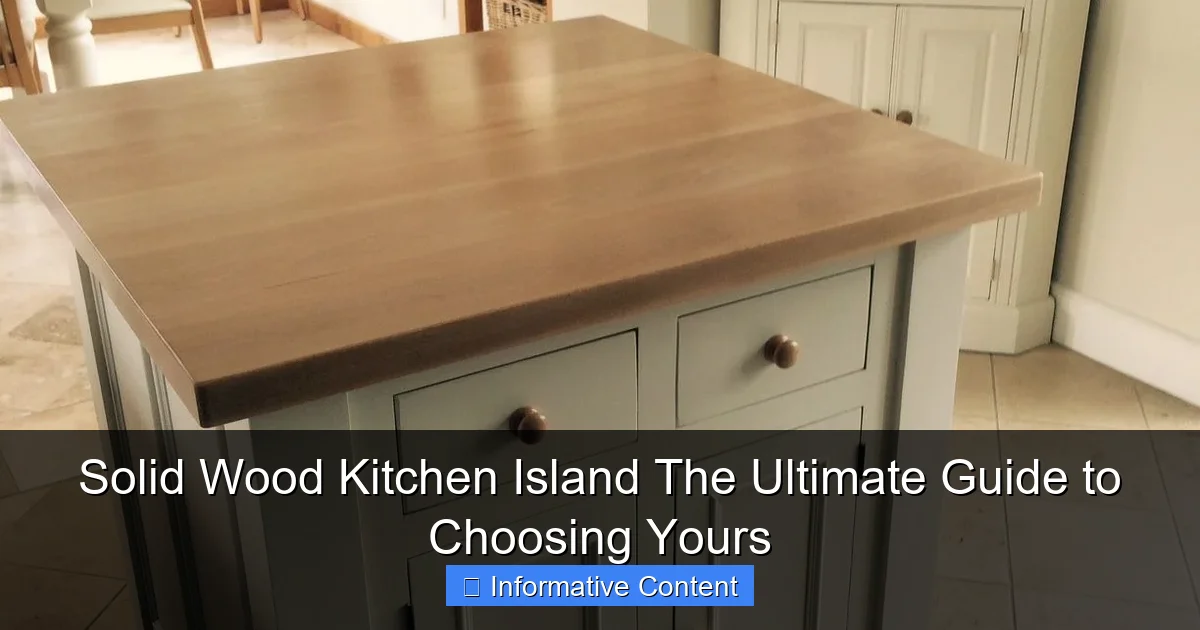
Featured image for solid wood kitchen island
Image source: i.pinimg.com
Solid wood kitchen islands are the gold standard for durability, timeless beauty, and long-term value in any kitchen. Crafted from hardwoods like oak, maple, or walnut, they offer unmatched sturdiness and can be refinished for decades of use. Whether you’re upgrading functionality or style, a solid wood island is a worthwhile investment that enhances both daily living and resale appeal.
Key Takeaways
- Choose solid wood for unmatched durability and timeless aesthetic appeal.
- Measure your space to ensure the island fits and allows easy movement.
- Prevent moisture damage by sealing wood and avoiding direct water exposure.
- Select a style that complements your kitchen’s design and layout.
- Opt for customization to maximize storage and functionality in your kitchen.
- Maintain regularly by cleaning and resealing to extend lifespan and beauty.
📑 Table of Contents
- Why a Solid Wood Kitchen Island Could Be Your Kitchen’s New Best Friend
- What Makes Solid Wood So Special?
- Choosing the Right Type of Wood for Your Island
- Size, Shape, and Layout: Finding the Perfect Fit
- Design and Function: Features That Add Real Value
- Maintenance and Care: Keeping Your Island Beautiful
- Making the Final Decision: Budget, Style, and Long-Term Value
Why a Solid Wood Kitchen Island Could Be Your Kitchen’s New Best Friend
Picture this: you’re standing in your kitchen, coffee in hand, sunlight streaming through the window. You glance at your countertop cluttered with appliances, mail, and half-finished projects. It’s not just messy—it’s draining. Now, imagine a warm, inviting solid wood kitchen island right in the center of it all. It’s more than just extra counter space. It’s a place to prep meals, chat with your kids while they do homework, or pour a glass of wine after a long day. That’s the magic of a solid wood kitchen island. It brings warmth, character, and function to your home in a way few other pieces can.
I’ve been there—trying to decide between style, durability, and budget. I remember standing in a home improvement store, overwhelmed by the options. Laminate? Metal? Particleboard? Then I saw it: a beautiful, handcrafted oak island with a smooth finish and sturdy legs. It felt like coming home. That’s when I realized: solid wood kitchen islands aren’t just trendy. They’re timeless. They age beautifully, tell a story, and become the heart of your kitchen. But not all solid wood islands are created equal. That’s why I’ve put together this guide—to help you find the perfect one for your space, lifestyle, and budget, without the stress.
What Makes Solid Wood So Special?
The Natural Beauty of Real Wood
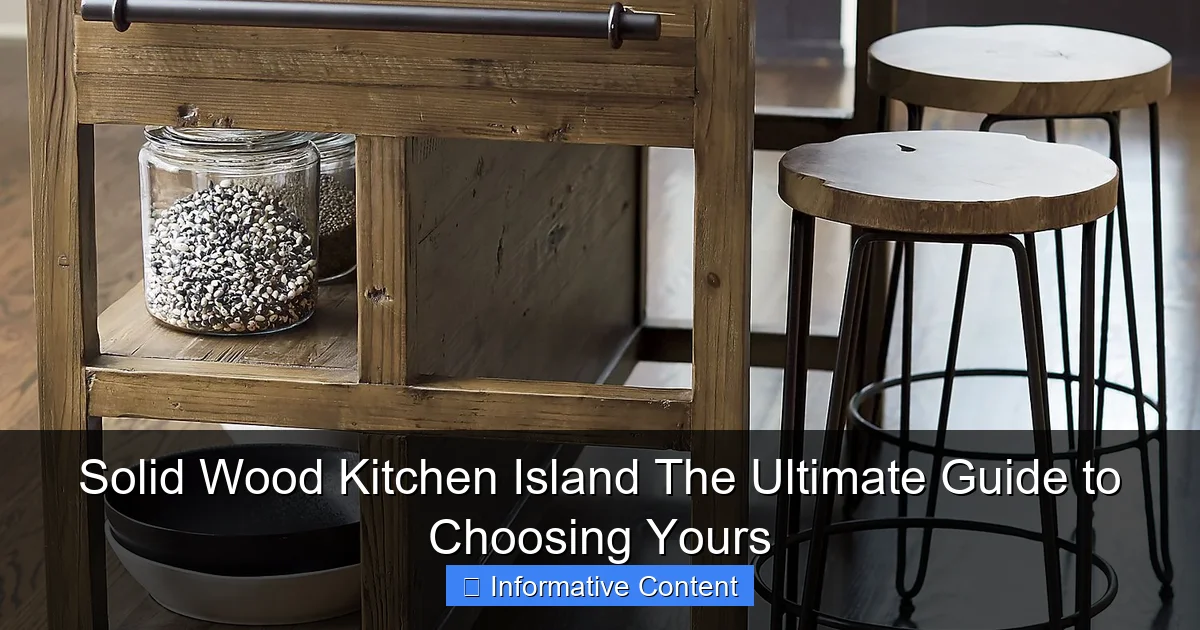
There’s something undeniably special about real wood. It’s not just about looks—though let’s be honest, the grain, color variations, and natural imperfections give each piece a unique personality. Unlike synthetic materials that try (and often fail) to mimic wood, solid wood has depth. You can see the growth rings, feel the texture, and even smell the earthy scent when you run your hand over it.
Visual guide about solid wood kitchen island
Image source: i.pinimg.com
Take, for example, a walnut island with rich chocolate tones and a subtle grain pattern. It instantly adds warmth and sophistication. Or a lighter maple island, which brightens up a small kitchen and makes it feel airy. The natural beauty of solid wood isn’t just skin deep. Over time, it develops a patina—a soft, lived-in glow that tells the story of your family’s life in the kitchen.
Durability That Lasts Generations
Let’s talk about longevity. A well-made solid wood kitchen island can last decades—sometimes even generations. I’ve seen antique kitchen tables from the 1920s that still look amazing today. Why? Because solid wood is tough. It can handle daily wear and tear: spills, knife marks, hot pans, and even the occasional toddler climbing on it.
Compare that to particleboard or MDF (medium-density fiberboard), which can swell when wet and often can’t be repaired. Solid wood, on the other hand, is repairable. Scratches can be sanded out. Water rings can be buffed away. And if a leg gets loose? You can tighten it or even replace it without tossing the whole thing. That’s not just durability—it’s sustainability.
Eco-Friendly and Sustainable Choice
Here’s a bonus: solid wood is often more eco-friendly than you might think. When sourced responsibly—from sustainably managed forests or reclaimed materials—it’s a renewable resource. And because it lasts so long, you’re not contributing to the cycle of buy-and-throw-away furniture.
For instance, a reclaimed barn wood island might come from an old farmhouse. It’s full of character, history, and zero new trees cut down. Plus, many solid wood pieces are finished with low-VOC (volatile organic compound) oils or waxes, which are safer for your family and the planet. So if you’re trying to make greener choices at home, a solid wood island is a smart step.
Choosing the Right Type of Wood for Your Island
Hardwood vs. Softwood: What’s the Difference?
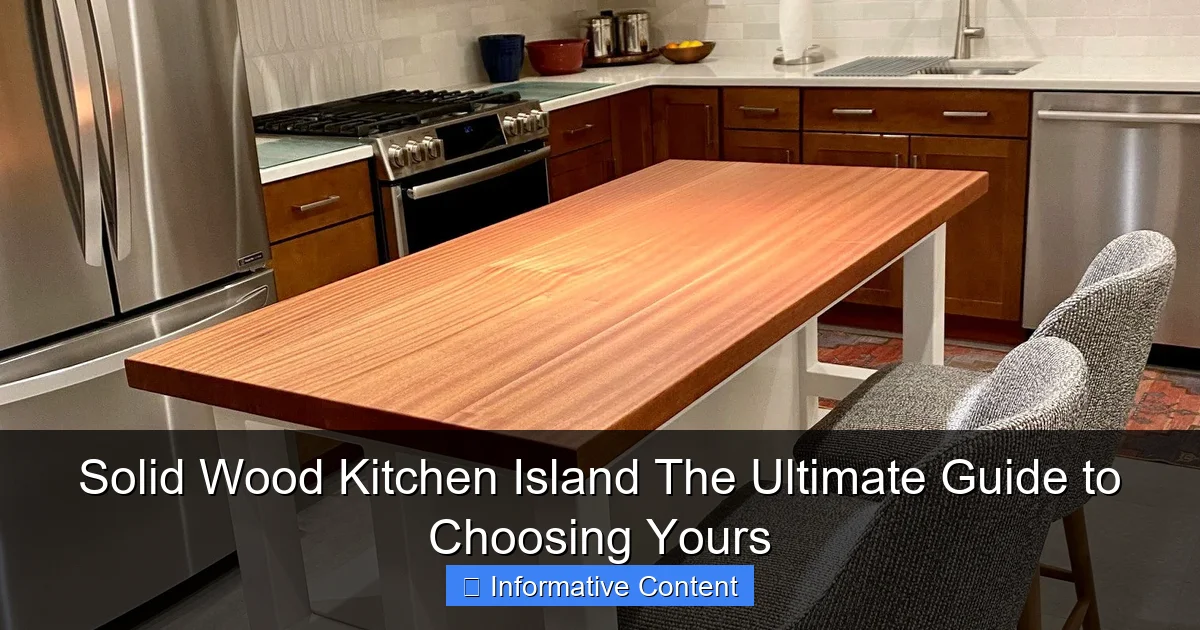
Not all wood is created equal. The type you choose affects the look, feel, and durability of your island. Broadly, we divide wood into two categories: hardwood and softwood. But don’t let the names fool you—“softwood” doesn’t mean it’s weak. It’s just a botanical classification based on the tree type.
Visual guide about solid wood kitchen island
Image source: i.etsystatic.com
- Hardwoods (like oak, maple, walnut, cherry) come from deciduous trees (they lose leaves in winter). They’re denser, more durable, and often pricier. Great for high-traffic kitchens.
- Softwoods (like pine, cedar, fir) come from coniferous trees (evergreens). They’re lighter, more affordable, and easier to work with. But they can dent more easily, so they’re better for low-impact use or if you love a rustic, lived-in look.
For example, a pine island might be perfect if you love a farmhouse vibe and don’t mind a few dents and dings. But if you’re a busy cook who drops pans and uses sharp knives, oak or maple might be a better fit.
Popular Wood Types Compared
Let’s break down the most common woods used in kitchen islands:
| Wood Type | Color & Grain | Durability | Cost | Best For |
|---|---|---|---|---|
| Oak | Warm golden to light brown; bold grain | High—resists dents and scratches | $$ | Traditional kitchens; high-use areas |
| Maple | Creamy white to light amber; fine, even grain | Very high—dense and smooth | $$$ | Modern or minimalist kitchens |
| Walnut | Rich chocolate brown; swirling grain | Medium-high—softer than oak but still strong | $$$$ | Elegant, upscale spaces |
| Cherry | Light pinkish-brown; darkens with age | Medium—can scratch but ages beautifully | $$$ | Timeless, warm kitchens |
| Pine | Pale yellow; knotty, rustic grain | Low—prone to dents and scratches | $ | Farmhouse, cottage, or budget-friendly styles |
Pro tip: If you’re unsure, visit a local woodworker or furniture showroom. Touch the wood. See how it looks in person. Photos online can’t capture the depth and warmth of real wood.
Reclaimed and Exotic Woods: Unique Options
If you want something truly one-of-a-kind, consider reclaimed or exotic woods. Reclaimed wood (from old barns, factories, or even wine barrels) brings history and character. Each piece has its own story—nail holes, saw marks, and weathered textures. It’s perfect for a rustic, industrial, or eclectic kitchen.
Exotic woods like teak, zebrawood, or padauk offer bold colors and dramatic grain patterns. But be cautious: they’re often more expensive, harder to source, and may not be as durable for daily kitchen use. Use them for accent pieces or if you’re going for a show-stopping centerpiece.
Size, Shape, and Layout: Finding the Perfect Fit
Measuring Your Space (The Right Way)
Before you fall in love with a beautiful island, make sure it fits. I once ordered a gorgeous walnut island online—only to realize it was 6 inches too wide. The delivery guys had to take it back, and I was heartbroken. Learn from my mistake: measure twice, buy once.
- Measure your kitchen’s total floor space.
- Leave at least 36 inches of clearance on all sides for walking and opening doors.
- If you have a galley kitchen, go for a smaller island or a rolling cart.
- In open-concept spaces, a larger island can act as a room divider.
Use painter’s tape to mark the island’s footprint on the floor. Walk around it. Open cabinet doors. Sit on a stool. Does it feel cramped? Or does it open up the space? This simple trick helps you visualize the final result.
Choosing the Right Shape
Kitchen islands come in several shapes, each with pros and cons:
- Rectangular: The most common. Great for linear kitchens. Offers maximum counter space.
- Square: Cozy and balanced. Works well in smaller kitchens or as a secondary prep area.
- Circular or Oval: Softer edges, better flow. Ideal for tight spaces or homes with kids (no sharp corners!).
- L-Shaped: Maximizes corner space. Perfect for U-shaped kitchens.
- Custom Shapes: For unique layouts or artistic statements (think a curved island with a waterfall edge).
For example, in my last kitchen—a long, narrow galley—I chose a narrow rectangular island with a built-in wine rack. It gave me extra storage and prep space without blocking the flow.
Height Matters: Standard vs. Bar-Height Islands
Most kitchen islands are 36 inches high, matching standard countertops. This is ideal for food prep, cooking, and using appliances. But if you want a casual dining spot or a place to chat with guests, consider a bar-height island (42 inches).
Bar-height islands pair well with stools and create a more social vibe. Just remember: you’ll need taller stools (24–30 inches), and it might not be as comfortable for chopping veggies. If you’re torn, go with a two-level island
A kitchen island isn’t just a pretty face. It’s a storage powerhouse. But not all storage is created equal. Think about what you use most: One of my favorite features? A cutting board drawer that slides out from the side. It’s perfect for quick chopping without cluttering the counter. And if you love baking, consider a built-in marble or granite top section—great for rolling out dough. Most solid wood islands have a wood top. But you can also mix materials. For example: I recommend sealing the wood with food-safe oil or wax (like mineral oil or beeswax) to protect it. Reapply every few months, especially in high-use areas. Do you want your island to stay put, or be able to move it? Fixed islands (bolted to the floor) are more stable and can support heavier features like sinks or cooktops. Rolling islands (on casters) are great for: Just make sure the casters lock securely. And if you’re using it near a stove or sink, check that the plumbing or gas lines can accommodate movement. Wood is low-maintenance, but it does need love. Here’s how to keep it looking great: Never soak the wood—water can seep into the grain and cause swelling or cracking. And avoid placing hot pots directly on the surface. Use trivets or hot pads. Over time, your island will get scratches, water marks, or fading. That’s okay! It’s part of its charm. But if you want to refresh it: Pro tip: Rotate cutting boards and trivets regularly to prevent uneven wear. And if you’re using a wood top for heavy prep, consider a replaceable cutting board that sits on top. Wood reacts to its environment. In dry climates, it can crack. In humid ones, it can swell. To protect your island: Choosing a solid wood kitchen island isn’t just about picking a pretty piece. It’s about finding something that fits your lifestyle, space, and values. Let’s break it down: Talk to local woodworkers. Visit showrooms. Read reviews. And don’t rush. The right island will feel like it was made for your kitchen—because in a way, it was. It’s not just a purchase. It’s a piece of your home’s story. When I finally installed my oak island, I didn’t just gain counter space. I gained a gathering spot. My kids do homework there. We eat dinner together. Friends linger with glasses of wine. It’s more than furniture. It’s family. And that’s the real beauty of a solid wood kitchen island. A solid wood kitchen island offers unmatched durability, timeless aesthetics, and the ability to withstand daily wear and tear. Unlike engineered materials, solid wood can be refinished over time, ensuring longevity and adaptability to changing design trends. Measure your kitchen space, leaving at least 36–42 inches of clearance around the island for comfortable movement. Consider the island’s purpose—prep space, seating, or storage—to determine the ideal dimensions and layout. Yes, solid wood kitchen islands are a long-term investment due to their durability, classic appeal, and potential to increase your home’s resale value. High-quality hardwoods like oak, maple, or walnut age gracefully and can last decades with proper care. Polyurethane, lacquer, or oil-based finishes are popular for their protective and water-resistant qualities. Choose a matte or satin finish for a natural look or a high-gloss finish for added shine and durability in high-traffic kitchens. Absolutely! Many manufacturers offer customization options like built-in storage, seating, or unique countertop materials to match your needs. Customization allows you to tailor the island’s size, style, and functionality to your kitchen’s layout. Regularly dust and clean with a damp cloth, avoiding harsh chemicals. Periodically reapply wood oil or wax to preserve the finish and prevent drying or cracking, especially in humid or dry climates.Design and Function: Features That Add Real Value
Storage Solutions That Work
Countertop Materials: Wood vs. Mixed Surfaces
Mobility: Fixed vs. Rolling Islands
Maintenance and Care: Keeping Your Island Beautiful
Daily Cleaning Tips
Long-Term Care and Refinishing
Protecting Against Humidity and Heat
Making the Final Decision: Budget, Style, and Long-Term Value
Frequently Asked Questions
What are the benefits of a solid wood kitchen island?
How do I choose the right size for a solid wood kitchen island?
Is a solid wood kitchen island worth the investment?
What type of finish is best for a solid wood kitchen island?
Can a solid wood kitchen island be customized?
How do I maintain a solid wood kitchen island?