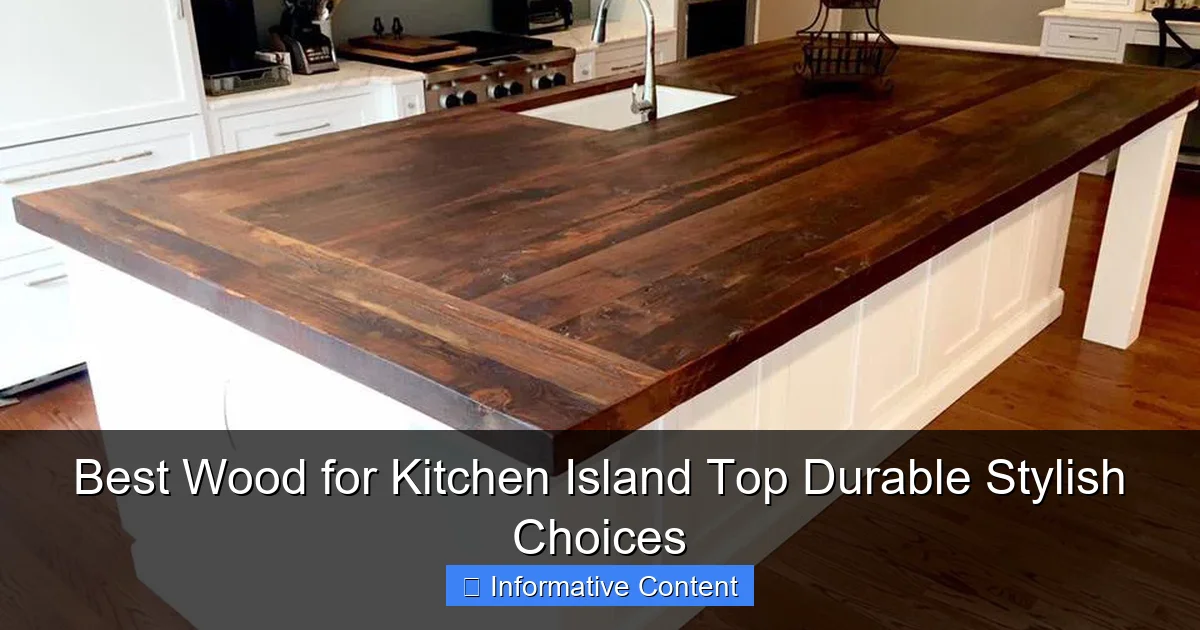
Featured image for best wood for kitchen island top
Image source: areclaimed.com
Hardwoods like maple, walnut, and white oak are the best wood choices for kitchen island tops, offering exceptional durability, resistance to wear, and timeless style. These dense woods withstand heavy use while developing a rich patina over time, making them ideal for high-traffic kitchens that demand both function and elegance.
Key Takeaways
- Choose hardwoods: Opt for oak, maple, or walnut for unmatched durability and style.
- Seal properly: Always apply food-safe sealants to protect wood from moisture and stains.
- Prioritize grain density: Tight grain patterns resist scratches and dents better in high-traffic kitchens.
- Consider maintenance: Reapply oil or wax every 6–12 months to preserve luster and longevity.
- Match your aesthetic: Light woods brighten spaces; dark woods add warmth and sophistication.
- Prevent warping: Use quarter-sawn lumber for enhanced stability in humid environments.
📑 Table of Contents
- Why the Right Wood Makes All the Difference
- What to Consider When Choosing Wood for Your Kitchen Island Top
- Top 5 Best Wood for Kitchen Island Top (With Real-World Pros and Cons)
- How to Finish and Seal Your Wood Island Top (Step-by-Step)
- Wood vs. Alternatives: Is Wood Really Worth It?
- Wood Type Comparison Table
- Final Thoughts: Pick the Wood That Fits Your Life
Why the Right Wood Makes All the Difference
When I was renovating my kitchen a few years ago, I thought the biggest decision would be the color of the cabinets. Turns out, I was wrong. The real challenge? Choosing the best wood for kitchen island top. That central hub where coffee is brewed, meals are prepped, and late-night chats happen needed something special. It had to be tough enough to handle daily wear, beautiful enough to be the room’s centerpiece, and warm enough to make the space inviting. Sound familiar?
Wood is a classic choice for kitchen islands—it adds warmth, texture, and a timeless charm that stone or laminate just can’t replicate. But not all wood is created equal. Some types scratch too easily. Others warp in humidity. And some, while stunning, require so much maintenance you’d need a part-time wood polisher. After testing, researching, and even regretting a few choices (yes, pine, I’m looking at you), I’ve learned that picking the right wood is less about trends and more about matching your lifestyle, budget, and design goals.
What to Consider When Choosing Wood for Your Kitchen Island Top
Before you fall in love with a beautiful walnut slab or a rich cherry finish, take a step back. The best wood for kitchen island top depends on several practical factors. Here’s what you need to think about—no fluff, just real talk.
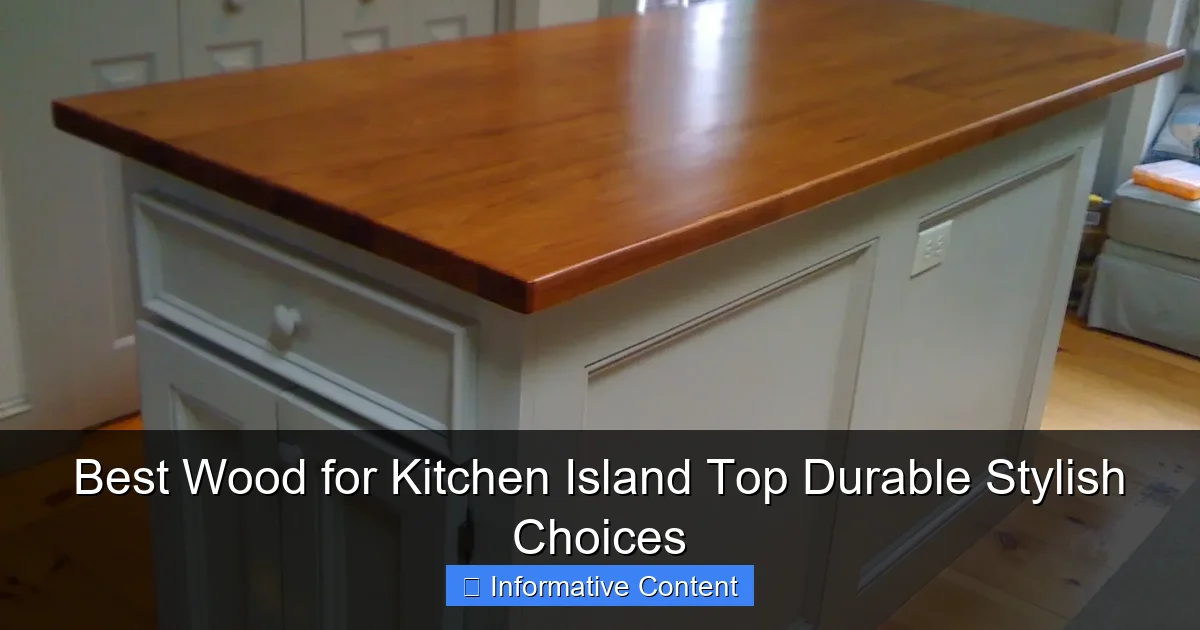
Visual guide about best wood for kitchen island top
Image source: images.custommade.com
Durability and Hardness: The Janka Scale Matters
Ever dropped a heavy pot and seen a dent in your counter? That’s why hardness matters. The Janka scale measures how resistant a wood is to denting and wear. Think of it like a wood’s “toughness score.” For kitchen islands—which face spills, scratches, and heavy use—you’ll want wood with a Janka rating of at least 1,000 lbf (pounds-force).
- Maple: ~1,450 lbf – Great for heavy use
- White Oak: ~1,360 lbf – Durable with a beautiful grain
- Walnut: ~1,010 lbf – Softer but still solid for most homes
- Pine: ~380 lbf – Avoid for high-traffic areas
Tip: If you’ve got kids, pets, or love cooking with cast iron, go for 1,300+ lbf. If it’s more of a showpiece, 1,000+ might suffice.
Moisture Resistance: Kitchen = Humidity
Kitchens are steamy. Boiling pasta, running the dishwasher, even just breathing—all that moisture can make some woods warp or crack over time. Woods with tight, closed grains (like maple or white oak) handle humidity better than open-grained types (like red oak or ash).
Real talk: I once used a beautiful but untreated ash top in a humid coastal kitchen. Within a year, it had a slight bow. Not a dealbreaker, but annoying. Now, I always ask: “Is this wood sealed properly?” and “Will it live near the sink?” If yes, choose wisely.
Maintenance Level: How Much Work Do You Want?
Some woods are high-maintenance. Others? Set it and forget it. Consider:
- Re-oiling: Walnut and cherry benefit from oil treatments every 6–12 months.
- Sealing: All wood tops should be sealed with polyurethane, epoxy, or food-safe oil (like mineral oil or tung oil).
- Stain resistance: Lighter woods (maple, birch) show stains more easily. Darker woods (walnut, ebony) hide spills but show dust.
My rule: If you hate polishing furniture, skip the high-gloss finishes or oiled-only tops. A satin or semi-gloss sealer is your friend.
Aesthetic and Design Match
This is where personal taste shines. Do you want a modern, clean look? A rustic farmhouse vibe? Or a sleek, minimalist island? The wood’s grain, color, and finish play a huge role.
- Uniform grain: Maple, birch – perfect for contemporary kitchens
- Bold grain: Oak, hickory – great for rustic or traditional styles
- Rich color: Walnut, cherry – adds warmth and elegance
Bonus tip: Visit a lumberyard or showroom. Wood looks different in person than online. And lighting changes everything—what looks warm under a showroom’s soft glow might feel cold in your north-facing kitchen.
Top 5 Best Wood for Kitchen Island Top (With Real-World Pros and Cons)
After years of testing, renovating, and even replacing a few tops, here are the five best woods for kitchen island tops—ranked by durability, style, and ease of use. No hype, just honest insights.
1. White Oak – The All-Around Winner
Why it’s great: White oak is the gold standard. It’s hard (1,360 lbf), resists moisture well, and has a beautiful, straight grain with subtle figuring. It’s also more affordable than walnut and more durable than cherry.
- Best for: Modern, farmhouse, and transitional kitchens
- Grain: Tight, with a mix of straight and cathedral patterns
- Color: Light tan to golden brown
- Sealing: Use water-based polyurethane for a durable, low-odor finish
My experience: I installed a white oak island top in my friend’s kitchen. It’s been three years, and it’s survived spaghetti sauce, red wine spills, and a toddler’s crayon art. The finish has held up, and it still looks amazing with a quick wipe.
Downside: It can be pricey—expect $10–$15 per square foot for solid planks. Also, some people find the grain a bit “busy” for ultra-minimalist designs.
2. Hard Maple – The Workhorse
Why it’s great: Maple is incredibly dense (1,450 lbf) and has a super-smooth, fine grain. It’s the same wood used in butcher blocks for a reason—it’s tough.
- Best for: High-traffic kitchens, modern or Scandinavian styles
- Grain: Very fine, almost uniform
- Color: Creamy white, with subtle golden undertones
- Sealing: Oil or polyurethane—both work well
Real talk: Maple is my go-to for busy families. One client has a maple island with a built-in sink. After five years, it has zero warping and only minor scratches (which add character). Just avoid direct sunlight—it can yellow over time.
Downside: It’s light, so spills and knife marks show easily. If you’re messy, consider a darker stain or a sealed finish.
3. Black Walnut – The Luxury Choice
Why it’s great: Walnut is rich, elegant, and has a stunning grain. It’s softer (1,010 lbf) but still durable enough for most homes. Plus, it ages beautifully—developing a warm, honeyed tone over time.
- Best for: High-end kitchens, mid-century modern, or cozy traditional spaces
- Grain: Straight with occasional waves and dark streaks
- Color: Deep chocolate brown, with purple or gray undertones
- Sealing: Oil-based polyurethane or tung oil for a natural feel
My tip: Use walnut for islands that aren’t near sinks or dishwashers. I once used it in a dry prep area, and it’s been flawless. But in a high-moisture zone? Not worth the risk.
Downside: Expensive ($12–$20/sq ft), and it can fade in direct sunlight. Also, some people dislike the “wild” grain patterns.
4. Hickory – The Rustic Powerhouse
Why it’s great: Hickory is one of the hardest domestic woods (1,820 lbf!). It’s also incredibly stable and has a bold, rustic grain with dramatic color variations.
- Best for: Farmhouse, rustic, or industrial kitchens
- Grain: Pronounced, with light and dark streaks
- Color: Creamy white to deep brown
- Sealing: Polyurethane for durability
Real-world use: A client wanted a “lived-in” look. We used hickory with a matte sealer. It hides scratches like a champ and adds so much character. The grain tells a story—perfect for a kitchen that’s meant to be used.
Downside: The color variation can be extreme. Some pieces look like two different woods. If you want uniformity, this isn’t for you. Also, it’s heavy—make sure your island base can support it.
5. Cherry – The Elegant Classic
Why it’s great: Cherry is smooth, warm, and ages like fine wine. It starts as a light pinkish tan and deepens to a rich, reddish-brown over 5–10 years. It’s softer (950 lbf) but still solid for most uses.
- Best for: Traditional, colonial, or cozy kitchens
- Grain: Fine and straight, with occasional “flecks”
- Color: Light to medium brown (ages to deep red)
- Sealing: Oil or polyurethane—oil enhances the natural aging
My advice: If you love the “patina” of old furniture, cherry is magic. But it scratches more easily than maple or oak. Use cutting boards and trivets. Also, avoid direct sunlight—it can fade unevenly.
Downside: It’s pricey ($10–$18/sq ft), and the aging process is unpredictable. Some people love it; others find it too dramatic.
How to Finish and Seal Your Wood Island Top (Step-by-Step)
Even the best wood for kitchen island top won’t last without the right finish. Here’s how to protect it—and keep it looking great for years.
Step 1: Sand Smoothly (220-Grit or Higher)
Start with 120-grit sandpaper to remove imperfections, then move to 180, and finish with 220. The smoother the surface, the better the sealer adheres. Wipe with a tack cloth afterward to remove dust.
Pro tip: Sand in the direction of the grain. Cross-grain scratches are visible and annoying.
Step 2: Choose the Right Sealer
- Water-based polyurethane: Clear, low odor, dries fast. Great for light woods (maple, birch). Apply 3–4 coats.
- Oil-based polyurethane: Slight amber tint, more durable. Better for walnut or cherry. Apply 2–3 coats.
- Food-safe oil (mineral or tung oil): Natural, easy to reapply. Best for low-moisture areas. Reapply every 6–12 months.
- Epoxy resin: Super tough, glass-like finish. Ideal for high-moisture zones (near sinks). Expensive and tricky to apply.
My pick: For most kitchens, water-based polyurethane is the sweet spot—durable, clear, and low-maintenance.
Step 3: Apply Thin Coats (Let Dry 24 Hours Between Coats)
Use a high-quality brush or foam roller. Apply thin, even coats. Too much sealer = bubbles and drips. Sand lightly with 320-grit paper between the last two coats for a super-smooth finish.
Real talk: I once rushed and applied thick coats. Big mistake. It looked like plastic. Thin coats are the key.
Step 4: Cure for 7–14 Days Before Heavy Use
Sealer takes time to fully harden. For the first week, use coasters, cutting boards, and trivets. After 14 days, it’s ready for daily use.
Step 5: Maintain It
- Wipe spills immediately
- Clean with mild soap and water (no harsh chemicals)
- Reapply oil every 6–12 months (for oil-finished tops)
- Touch up scratches with a wax filler or sand and reseal
Wood vs. Alternatives: Is Wood Really Worth It?
Wood isn’t the only option. But is it the best wood for kitchen island top compared to quartz, granite, or laminate? Let’s break it down.
Wood vs. Quartz/Engineered Stone
- Pros of wood: Warmer, more natural, repairable, adds character
- Cons of wood: Requires maintenance, can scratch, not heat-resistant (use trivets!)
- Pros of quartz: Zero maintenance, heat-resistant, non-porous
- Cons of quartz: Cold, sterile look, can chip at edges, not repairable
My take: If you want a “lived-in” kitchen with soul, go wood. If you want a sleek, low-maintenance space, choose quartz.
Wood vs. Butcher Block (Pre-Made)
Butcher block is just wood, right? Not quite. Pre-made blocks are often glued strips, not solid planks. They’re cheaper but can delaminate if wet. Solid wood tops are more durable and customizable.
Tip: If you’re on a budget, look for “solid wood” butcher block (not “engineered”). But for long-term value, solid planks win.
Wood vs. Laminate
- Wood: Authentic, repairable, ages gracefully
- Laminate: Cheap, scratch-resistant, wide design options
Bottom line: Laminate is great for rentals or tight budgets. But for a forever kitchen, wood is worth the investment.
Wood Type Comparison Table
| Wood Type | Janka Hardness (lbf) | Best For | Maintenance Level | Price Range (per sq ft) | Special Notes |
|---|---|---|---|---|---|
| White Oak | 1,360 | Modern, farmhouse | Medium | $10–$15 | Excellent moisture resistance |
| Hard Maple | 1,450 | High-traffic kitchens | Low–Medium | $8–$12 | Hides wear; light color shows stains |
| Black Walnut | 1,010 | High-end, cozy spaces | Medium | $12–$20 | Ages beautifully; avoid moisture |
| Hickory | 1,820 | Rustic, industrial | Low | $9–$14 | Bold grain; heavy |
| Cherry | 950 | Traditional, colonial | Medium | $10–$18 | Ages to rich red; avoid sunlight |
Final Thoughts: Pick the Wood That Fits Your Life
Choosing the best wood for kitchen island top isn’t about chasing trends. It’s about finding a balance between beauty, durability, and how you actually live. White oak? A safe, stylish bet. Maple? For those who want toughness without fuss. Walnut? When you want elegance. Hickory? For character and charm. Cherry? For a kitchen that ages like a fine wine.
Remember: No wood is “perfect.” Every type has trade-offs. The key is matching the wood to your lifestyle. Love cooking? Prioritize hardness. Have kids? Think about stain resistance. Want a showpiece? Go for beauty and embrace the maintenance.
And don’t forget the finish. A well-sealed top will last decades. A poorly sealed one? It’ll look sad in a year. Take the time to sand, seal, and cure it right. Your future self will thank you.
At the end of the day, your kitchen island is more than a countertop. It’s where life happens. So pick a wood that feels right—one that’s durable, stylish, and uniquely *you*. Whether it’s the warmth of walnut, the strength of maple, or the rustic charm of hickory, the right choice will make your kitchen not just functional, but truly beautiful.
Frequently Asked Questions
What is the best wood for kitchen island top in terms of durability?
Hard maple and walnut are top choices for the best wood for kitchen island top due to their high Janka hardness ratings (1,450 and 1,010 lbf, respectively). These dense woods resist scratches and dents from daily use while maintaining their beauty.
Which wood offers the most stylish look for a kitchen island?
Reclaimed wood and black walnut provide unique grain patterns and rich color variations that instantly elevate kitchen aesthetics. Their natural character works with both modern and farmhouse designs.
Is butcher block a good option for kitchen island tops?
Yes, end-grain or edge-grain maple butcher blocks are excellent for kitchen islands, combining functionality with warmth. They withstand heavy use and can be refinished over time to remove scratches.
How does wood compare to stone for kitchen island surfaces?
Wood offers warmth, easier maintenance, and repairability compared to stone, while still providing durability when sealed properly. It’s also more budget-friendly and adds organic texture that stone lacks.
What wood requires the least maintenance for kitchen islands?
Pre-finished hardwoods like white oak or walnut with food-grade mineral oil or poly seals need only regular oiling to stay protected. Their natural tannins also resist staining and moisture damage.
Can I use softwood for a kitchen island countertop?
Avoid softwoods like pine—they dent easily and require frequent refinishing. If budget is a concern, consider engineered wood tops with hardwood veneers for better durability.