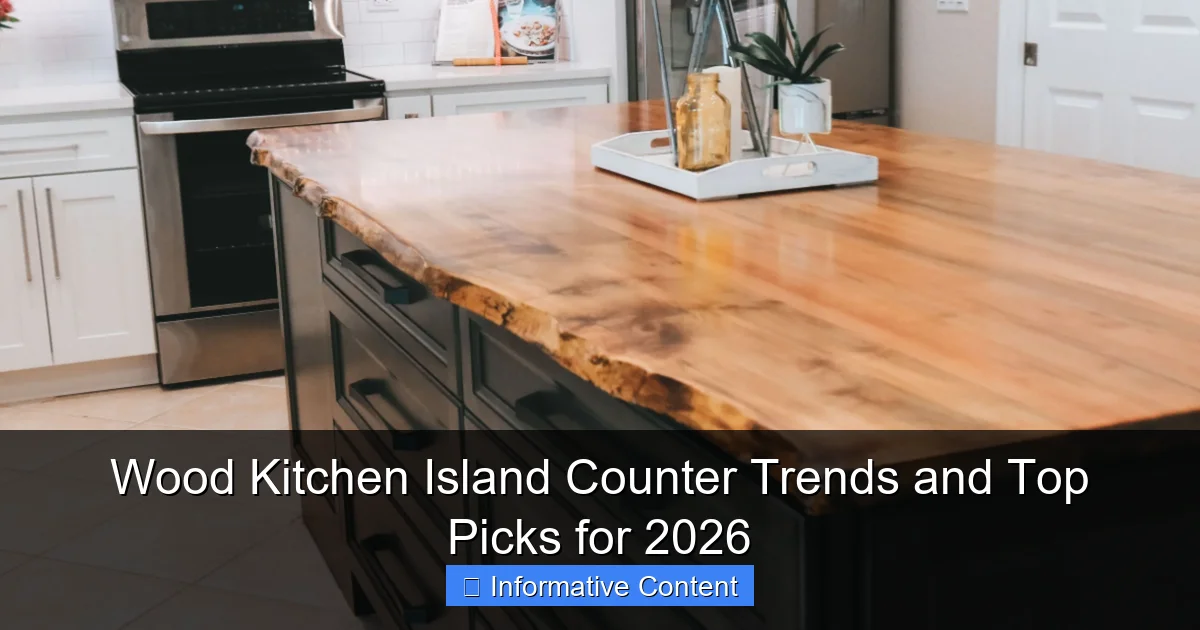
Featured image for wood kitchen island counter
Image source: i.pinimg.com
Wood kitchen island counters are dominating 2026 design trends, blending natural warmth with modern durability to create stunning, functional focal points in today’s kitchens. Top picks feature sustainably sourced hardwoods, live-edge detailing, and innovative eco-friendly finishes that resist stains and scratches—perfect for busy households. From minimalist Scandinavian styles to bold organic shapes, wood islands offer unmatched versatility and timeless appeal.
Key Takeaways
- Choose sustainable wood: Opt for FSC-certified or reclaimed wood for eco-friendly durability.
- Prioritize finish quality: Select matte or satin finishes to hide scratches and wear.
- Measure carefully: Ensure your island fits the space with at least 36″ clearance.
- Mix materials wisely: Pair wood with stone or metal for contrast and functionality.
- Prevent moisture damage: Seal edges and undersides to prolong lifespan in humid kitchens.
- Customize storage: Add pull-out shelves or drawers for optimized organization.
📑 Table of Contents
- Why the Wood Kitchen Island Counter Is Stealing the Show in 2026
- The Rise of Wood: Why It’s Trending in 2026
- Top Wood Types for Kitchen Island Counters in 2026
- Finishes and Maintenance: How to Keep Your Wood Island Looking Great
- Design Trends: How to Style Your Wood Kitchen Island
- Top Picks: Best Wood Kitchen Island Counters for 2026
- Final Thoughts: Is a Wood Kitchen Island Counter Right for You?
Why the Wood Kitchen Island Counter Is Stealing the Show in 2026
Remember when kitchen islands were all about stainless steel and quartz? Those days are fading fast. In 2026, homeowners and designers are turning back to nature—and the wood kitchen island counter is leading the charge. There’s something undeniably warm and grounding about wood. It brings character, texture, and a sense of history to a space that’s often all about function. Whether you’re renovating an old farmhouse or designing a sleek modern kitchen, a wooden island countertop can be the heart of your home.
I recently helped a friend redo her kitchen, and she was dead set on a white quartz island—until she saw a reclaimed oak countertop with visible grain and subtle imperfections. “It feels like it has a soul,” she said. That moment reminded me how powerful wood can be. It’s not just a surface; it’s a statement. And in 2026, that statement is all about authenticity, sustainability, and timeless beauty. With more people working from home, cooking more, and craving cozy, lived-in spaces, the demand for wood kitchen island counters has skyrocketed. So what’s driving this trend? And which wood types, finishes, and styles are worth your attention? Let’s dive in.
The Rise of Wood: Why It’s Trending in 2026
Wood has always had a place in kitchens—think butcher blocks and cutting boards—but in 2026, it’s no longer a side player. It’s the star. The shift toward biophilic design (bringing the outdoors in) has made natural materials like wood more desirable than ever. But it’s not just about aesthetics. People are also prioritizing sustainability, durability, and emotional connection to their homes.
Biophilic Design Meets the Kitchen
Biophilic design isn’t just a buzzword. Studies show that spaces with natural elements reduce stress and improve well-being. A wood kitchen island counter does more than look good—it helps create a calming, inviting environment. Think of it as your kitchen’s “zen zone.” Unlike cold, hard surfaces like quartz or concrete, wood feels alive. The grain, knots, and subtle color variations make each piece unique. It’s tactile. It’s warm. And it makes you want to linger.
Take the case of a family in Portland who replaced their granite island with a live-edge walnut countertop. “It changed the whole mood of the kitchen,” they told me. “It’s like we’re cooking in a cabin, even though we’re in the city.” That emotional resonance is a big part of why wood is trending.
Sustainability and Reclaimed Wood
Eco-consciousness is no longer optional. In 2026, more homeowners are asking: *Where does this wood come from?* Reclaimed wood—salvaged from old barns, factories, or even wine barrels—has become a top choice. It’s not just sustainable; it’s full of character. Reclaimed oak, for example, often has a rich patina and visible nail holes that tell a story.
Brands like Reclaimed Designworks and Barnwood Living now offer pre-finished reclaimed wood countertops that are sealed for kitchen use. These aren’t just eco-friendly—they’re conversation starters. And because reclaimed wood is already aged, it ages gracefully, developing a deeper, richer look over time.
Durability Meets Daily Life
One myth about wood countertops? They’re fragile. Not true. Modern finishes and proper maintenance have made wood kitchen island counters more resilient than ever. When sealed with food-safe oils or water-resistant polyurethanes, wood can handle spills, heat (to a point), and daily wear. In fact, wood is naturally antimicrobial—unlike plastic or unsealed stone—thanks to its dense cellular structure.
That said, wood isn’t indestructible. It can scratch, and it shouldn’t be used as a cutting surface without a separate board. But for most people, the trade-off is worth it. As one homeowner in Austin put it: “I don’t mind a few scratches. They add character. And I can always sand and reseal if needed.”
Top Wood Types for Kitchen Island Counters in 2026
Not all wood is created equal. Some types are better suited for high-traffic kitchens, while others shine in low-maintenance spaces. Here are the top contenders for 2026—each with pros, cons, and real-world examples.
Walnut: The Dark Horse of Elegance
Walnut has surged in popularity, and for good reason. Its rich, chocolate-brown hue with subtle purple undertones makes it a favorite for modern and traditional kitchens alike. It’s durable (Janka hardness: 1,010 lbf), stable, and ages beautifully. Walnut’s grain is straight and fine, giving it a refined look without being too flashy.
Best for: Mid-century modern, Scandinavian, and contemporary kitchens.
Tip: Pair walnut with light cabinets (like white or gray) for contrast, or go monochrome with dark cabinets for a moody, dramatic effect. Avoid direct sunlight, as walnut can fade slightly over time.
One designer in Chicago used a 1.5-inch-thick walnut slab with a matte oil finish for a client’s island. “The client wanted warmth but didn’t want it to feel rustic. Walnut was the perfect middle ground,” she said.
White Oak: The Versatile Workhorse
White oak is having a moment—and it’s not just because of the “quiet luxury” trend. With a Janka hardness of 1,360 lbf, it’s one of the most durable hardwoods available. Its grain is pronounced but not overwhelming, with a mix of cathedral and straight patterns. It’s also naturally water-resistant, thanks to its closed-cell structure, making it ideal for kitchens.
Best for: Farmhouse, transitional, and modern kitchens.
Tip: White oak takes stains beautifully. If you want a lighter look, try a whitewash or light gray stain. For a bolder statement, go natural or with a dark espresso finish.
A couple in Nashville used white oak for their island, paired with black metal legs and brass hardware. “It’s the first thing people notice,” they said. “It feels solid, like it will last forever.”
Reclaimed Pine: Character on a Budget
Reclaimed pine is a budget-friendly option that doesn’t skimp on charm. It’s softer (Janka hardness: 380 lbf), so it’s more prone to dents, but that’s part of its appeal. The wood often has visible knots, cracks, and nail holes that add vintage appeal. When sealed properly, it can last decades.
Best for: Rustic, cottage, and shabby-chic kitchens.
Tip: Use a high-quality sealant (like Rubio Monocoat or Tung Oil) and reapply every 6–12 months. Avoid placing hot pots directly on the surface—use trivets instead.
A small café in Vermont uses a reclaimed pine island counter that’s been in place for 15 years. “It’s worn, but in the best way,” the owner said. “It feels like part of the story.”
Maple: The Classic with a Modern Twist
Maple is a longtime favorite for butcher blocks, but in 2026, it’s stepping into the spotlight for full island counters. With a Janka hardness of 1,450 lbf, it’s one of the hardest domestic woods—perfect for high-traffic kitchens. Its light color and subtle grain make it a chameleon; it works with almost any style.
Best for: Modern, minimalist, and coastal kitchens.
Tip: Maple can yellow slightly over time when exposed to light. If you want a pure white look, consider a white-pigmented oil finish. For a warmer tone, go natural with a clear oil.
A designer in San Diego used a thick maple slab for a client’s island, paired with open shelving and matte black fixtures. “The client wanted a clean, airy look, and maple delivered,” she said.
Finishes and Maintenance: How to Keep Your Wood Island Looking Great
Choosing the right finish is just as important as choosing the right wood. The finish affects durability, maintenance, and even the feel of the countertop. Here’s what you need to know.
Oil Finishes: Natural and Nourishing
Oil finishes—like tung oil, linseed oil, or food-safe blends (e.g., Rubio Monocoat, Odie’s Oil)—penetrate the wood, enhancing its natural grain while providing a water-resistant barrier. They give a soft, matte look and feel warm to the touch.
Pros: Easy to repair, food-safe, enhances grain.
Cons: Requires reapplication every 6–12 months; can darken wood over time.
Tip: Apply oil with a lint-free cloth, let it soak for 15–30 minutes, then wipe off excess. Sand lightly between coats for a smooth finish.
One homeowner in Denver uses Rubio Monocoat on her walnut island. “I love how it feels—like butter. And when it gets a small scratch, I just rub a bit of oil on it, and it blends right in.”
Polyurethane: Tough and Low-Maintenance
Water-based polyurethane is a popular choice for busy kitchens. It creates a hard, protective layer that resists scratches, stains, and water damage. It’s also easy to clean—just wipe with a damp cloth.
Pros: Durable, low maintenance, available in matte, satin, or gloss.
Cons: Can look plastic-like if too glossy; harder to repair than oil.
Tip: Apply 2–3 thin coats, sanding lightly between each. Use a high-quality brush or foam roller to avoid streaks.
A family in Atlanta chose polyurethane for their white oak island. “We have three kids and a dog,” they said. “We needed something that could handle spills and messes. Polyurethane has been a lifesaver.”
Maintenance Routines: Simple Steps for Longevity
- Clean daily: Wipe with a damp cloth and mild soap. Avoid abrasive cleaners.
- Reseal regularly: Oil finishes every 6–12 months; polyurethane every 3–5 years.
- Protect from heat: Always use trivets for hot pots and pans.
- Sand and reseal: For deep scratches, sand with 220-grit paper and reapply finish.
One common mistake? Using vinegar or bleach. These can strip the finish and dry out the wood. Stick to pH-neutral cleaners.
Design Trends: How to Style Your Wood Kitchen Island
A wood kitchen island counter isn’t just a functional surface—it’s a design centerpiece. In 2026, the way you style it can make or break your kitchen’s vibe.
Live-Edge Slabs: Raw and Organic
Live-edge wood—where the natural bark or curve of the tree is preserved—is huge in 2026. It adds drama and a sense of the outdoors. A live-edge walnut slab, for example, can turn a simple island into a sculptural element.
Tip: Balance the rawness with clean lines elsewhere. Pair a live-edge counter with sleek cabinets or minimalist stools. Avoid over-accessorizing—let the wood speak for itself.
Mixed Materials: Wood + Metal, Wood + Stone
Combining wood with other materials is a major trend. Think: a white oak countertop on a black metal base, or a maple island with a quartz backsplash. The contrast adds visual interest without clashing.
Example: A kitchen in Seattle uses a reclaimed oak countertop with a steel base and leather barstools. “It’s industrial but warm,” the homeowner said. “The wood softens the metal.”
Integrated Features: Built-In Cutting Boards and Trays
Custom wood islands often include built-in features like pull-out cutting boards, spice racks, or even a breakfast bar. These add functionality while keeping the design cohesive.
Tip: Use the same wood for all elements to create a unified look. Or, for contrast, use a different wood for the cutting board (e.g., maple on a walnut counter).
Top Picks: Best Wood Kitchen Island Counters for 2026
Here’s a curated list of standout options—from budget-friendly to luxury—based on real customer reviews, durability, and design appeal.
Budget-Friendly (Under $2,000)
1. IKEA KUNGSFORS Butcher Block Countertop ($199)
Made from solid beech, this pre-finished countertop is easy to install and works well for DIY islands. It’s not as durable as oak or walnut, but for the price, it’s a great starter option. Just remember to reseal it annually.
2. Home Depot Reclaimed Pine Slab ($450–$800)
Available in various sizes, this reclaimed pine slab has a rustic charm. Pair it with black iron legs for a farmhouse look. Requires oiling every 6–12 months.
Mid-Range ($2,000–$5,000)
3. Etsy Custom White Oak Island Countertop (from $2,500)
Handmade by artisans, these slabs come in custom sizes and finishes. Many offer live-edge options. One popular seller, “WoodHavenStudio,” has 500+ 5-star reviews for craftsmanship and customer service.
4. Lumber Liquidators Maple Butcher Block ($3,200 for 96” x 36”)
A solid maple countertop with a pre-applied polyurethane finish. Durable, easy to clean, and available in multiple sizes. Great for modern kitchens.
Luxury (Over $5,000)
5. The Joinery Reclaimed Walnut Slab ($6,500+)
Hand-sanded, finished with food-safe oil, and shipped with care instructions. The company sources wood from deconstructed barns in the Midwest. Each piece is unique.
6. Urban Wood Goods Live-Edge Island Counter ($7,000–$10,000)
Custom-designed with a live edge and optional metal inlays. Based in Portland, they work with local urban trees (rescued from removal), making it a sustainable choice.
| Product | Wood Type | Finish | Price Range | Best For |
|---|---|---|---|---|
| IKEA KUNGSFORS | Beech | Pre-finished oil | $199 | DIY, small kitchens |
| Home Depot Reclaimed Pine | Reclaimed pine | Unfinished (requires sealing) | $450–$800 | Rustic, farmhouse |
| Etsy Custom White Oak | White oak | Oil or polyurethane | $2,500–$4,500 | Custom design |
| The Joinery Walnut | Reclaimed walnut | Food-safe oil | $6,500+ | Luxury, statement piece |
Final Thoughts: Is a Wood Kitchen Island Counter Right for You?
By now, you’ve probably realized that a wood kitchen island counter isn’t just a trend—it’s a movement. It’s about choosing materials that feel authentic, sustainable, and emotionally resonant. Whether you go for the elegance of walnut, the durability of white oak, or the charm of reclaimed pine, wood brings a warmth that synthetic materials can’t match.
Yes, it requires care. Yes, it can scratch. But isn’t that part of the beauty? A well-loved wood countertop tells a story—of family dinners, holiday baking, and quiet mornings with coffee. It’s not about perfection. It’s about character.
As you plan your 2026 kitchen update, ask yourself: What kind of kitchen do I want to live in? One that feels cold and sterile? Or one that feels like home? If you’re leaning toward the latter, wood might just be the answer. And with so many options—budget-friendly, custom, sustainable—there’s never been a better time to go for it.
So go ahead. Embrace the grain. Love the knots. And let your kitchen island be more than just a counter—it can be the heart of your home.
Frequently Asked Questions
What are the most popular wood kitchen island counter trends for 2026?
In 2026, expect to see warm-toned woods like walnut and white oak dominating, paired with matte finishes and integrated storage solutions. Live-edge slabs and mixed-material designs (e.g., wood with metal legs) are also gaining traction for a modern-rustic aesthetic.
Is a wood kitchen island counter durable enough for daily use?
Yes, high-quality hardwoods like maple or teak are highly durable and can withstand daily wear when properly sealed. Regular maintenance with food-safe oil or wax ensures longevity and protects against scratches and spills.
How do I choose the right wood type for my kitchen island counter?
Consider durability, maintenance, and style: hardwoods like oak or cherry are ideal for high-traffic kitchens, while softer woods like pine suit low-use areas. Match the wood’s grain and color to your existing cabinetry for a cohesive look.
Can a wood kitchen island counter be customized to fit my space?
Absolutely! Many manufacturers offer bespoke sizing, shapes, and finishes to fit unique kitchen layouts. You can also add features like overhangs for seating or built-in spice racks for added functionality.
Are wood kitchen island counters eco-friendly?
Solid wood is a sustainable choice, especially if sourced from FSC-certified forests or reclaimed wood. Avoid veneers or particleboard options, which often contain adhesives and are less durable, reducing their environmental appeal.
How do I clean and maintain a wood kitchen island counter?
Wipe spills immediately with a damp cloth and mild soap, then dry thoroughly. Reapply mineral oil or beeswax every 3–6 months to prevent drying and maintain the wood’s luster, especially in dry climates.