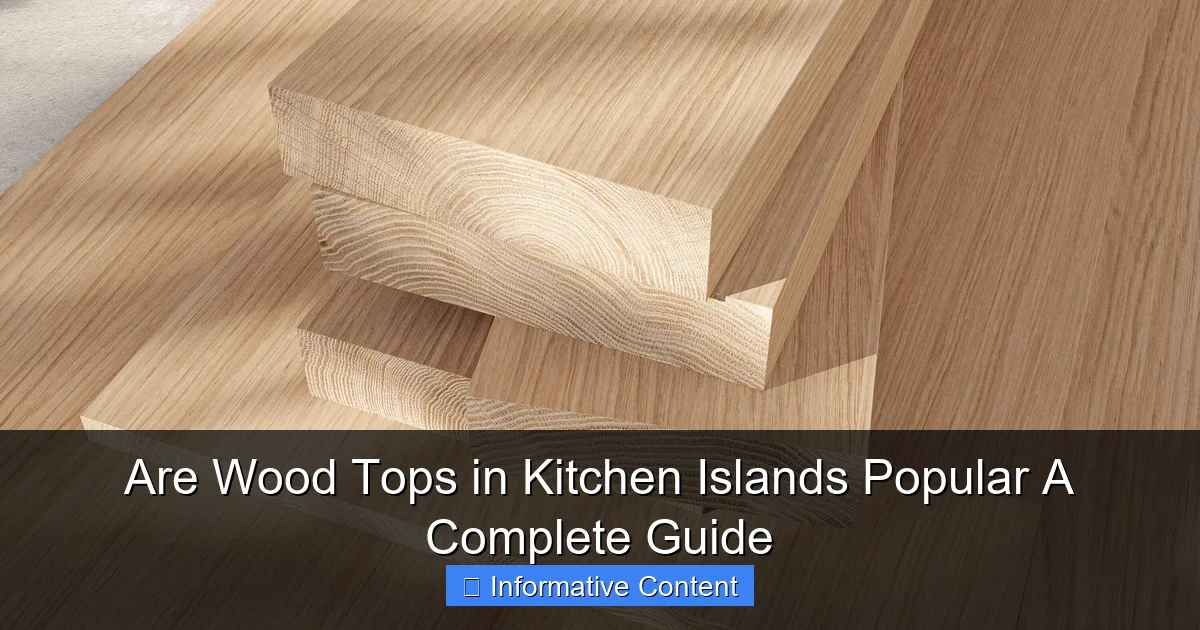
Featured image for are wood tops in kitchen islands popular
Image source: materialsoftheworld.com
Wood tops are a highly popular choice for kitchen islands, prized for their timeless warmth, natural beauty, and versatility in both modern and traditional designs. Homeowners and designers favor hardwood surfaces like oak, walnut, and maple for their durability, ease of maintenance, and ability to elevate any kitchen’s aesthetic appeal.
Key Takeaways
- Wood tops are highly popular due to their warmth and timeless aesthetic appeal.
- Durability matters: Choose hardwoods like oak or maple for long-lasting performance.
- Maintenance is key: Regular oiling and sealing prevent damage and extend lifespan.
- Versatility shines: Wood complements both modern and traditional kitchen designs effortlessly.
- Eco-friendly option: Reclaimed or sustainably sourced wood reduces environmental impact.
- Customization potential: Wood can be stained or finished to match any kitchen palette.
📑 Table of Contents
- Why Wood Tops in Kitchen Islands Are Making a Comeback
- The Rise of Wood Tops: A Trend Rooted in Warmth and Character
- Types of Wood Used for Kitchen Islands (And What to Know Before Choosing)
- Durability and Maintenance: Separating Myth from Reality
- Design Ideas: How to Style a Wood-Topped Kitchen Island
- Cost, Sustainability, and Long-Term Value
- When Wood Might Not Be the Right Choice (And What to Consider Instead)
- Final Thoughts: Why Wood Tops in Kitchen Islands Are Here to Stay
Why Wood Tops in Kitchen Islands Are Making a Comeback
Let’s be honest—kitchen islands are the heart of the modern home. They’re where we sip morning coffee, help kids with homework, and gather for weekend meals. But when it comes to choosing a countertop material, the debate can get heated. Granite? Quartz? Concrete? All great options, but lately, one classic contender is quietly stealing the spotlight: wood tops in kitchen islands.
You might remember wood countertops from your grandma’s farmhouse kitchen—maybe a bit worn, maybe a little rustic, but undeniably warm. Today, wood is back—and not just as a nostalgic throwback. It’s evolved into a sophisticated, durable, and surprisingly practical choice. Whether you’re renovating or building from scratch, you’ve probably asked yourself: Are wood tops in kitchen islands popular? The short answer? Yes. But the real story lies in why they’re so loved, how they’ve improved, and when they might—or might not—be the right fit for your home.
The Rise of Wood Tops: A Trend Rooted in Warmth and Character
Wood countertops aren’t new, but their resurgence is more than just a passing fad. It’s a shift toward natural materials, sustainability, and a desire for spaces that feel lived-in and human. Unlike cold, industrial surfaces, wood brings a sense of warmth and authenticity that’s hard to replicate.
Visual guide about are wood tops in kitchen islands popular
Image source: developingexperts.com
Why Homeowners Are Choosing Wood
Let’s start with the emotional appeal. Wood has a way of making a kitchen feel cozy, even in large, open-concept spaces. Think of a walnut island with rich grain patterns catching the morning light, or a maple top that develops a soft patina over time. These aren’t just surfaces—they’re stories in the making.
- Natural beauty: Every slab of wood is unique. No two grains are the same, which means your island becomes a one-of-a-kind centerpiece.
- Warmth and texture: Wood feels softer under the hand than stone. It’s inviting, especially in homes with kids or frequent entertaining.
- Design flexibility: Wood pairs beautifully with almost any style—Scandinavian, modern farmhouse, rustic, even minimalist. It bridges the gap between modern and traditional.
Take Sarah, a homeowner in Portland, who swapped her quartz island for a reclaimed oak top. “I wanted something that felt real,” she told me. “The quartz looked perfect, but it felt sterile. The wood? It feels like home.”
The Data Behind the Trend
According to the National Kitchen & Bath Association (NKBA), wood countertops have seen a 32% increase in popularity over the past five years. In 2023, 18% of kitchen remodels included wood surfaces—up from just 11% in 2018. This growth is especially strong in suburban and rural areas, where homeowners value natural materials and durability.
And it’s not just about looks. A 2022 Houzz survey found that 67% of homeowners who chose wood countertops cited “warmth” and “natural feel” as their top reasons. Only 22% mentioned durability first—showing that emotional appeal is a major driver.
Types of Wood Used for Kitchen Islands (And What to Know Before Choosing)
Not all wood is created equal. The type you choose impacts durability, maintenance, and overall look. Here’s a breakdown of the most popular options—and what you should consider before making a decision.
Hard Maple: The All-Around Winner
Maple is the most common choice for kitchen islands, and for good reason. It’s dense, durable, and has a fine, consistent grain that works well in modern and traditional kitchens alike.
- Pros: Resists scratches, easy to clean, takes stains evenly.
- Cons: Can yellow slightly over time with certain finishes; not as heat-resistant as stone.
- Best for: Families, high-traffic kitchens, minimalist designs.
Pro tip: Opt for quarter-sawn maple. It’s more stable and has a distinctive “ray fleck” grain that adds character.
Walnut: Luxury with a Dark, Rich Tone
Walnut is the dark horse of wood countertops. It’s softer than maple but offers a deep, chocolatey color that instantly elevates a space.
- Pros: Stunning grain, excellent for contrast (e.g., light cabinets), ages beautifully.
- Cons: More prone to dents and scratches; can be pricey.
- Best for: Design-forward kitchens, luxury builds, spaces with neutral palettes.
One caveat: Walnut is photosensitive. It darkens over time when exposed to light. Some love this “patina effect,” but if you want consistency, consider a UV-protective sealant.
Reclaimed Wood: Eco-Friendly and Full of History
Reclaimed wood—sourced from old barns, factories, or even wine barrels—is a favorite among eco-conscious homeowners. Each piece tells a story, with knots, nail holes, and weathering adding charm.
- Pros: Sustainable, unique, conversation starter.
- Cons: Can be inconsistent in thickness; may require more prep work.
- Best for: Farmhouse, rustic, or industrial kitchens.
Tip: Always work with a reputable supplier. Reclaimed wood should be kiln-dried and free of pests or mold.
Butcher Block vs. Solid Slab: What’s the Difference?
You’ll often hear the terms “butcher block” and “solid wood slab” used interchangeably—but they’re not the same.
- Butcher block: Made from strips of wood glued together (usually end-grain or edge-grain). Great for chopping, more affordable, and easier to replace sections if damaged.
- Solid slab: A single, thick piece of wood (often 2” or more). More expensive, but offers a seamless, high-end look. Less practical for cutting, but stunning as a showpiece.
For kitchen islands, most people choose edge-grain butcher block—it’s durable, affordable, and still looks great. Solid slabs are best reserved for accent areas or smaller islands.
Durability and Maintenance: Separating Myth from Reality
Let’s tackle the big question: Is wood really durable enough for a kitchen island? The answer is yes—but with some caveats. Wood isn’t bulletproof, but with proper care, it can last decades.
How Wood Holds Up to Daily Use
Wood countertops are often criticized for being “too soft” or “easily damaged.” But here’s the truth: with modern finishes and techniques, wood is far more resilient than most people think.
- Scratches: Yes, wood can scratch—but so can stone. The difference? Wood scratches add character. Stone scratches can look like cracks. Plus, wood can be sanded and refinished.
- Heat: Wood doesn’t handle direct heat well. Always use trivets. But unlike stone, it won’t crack from sudden temperature changes.
- Water: Wood expands and contracts with moisture. Avoid leaving wet sponges or bowls on the surface. Use a water-resistant finish (more on that below).
- Knife marks: Butcher block is actually great for chopping. Just avoid cutting directly on solid slabs—use a cutting board.
One homeowner in Austin, Mark, told me his walnut island has survived three kids, two dogs, and a weekly taco night. “Sure, it has a few nicks,” he laughed. “But that’s just proof we use it.”
Finishes That Protect Your Investment
The finish you choose is critical. It affects durability, maintenance, and how the wood ages.
- Mineral oil: Natural, food-safe, but requires frequent reapplication (every 4–6 weeks). Best for butcher block used for cutting.
- Beeswax blends: Adds a soft sheen and moisture protection. Needs reapplication every 3–4 months.
- Polyurethane (water-based): Durable, low-odor, and long-lasting. Ideal for solid slabs. Can be semi-gloss or matte.
- Epoxy resin: Creates a glass-like, waterproof surface. Great for modern kitchens, but can look artificial if overused.
Pro tip: For a kitchen island, I recommend a water-based polyurethane with at least three coats. It’s durable, food-safe, and gives a subtle sheen without looking plastic.
Cleaning and Care Tips
Wood doesn’t need fancy cleaners. Here’s how to keep it looking great:
- Wipe spills immediately with a damp cloth.
- Use mild soap and water for daily cleaning. Avoid vinegar or bleach—they can dry out the wood.
- Reapply finish every 6–12 months (or as needed).
- Sand and refinish every 5–10 years to restore the surface.
And remember: a little patina is a good thing. Wood is meant to age. It’s not a flaw—it’s a feature.
Design Ideas: How to Style a Wood-Topped Kitchen Island
Wood tops aren’t just functional—they’re design statements. Here’s how to make the most of them in your space.
Pairing Wood with Other Materials
One of the biggest design trends is mixed materials. A wood island can be the perfect anchor in a kitchen with stone, metal, or tile.
- Wood + marble: Classic combo. A walnut island with a marble backsplash feels elegant and timeless.
- Wood + concrete: Industrial meets organic. Great for modern lofts.
- Wood + stainless steel: Sleek and contemporary. Works well in minimalist kitchens.
Example: A homeowner in Chicago paired a reclaimed oak island with a white quartz perimeter. “The wood warms up the space,” she said. “It keeps the kitchen from feeling too clinical.”
Color and Finish Choices
Wood can be left natural, stained, or painted. Each has its own vibe.
- Natural: Shows off the wood’s grain. Best with high-quality, knot-free wood.
- Stained: Enhances or changes the color. A gray stain can give oak a modern look.
- Painted: White, black, or navy wood islands are trending. Adds contrast and drama.
Pro tip: If you’re painting, use a high-gloss or satin finish for durability. Avoid flat paint—it’s harder to clean.
Integrating Functional Features
Your island isn’t just for show. Make it work for you.
- Overhangs: Add a 12–14” overhang for stools. Use a waterfall edge for a modern look.
- Storage: Include drawers, shelves, or open cubbies. Wood looks great with brass or black hardware.
- Appliances: Some islands include built-in sinks or cooktops. Just avoid placing heat sources directly on the wood.
And don’t forget lighting. Pendant lights above a wood island highlight the grain and create a cozy glow.
Cost, Sustainability, and Long-Term Value
Let’s talk money and the planet. Is a wood island a smart long-term investment?
How Much Does a Wood Island Top Cost?
Prices vary widely based on wood type, thickness, and finish.
| Wood Type | Price per Square Foot (Installed) | Lifespan (With Care) |
|---|---|---|
| Hard Maple (Butcher Block) | $40–$70 | 15–25 years |
| Walnut (Solid Slab) | $80–$120 | 20–30 years |
| Reclaimed Oak | $60–$100 | 25+ years |
| Painted Maple | $50–$90 | 15–20 years |
Compare that to quartz ($80–$120/sq ft) or granite ($60–$100/sq ft), and wood is often more affordable—especially if you choose butcher block.
Environmental Impact: Is Wood Sustainable?
Yes—if you choose wisely.
- FSC-certified wood: Ensures responsible forestry. Look for this label.
- Reclaimed wood: Reuses existing materials—zero new trees cut.
- Local sourcing: Reduces carbon footprint from shipping.
One study by the Forest Stewardship Council found that sustainably managed forests can actually increase carbon storage over time. So your wood island? It could be helping the planet.
Resale Value: Will It Pay Off?
Absolutely. A well-designed wood island can boost your home’s appeal. According to Remodeling Magazine’s 2023 Cost vs. Value Report, a midrange kitchen remodel with a wood island returned 72% of the cost at resale—higher than many other upgrades.
And in high-end markets, unique wood features (like live-edge slabs or custom stains) are seen as premium details.
When Wood Might Not Be the Right Choice (And What to Consider Instead)
Wood isn’t perfect for every kitchen. Here’s when you might want to think twice—and what to consider instead.
High-Traffic or Commercial Kitchens
If your island is a prep station for heavy cooking (think: daily baking, frequent chopping), wood might wear faster. Consider:
- Butcher block with a thick edge-grain: More durable for cutting.
- Hybrid design: Use wood for the main surface and add a stone or quartz cutting board.
Homes with Pets or Young Kids
Wood can handle spills, but it’s not indestructible. If you have a puppy who chews or a toddler who draws on counters, you might need extra protection.
- Use a durable finish like polyurethane.
- Keep a cutting board handy to protect the surface.
- Embrace the wear—kids and pets add character.
Humid or Wet Climates
Wood expands and contracts with moisture. In very humid areas, it can warp over time.
- Choose stable woods like maple or teak.
- Use a moisture-resistant finish.
- Ensure proper ventilation in the kitchen.
Alternative: Consider engineered wood (like bamboo or wood-look porcelain) for similar aesthetics with less maintenance.
When You Want a “Set It and Forget It” Surface
Let’s be real—wood takes more care than stone. If you’re someone who forgets to seal countertops or hates sanding, quartz or solid surface might be better.
But if you love the idea of a surface that evolves with your life? Wood is worth the effort.
Final Thoughts: Why Wood Tops in Kitchen Islands Are Here to Stay
So, are wood tops in kitchen islands popular? Without a doubt. But more than that—they’re meaningful. They connect us to nature, to craftsmanship, and to the idea that a kitchen should feel like home.
Wood isn’t just a trend. It’s a return to authenticity in a world of mass-produced, cookie-cutter design. Whether you choose rich walnut, warm maple, or character-filled reclaimed wood, your island becomes more than a workspace. It becomes a story.
And yes, it takes a little extra care. But isn’t that true of anything worth having? A well-loved wood countertop isn’t perfect—it’s better. It’s lived-in. It’s real. And in the end, that’s what makes a kitchen truly special.
So go ahead. Embrace the grain. Let the light catch the knots. And when someone asks, “Why wood?” you can smile and say, “Because it feels like home.”
Frequently Asked Questions
Are wood tops in kitchen islands popular for modern kitchens?
Yes, wood tops in kitchen islands remain popular due to their timeless appeal and versatility in both modern and traditional designs. Their natural warmth and ability to pair with various countertop materials make them a sought-after choice.
Why choose a wood top for a kitchen island over granite or quartz?
Wood tops offer a unique organic aesthetic, are gentler on dishware, and can be sanded/refinished to extend their lifespan. Unlike stone, they provide warmth underfoot and a more casual, inviting feel.
What types of wood are best for kitchen island tops?
Hardwoods like walnut, maple, and oak are top choices for kitchen islands due to their durability and resistance to scratches. Reclaimed wood is also popular for its character and eco-friendly appeal.
How do wood kitchen island tops hold up to daily wear and tear?
With proper sealing and maintenance, wood tops can withstand heavy use for decades. They may develop a natural patina over time, which many homeowners appreciate as part of the wood’s charm.
Can wood tops in kitchen islands increase home value?
Yes, high-quality wood island tops can boost resale value by creating a focal point and elevating the kitchen’s overall aesthetic. Buyers often view them as a premium, custom feature.
Are wood kitchen island tops hard to maintain?
Wood tops require regular oiling or sealing to prevent water damage but are otherwise low-maintenance. Simple upkeep, like wiping spills promptly, keeps them looking pristine for years.