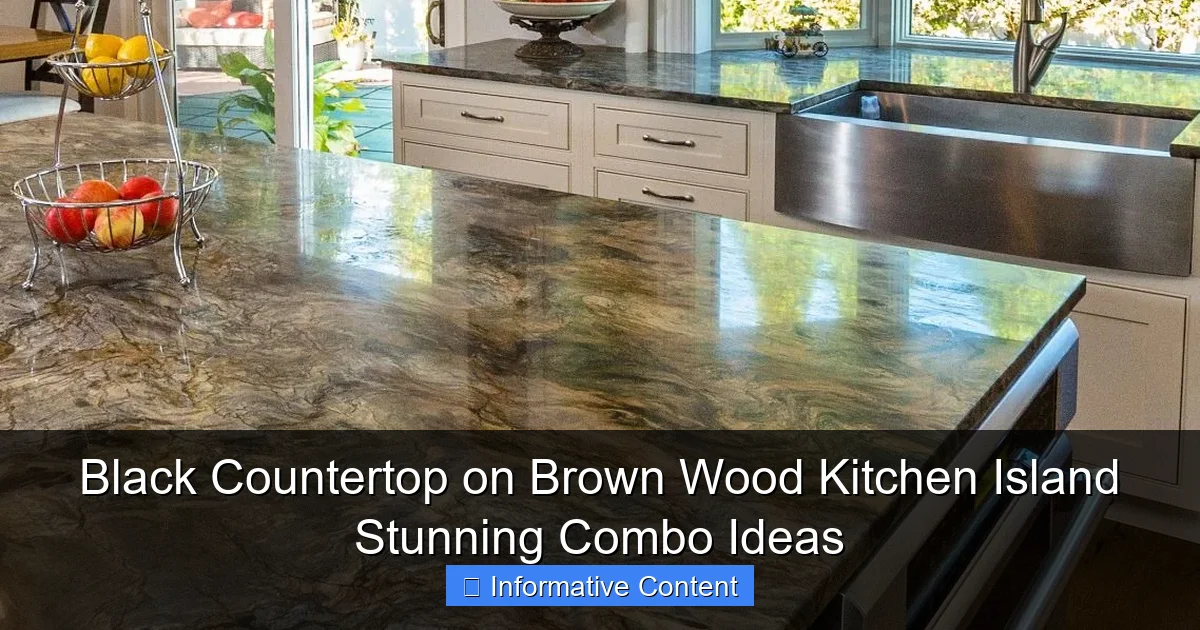
Featured image for black countertop on brown wood kitchen island
Image source: i.pinimg.com
A black countertop on a brown wood kitchen island creates a striking, modern contrast that elevates any kitchen’s aesthetic. This bold combo blends warmth and sophistication, with the rich wood tones adding coziness while the sleek black surface delivers drama and durability. Ideal for both rustic and contemporary spaces, it’s a timeless design choice that wows.
Key Takeaways
- Contrast creates drama: Pair black countertops with brown wood for bold visual impact.
- Choose matte finishes: Reduces glare and highlights wood grain naturally.
- Anchor with lighting: Pendant lights enhance depth and style above islands.
- Balance with neutrals: Use walls or backsplashes to avoid overwhelming the space.
- Mix materials wisely: Add metal accents to tie black and brown together.
📑 Table of Contents
- Why a Black Countertop on a Brown Wood Kitchen Island Works
- The Science Behind the Contrast: Why It Works
- Material Matchups: Choosing the Right Black and Brown
- Design Styles: From Farmhouse to Modern
- Lighting, Hardware, and Accents: The Finishing Touches
- Common Mistakes and How to Avoid Them
- Cost and Maintenance: What to Expect
- Final Thoughts: Making the Combo Work for You
Why a Black Countertop on a Brown Wood Kitchen Island Works
Imagine walking into a kitchen where the rich warmth of natural brown wood meets the bold sophistication of a sleek black countertop. It’s not just a design choice—it’s a statement. The contrast creates a focal point that feels both timeless and modern, like pairing a classic leather jacket with a crisp white tee. I remember visiting a friend’s remodeled kitchen last year and being instantly drawn to her black quartz countertop resting on a reclaimed oak island. The way the dark surface absorbed light while the wood grain added texture? Pure magic. That’s the power of this combo: it balances drama and coziness in a way few materials can.
This pairing isn’t just about aesthetics, though. A black countertop on brown wood kitchen island solves practical dilemmas too. The wood hides scratches and dents better than light finishes, while the black countertop camouflages water spots and crumbs—a win for busy households. Plus, it’s surprisingly versatile. Whether you’re going for farmhouse charm, mid-century modern, or even industrial edge, this duo adapts like a chameleon. Let’s dive into why this combo works, how to style it, and what to watch out for.
The Science Behind the Contrast: Why It Works
Visual Balance and Focal Points
Ever notice how a dark object on a light surface (or vice versa) instantly grabs attention? That’s visual contrast at work. A black countertop on a brown wood island creates a striking focal point, grounding the kitchen and drawing the eye. But it’s not just about drama—the warm undertones of brown wood (think walnut, oak, or cherry) soften the harshness of black, preventing the space from feeling cold. It’s like adding honey to espresso: bold, but with a hint of sweetness.

Visual guide about black countertop on brown wood kitchen island
Image source: img.shopstyle-cdn.com
For example, take a black granite countertop paired with a medium-toned walnut island. The granite’s flecks of silver or white mimic natural light, while the walnut’s grain adds organic texture. The result? A kitchen that feels both polished and inviting. Pro tip: If your kitchen has low natural light, opt for a matte or honed black finish (more on this later) to avoid overwhelming the space.
Color Psychology and Mood
Colors influence how we feel in a space. Black conveys luxury, sophistication, and authority—great for a kitchen that doubles as a entertaining hub. Brown wood, meanwhile, evokes stability, comfort, and earthiness. Together, they strike a balance between “I’m here to impress” and “kick off your shoes and stay awhile.” This is especially useful in open-concept homes, where the kitchen flows into living areas. The combo ensures your island feels intentional, not chaotic.
Anecdote time: My neighbor once told me she avoided black countertops for years, fearing they’d feel “too heavy.” But when she paired a black matte quartz countertop with a light oak island (stained with a honey glaze), she loved how the wood’s warmth lifted the darkness. “It’s like the island is giving the countertop a hug,” she joked. Moral? Context matters. The right wood tone can make all the difference.
Material Matchups: Choosing the Right Black and Brown
Countertop Materials: Pros, Cons, and Pairing Tips
Not all black countertops are created equal. Here’s how to pick the best material for your brown wood island:
- Black Quartz: Low-maintenance, stain-resistant, and available in matte or polished finishes. Pairs well with medium to dark wood (e.g., walnut, espresso-stained oak). Avoid if you want a natural stone look.
- Black Granite: Durable and heat-resistant, with unique veining. Works with any wood tone but shines with lighter woods (e.g., ash, whitewashed oak) to highlight its patterns.
- Matte Black Porcelain: Budget-friendly, scratch-resistant, and mimics concrete or soapstone. Ideal for rustic or industrial styles with reclaimed wood.
- Black Soapstone: Soft, natural, and ages beautifully. Best with warm-toned wood (e.g., cherry, hickory) to enhance its organic feel.
Wood Types: Finding the Perfect Brown
The wood’s undertone (warm, neutral, or cool) affects how it interacts with black:
- Warm Browns (e.g., walnut, cherry): Amplify richness. Great for traditional or farmhouse kitchens. Pair with matte black for a cozy vibe.
- Neutral Browns (e.g., oak, maple): Versatile and modern. Works with polished black for a sleek look.
- Cool Browns (e.g., ebony-stained ash): Add contrast. Best with textured black countertops (e.g., honed granite) to avoid a stark feel.
Example: A black soapstone countertop on a walnut island creates a moody, organic space—perfect for a cabin kitchen. Swap the walnut for a light gray-brown oak, and the same countertop feels airy and modern.
Finish Matters: Glossy vs. Matte
The countertop’s finish dramatically impacts the combo’s vibe:
- Glossy: Reflects light, making small kitchens feel larger. But it shows fingerprints and water spots. Best with dark wood (e.g., espresso-stained oak).
- Matte/Honed: Hides imperfections and feels tactile. Ideal for busy families or textured wood (e.g., reclaimed barnwood).
Pro tip: If your island has a distressed wood finish, pair it with a matte black countertop to enhance the rustic charm. For a high-gloss lacquered wood, polished black adds glam.
Design Styles: From Farmhouse to Modern
Farmhouse Rustic
Think shiplap walls, apron sinks, and open shelving. A black quartz countertop on a reclaimed oak island with a whitewash stain nails this look. The wood’s imperfections (knots, nail holes) add character, while the black countertop grounds the space. Add brass hardware and a vintage-inspired faucet to complete the vibe.
Example: A client of mine wanted a farmhouse kitchen but feared it’d feel “too country.” We used a matte black porcelain countertop (for durability) on a light oak island with a weathered finish. The combo felt fresh, not fussy.
Mid-Century Modern
Clean lines, tapered legs, and geometric shapes define this style. Try a black granite countertop with white veining on a walnut island with hairpin legs. The wood’s straight grain and the granite’s patterns echo mid-century design principles. Add a retro pendant light for flair.
Industrial Edge
Exposed brick, metal stools, and concrete floors? A black concrete countertop on a steel-framed wood island (e.g., blackened steel legs with a walnut top) feels edgy yet functional. The wood softens the industrial feel, while the black countertop ties in with metal accents.
Minimalist Contemporary
Less is more here. A high-gloss black quartz countertop on a light maple island (stained with a clear sealant) creates a serene, uncluttered look. Keep hardware simple—think recessed pulls or hidden handles.
Eclectic Boho
Mix textures and colors fearlessly. A black soapstone countertop on a dark-stained teak island pairs with colorful tile backsplashes and woven bar stools. The wood’s natural grain and the stone’s patina add warmth to the bold palette.
Lighting, Hardware, and Accents: The Finishing Touches
Lighting: Setting the Mood
Lighting can make or break this combo. Here’s how to get it right:
- Pendant Lights: Hang 3-5 pendants (e.g., matte black or brass) above the island. They create a “jewelry” effect on the dark countertop. For warm wood, choose brass or copper; for cool wood, try nickel or black metal.
- Under-Cabinet Lighting: Install LED strips under the island overhang to highlight the wood grain and countertop texture. Avoid cool-white lights—they can make black look gray.
- Natural Light: If your kitchen has windows, position the island to catch morning light. The sun will warm the wood and soften the black’s intensity.
Hardware: Small Details, Big Impact
The hardware you choose ties the black and brown together:
- Drawer Pulls & Knobs: Black matte or oil-rubbed bronze complements both materials. For a pop, try brass (works with warm wood) or chrome (suits cool wood).
- Faucet: A black matte or brushed gold faucet echoes the countertop. Avoid shiny chrome—it clashes with wood’s warmth.
- Bar Stools: Leather (brown or black) or wood seats (matching the island) keep the look cohesive.
Accents: Textures and Colors
Use decor to bridge the black-brown gap:
- Backsplash: White subway tile, black-and-white mosaic, or even a wood-look tile (to echo the island).
- Plants: Greenery (e.g., a fiddle-leaf fig) adds life and softens the contrast.
- Rugs: A jute or wool rug under the island introduces texture. Choose a neutral or muted color to avoid competing with the countertop.
Common Mistakes and How to Avoid Them
Overdoing the Black
Too much black can feel heavy. Avoid:
- Pairing a black countertop with black cabinets.
- Using high-gloss black in a small, dark kitchen.
- Ignoring natural light—black absorbs it, making spaces feel smaller.
Fix: Balance black with lighter elements. Try a white backsplash, light-colored stools, or a window above the island.
Ignoring Wood Grain Direction
Wood grain should flow naturally. A horizontal grain on a rectangular island feels intentional; a vertical grain can look awkward.
Fix: For long islands, align the grain lengthwise. For square islands, use a radial or herringbone pattern.
Skipping the Protective Sealant
Wood and porous stones (e.g., soapstone) need sealing. Unsealed wood stains easily; unsealed stone absorbs spills.
Fix: Apply a food-safe sealant (e.g., beeswax for wood, mineral oil for soapstone) every 6-12 months.
Forgetting Functionality
A beautiful combo means nothing if it’s impractical. Avoid:
- Choosing a delicate wood (e.g., pine) for a high-traffic island.
- Using a glossy countertop in a family kitchen (hello, fingerprints).
Fix: Prioritize durability. Quartz and granite countertops with sealed hardwood (e.g., oak, walnut) are best for busy homes.
Cost and Maintenance: What to Expect
| Component | Average Cost | Maintenance Tips |
|---|---|---|
| Black Quartz Countertop | $70–$100/sq. ft. | Wipe with mild soap; avoid abrasive cleaners. |
| Black Granite Countertop | $60–$120/sq. ft. | Seal every 1–2 years; clean with pH-neutral stone cleaner. |
| Hardwood Island (e.g., Walnut) | $50–$150/sq. ft. | Reapply wood oil/sealer annually; use coasters to prevent water rings. |
| Matte Black Porcelain | $40–$80/sq. ft. | Clean with vinegar-water mix; no sealing needed. |
Remember: A black countertop on brown wood kitchen island is an investment. But with proper care, it ages beautifully. My friend’s walnut island, for example, has developed a richer patina over time, while her quartz countertop still looks brand new after 5 years.
Final Thoughts: Making the Combo Work for You
A black countertop on a brown wood island isn’t just a trend—it’s a design strategy. It’s about creating harmony through contrast, where the boldness of black meets the warmth of wood to create a kitchen that feels both striking and livable. Whether you’re drawn to the rustic charm of reclaimed oak, the sleekness of polished quartz, or the organic allure of soapstone, this combo adapts to your style.
The key? Balance. Let the materials speak for themselves, but don’t forget the little things—the right lighting, hardware, and accents can elevate the entire space. And remember, perfection isn’t the goal. A few imperfections (a scratch on the wood, a water spot on the countertop) add character, not flaws.
So go ahead: embrace the drama of black, the warmth of brown, and the joy of a kitchen that’s uniquely yours. After all, the best designs aren’t just seen—they’re felt. And this combo? It’s a hug for your kitchen.
Frequently Asked Questions
What are the benefits of pairing a black countertop with a brown wood kitchen island?
A black countertop on a brown wood kitchen island creates a striking contrast while maintaining warmth. The combination adds sophistication, hides stains and scratches, and pairs well with both modern and rustic décor styles.
How do I style a black countertop on a brown wood kitchen island to avoid a dark look?
Balance the darker tones with light-colored walls, metallic accents (like brass or chrome), and open shelving. Adding greenery or colorful bar stools can also brighten the space while highlighting the black countertop on brown wood kitchen island combo.
Is a black countertop practical for a high-traffic kitchen island?
Yes! Black countertops (especially quartz or granite) resist wear, hide smudges, and are easy to clean. When paired with durable brown wood, this combo withstands daily use while maintaining its visual appeal.
What countertop materials work best with a brown wood kitchen island?
Quartz, granite, or solid surface countertops in black complement brown wood beautifully. Each material offers durability and unique veining or texture, enhancing the contrast and depth of your black countertop on brown wood kitchen island.
Can I use this combo in a small kitchen without overwhelming the space?
Absolutely! Opt for a lighter shade of brown wood or a two-tone design to keep the space airy. A glossy black countertop can also reflect light, making the area feel larger.
How do I choose the right wood finish for my brown island to match a black countertop?
Match the wood finish to your existing décor: espresso for modern spaces, walnut for mid-century charm, or whitewashed oak for a coastal vibe. Ensure the undertones (warm/cool) harmonize with the countertop’s finish.