
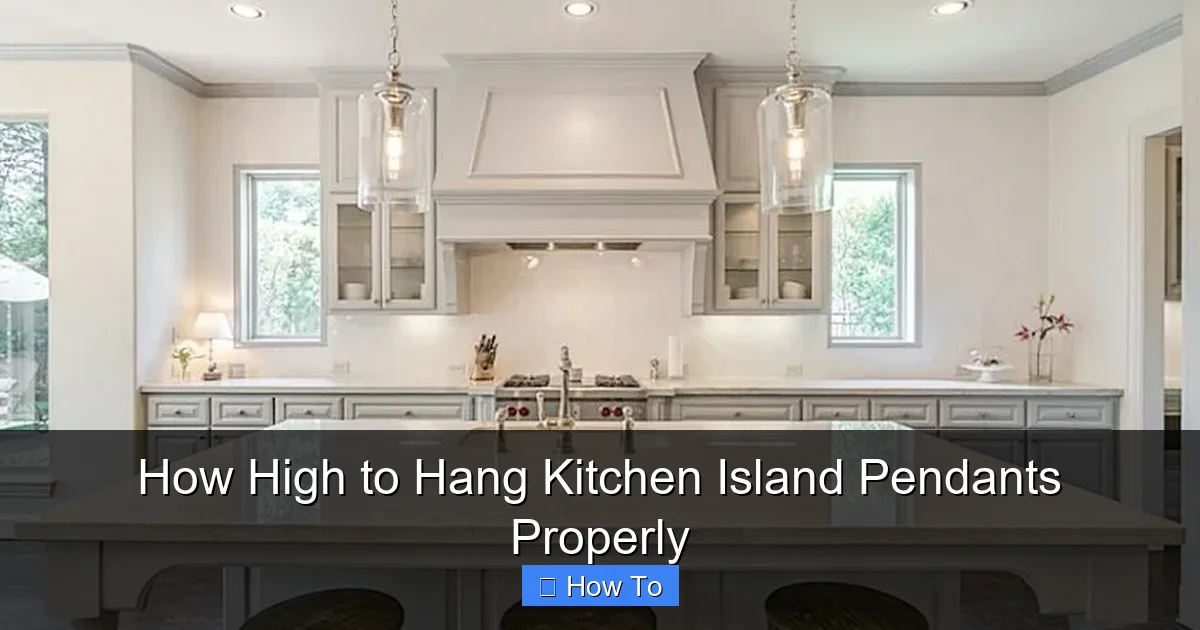
Featured image for this comprehensive guide about how high to hang kitchen island pendants
Image source: i.ytimg.com
How High to Hang Kitchen Island Pendants Properly
The kitchen island is often the heart of the home – a gathering spot, a prep station, a homework zone, and sometimes even a makeshift bar. And what often defines and elevates this central hub? Its lighting. Specifically, the captivating glow and stylish presence of kitchen island pendants. These fixtures aren’t just about illumination; they’re critical design elements that contribute significantly to your kitchen’s aesthetic, functionality, and overall ambiance.
However, getting their placement right is an art and a science. One of the most frequently asked questions in kitchen design is: “How high to hang kitchen island pendants?” Hang them too low, and they obstruct views, create glare, and become a head-bumping hazard. Hang them too high, and they lose their visual impact, fail to provide adequate task lighting, and look awkwardly out of place. The perfect height ensures both beauty and practicality, creating a harmonious and well-lit space. This comprehensive guide will walk you through every aspect of determining the ideal pendant height for your unique kitchen, transforming your island from merely functional to truly fabulous.
Let’s dive into the specifics and demystify the process of perfectly positioning your kitchen island pendants.
Quick Answers to Common Questions
What’s the general rule for how high to hang kitchen island pendants?
A great starting point is to hang your kitchen island pendants so the bottom of the fixture is about 30-36 inches above the island’s countertop. This range often provides ideal task lighting and keeps views unobstructed.
Why does the height of kitchen island pendants matter so much?
Getting the height right for your kitchen island pendants is key for both function and aesthetics! Too low, and they’ll block sightlines or get in the way; too high, and they won’t effectively light your workspace.
How do I measure the ideal height for my kitchen island pendants?
Begin by measuring up from your island’s countertop. Mark a spot between 30 and 36 inches, and that’s where the very bottom of your kitchen island pendant light should sit for optimal placement.
Should I adjust how high to hang kitchen island pendants if I’m particularly tall?
Yes, absolutely! While 30-36 inches is a good general guideline, if you or others in your household are taller, consider hanging your kitchen island pendants a bit higher, perhaps 36-40 inches, to prevent head bumps and keep sightlines clear.
What if my kitchen island pendants seem to be blocking the view across the kitchen?
If your kitchen island pendants are obstructing your view, they’re likely hung too low! Try raising them a few inches, aiming for the higher end of the 30-36 inch range or slightly above, to restore clear lines of sight without sacrificing light quality.
📋 Table of Contents
- The Golden Rule: Starting Point Measurements for Island Pendants
- Factors That Influence Pendant Height Beyond the Basics
- Achieving Visual Balance and Flow: The Art of Pendant Placement
- Practical Considerations and Troubleshooting Common Issues
- Step-by-Step Guide: How to Determine Your Ideal Pendant Height
- Recommended Pendant Height Guidelines
- Conclusion: Illuminate Your Kitchen with Confidence
The Golden Rule: Starting Point Measurements for Island Pendants
While there’s no single “one-size-fits-all” answer to how high to hang kitchen island pendants, there are widely accepted starting points that serve as excellent foundational guidelines. Think of these as your default settings before you begin to fine-tune based on your specific kitchen and personal preferences.
Learn more about how high to hang kitchen island pendants – How High to Hang Kitchen Island Pendants Properly
Image source: images.squarespace-cdn.com
- 30-36 Inches Above the Countertop: This is arguably the most common and recommended starting range. To calculate this, measure from the surface of your kitchen island countertop up to the bottom of your pendant light fixture. This height range is popular because it generally provides ample task lighting without obstructing sightlines across the island or creating uncomfortable glare from the bulb. It keeps the fixture at a comfortable distance, making it a design feature rather than an obstacle.
- 72-78 Inches from the Floor: Another way to look at the same measurement, this range considers your kitchen floor as the baseline. If your island countertop is a standard 36 inches high (which most are), then adding 36-42 inches (for the pendant height above the counter) gets you into the 72-78 inch range from the floor. This perspective can be useful if you’re visualizing the entire room’s vertical space.
Why does this “golden rule” work so well?
| Key Consideration | Recommended Height Above Island Surface | Approx. Fixture Drop (from 8ft Ceiling to Bottom of Pendant)* | Impact / Best Practice |
|---|---|---|---|
| **Standard Clearance (Most Common)** | 30-36 inches | 24-30 inches | Comfortable for average height individuals, good general task and ambient lighting. |
| **Taller Users / Bar Seating** | 36-40 inches | 20-24 inches | Prevents head bumps when standing or sitting at the island, maintains clear sight lines. |
| **Clear Sight Lines / Open Concept** | 36-42 inches | 18-24 inches | Ensures an unobstructed view across the room, ideal for open-plan living spaces. |
| **Task Lighting Focus (Smaller Pendants)** | 28-32 inches | 28-32 inches | Closer to the surface for concentrated illumination, effective for detailed tasks. |
| **Large / Statement Pendants** | 36-40 inches | 20-24 inches | Allows the fixture to be a focal point without overwhelming the space or obstructing movement. |
This range is chosen to:
- Optimize Task Lighting: Pendants are often key for illuminating food prep, cooking, and other activities on the island. This height places the light source close enough to the work surface to effectively brighten it without being in the way.
- Prevent Obstruction: It generally keeps the bottom of the fixture above most people’s eye level when standing, and well above eye level when seated on a bar stool, ensuring clear views across the island.
- Minimize Glare: By positioning the light source slightly above direct eye level, it helps to reduce harsh glare, especially if you’re using exposed bulbs or clear glass shades.
- Maintain Proportion: It offers a visually balanced placement relative to the island and the surrounding kitchen elements, preventing the pendants from looking too dominant or too diminutive.
Remember, these are starting points. The real magic happens when you adjust these numbers based on various factors unique to your home. But having a firm understanding of these basic measurements is the first crucial step in mastering kitchen island pendant height.
Factors That Influence Pendant Height Beyond the Basics
While the 30-36 inch rule is a fantastic starting block, true pendant perfection lies in customizing that measurement. Several critical factors will help you fine-tune exactly how high to hang kitchen island pendants for optimal aesthetics and functionality in your specific space.

Learn more about how high to hang kitchen island pendants – How High to Hang Kitchen Island Pendants Properly
Image source: i.ytimg.com
Island Size and Shape
The dimensions of your kitchen island play a significant role. A longer island might benefit from pendants hung slightly higher to create a more expansive feel, especially if you’re using multiple fixtures. A wider island might allow for pendants to be hung closer to the center, or you might need a larger pendant (or more of them) to adequately cover the surface area, which can subtly influence height. The goal is always visual balance; the pendants should complement, not overpower, the island.
Ceiling Height
This is a major influencer. Standard ceiling height in most homes is 8 feet (96 inches). If your ceilings are taller – 9 feet, 10 feet, or even vaulted – you’ll likely need to hang your pendants slightly higher than the standard 30-36 inches above the counter. For every foot of ceiling height above 8 feet, consider adding 3-6 inches to your pendant height above the countertop. This helps maintain proper proportion within the room, preventing the pendants from looking too small or too low in a grander space. Conversely, if you have lower ceilings, you might need to err on the side of the 36-inch mark or even slightly higher to ensure clearance and prevent a crowded look.
For example, with a 9-foot ceiling, aiming for 33-39 inches above the counter might be appropriate. With a 10-foot ceiling, you could go as high as 36-42 inches. The key is to lift them just enough so they don’t look grounded, but not so much that they lose their purpose or visual weight.
Your Height and the Height of Your Household
This is a practical consideration that’s often overlooked when deciding how high to hang kitchen island pendants. If you or members of your household are particularly tall, you’ll want to ensure the pendants are high enough to avoid head bumps or direct glare into their eyes when standing at the island. A good rule of thumb is to ensure the bottom of the pendant is at least 6-12 inches above the tallest person’s head who will regularly stand at the island. Similarly, consider the average eye level when seated at the island stools; the pendants should ideally be above this line to maintain clear conversation and sightlines.
Pendant Style, Size, and Light Output
- Size: Larger, more voluminous pendants can often be hung slightly higher than smaller, more delicate ones, as they still command presence. Small pendants might need to be a bit lower to provide sufficient light and not get lost in the space.
- Shade Material: Opaque shades direct light downwards, making them ideal for task lighting. These can often be hung a bit lower to maximize their functionality. Clear glass or open-cage designs disperse light more broadly and might benefit from being hung slightly higher to reduce direct glare from the bulb.
- Light Output: If your pendants are the primary light source for the island, you might want them a touch lower to maximize their illumination. If they are more for ambient light or a decorative accent, and you have ample recessed lighting, you have more flexibility to raise them for visual impact.
Other Lighting in the Room
Consider the complete lighting scheme of your kitchen. If you have extensive recessed lighting, under-cabinet lighting, or a prominent chandelier in an adjacent dining area, your island pendants might serve more as accent or decorative lighting rather than primary task lighting. This can give you a bit more leeway in raising them slightly to blend seamlessly with the overall design. However, if the pendants are crucial for task lighting, you’ll need to prioritize their functional height.
Achieving Visual Balance and Flow: The Art of Pendant Placement
Beyond the strict measurements of how high to hang kitchen island pendants, there’s an aesthetic component crucial for a cohesive and pleasing design. It’s about creating visual harmony, ensuring your pendants don’t just light the space but also enhance it.
The Rule of Three (and other odd numbers)
Designers often favor odd numbers, particularly three, when grouping items like pendant lights. A trio of pendants typically creates a more dynamic and visually interesting arrangement over an island than an even number (like two or four). Three pendants provide a natural rhythm and balance, drawing the eye along the length of the island without feeling overly symmetrical or rigid. This isn’t a hard and fast rule, but it’s a very common and effective guideline for achieving visual appeal, especially over longer islands. For very short islands, two well-spaced pendants can work, but for anything substantial, lean towards three.
Spacing Between Pendants
Once you’ve decided on the number of pendants, even spacing is paramount. To calculate this, measure the length of your island. Divide the island into equal sections based on the number of pendants you’ll have plus one. For example, for three pendants, you’ll divide the island into four equal sections. The pendants would then be centered in the first, second, and third sections. A simpler approach: measure the length of your island and subtract the total width of all your pendants combined. Divide that remaining number by the number of gaps between your pendants (e.g., two gaps for three pendants) to find your spacing. Generally, aim for 24-30 inches between the centers of your pendants, but adjust based on pendant size and island length. Ensure the outermost pendants are not too close to the edges of the island; usually, leaving 6-12 inches from each end is a good starting point.
Relationship to Other Fixtures
Your island pendants are part of a larger lighting narrative in your open-concept kitchen or dining area. Consider how they relate to a dining room chandelier or other prominent ceiling fixtures. Their style, finish, and even their general height (though not exact) should feel harmonious. If a nearby chandelier is a bold statement piece, your island pendants might be more understated, or vice-versa. Ensure there’s enough visual breathing room between different lighting elements to avoid a cluttered look. Aim for a consistent design language – whether modern, farmhouse, industrial, or traditional – across all your visible light fixtures.
The “Goldilocks” Effect: Not Too High, Not Too Low
- Too High: If pendants are hung too high, they can lose their visual impact, becoming insignificant against the ceiling. More importantly, they won’t provide adequate task lighting, leaving your island work surface dimly lit. They might also feel disconnected from the island, floating awkwardly in the air.
- Too Low: Pendants hung too low create several problems: they obstruct views, making conversation difficult across the island; they can cause uncomfortable glare, shining directly into people’s eyes; and they pose a potential head-bumping hazard. Visually, they can make the kitchen feel cluttered and cramped.
Finding that “just right” spot involves balancing all the factors discussed, ensuring the pendants are both functional and aesthetically pleasing.
Practical Considerations and Troubleshooting Common Issues
Beyond the measurements and aesthetics, a few practical points are essential to consider when determining how high to hang kitchen island pendants to ensure your lighting truly enhances your kitchen experience.
Task Lighting vs. Ambient Lighting
Clarify the primary role of your island pendants. Are they the main source of light for cutting, chopping, and reading recipes? If so, prioritize the lower end of the recommended height range (closer to 30 inches above the counter) to maximize focused illumination. Consider using LED bulbs with a high CRI (Color Rendering Index) for accurate color representation of food. If they are more for general ambient light, or a decorative glow, you might have more flexibility to raise them slightly for a broader spread of light or to emphasize their design.
Pro Tip: Always install your island pendants on a dimmer switch. This allows you to effortlessly transition from bright task lighting during meal prep to a softer, more atmospheric glow for entertaining or quiet evenings.
Preventing Glare
Glare is a common complaint with poorly placed pendants. The height directly impacts this. If the bulb is exposed and at eye level, it will be uncomfortable. Ensure the bottom of the pendant, or at least the light-emitting part of the bulb, is above the eye level of most users, both standing and sitting. Consider the type of bulb – frosted or milky bulbs will diffuse light better than clear filament bulbs, reducing glare even in clear glass shades. Directional shades (like opaque domes or bells) inherently help mitigate glare by focusing light downwards.
Ensuring Clear Sightlines
One of the most frequent mistakes is hanging pendants too low, which effectively puts a barrier between people conversing across the island. Before final installation, stand on both sides of the island, and if you have bar stools, sit on them. Do the pendants obstruct your view of someone on the other side? Do they block your view of the TV or a beautiful backsplash? If so, they are too low. Your pendants should ideally float above the natural line of sight, allowing for an unimpeded flow of conversation and visual connection throughout the kitchen.
Installation Tips and Tools
- Measure Twice, Cut Once: Use a retractable measuring tape for accuracy.
- Ladder Up: A sturdy step ladder or even a small scaffolding is crucial for safe and precise installation.
- Pencil Power: Lightly mark your desired height on the wall or ceiling with a pencil before making any permanent adjustments.
- Get a Helper: Having a second person to hold the fixture at different heights while you step back and assess from various angles is invaluable.
- The “Balloon/String” Test: A surprisingly effective method for visualizing pendant height and spacing. Inflate balloons to roughly the size of your pendants, tie them to strings, and tape the strings to the ceiling at your proposed pendant locations. Adjust the string lengths until the balloons are at your desired height. This allows you to see the real-world impact before drilling holes or cutting wires.
- Consider Future Use: Are you likely to add a tall appliance (like a stand mixer) to the island? Will people often be leaning over the island? Keep potential future activities in mind.
Step-by-Step Guide: How to Determine Your Ideal Pendant Height
Ready to put theory into practice? Follow this actionable, step-by-step process to confidently determine how high to hang kitchen island pendants in your home.
- Measure Your Island Countertop Height: Use a tape measure to get the exact height from the floor to the top of your island countertop. Most are 36 inches, but custom islands can vary.
- Apply the Golden Rule Starting Point:
- For most standard countertops (36 inches high), aim for the bottom of your pendants to be 30-36 inches above the countertop.
- Alternatively, measure 72-78 inches from the floor to the bottom of the pendant.
This is your initial reference point.
- Factor in Your Ceiling Height:
- 8-foot ceilings: Stick closer to the 30-36 inch range above the counter.
- 9-foot ceilings: Consider adding 3-6 inches to the above-counter height (e.g., 33-39 inches).
- 10-foot+ ceilings or vaulted ceilings: You may need to go even higher, adding 6-12 inches or more, to maintain proper scale. Use your best judgment to ensure the pendants don’t look lost.
- Account for Your Height and Sightlines:
- Have the tallest person who will regularly use the island stand at the counter. Ensure the bottom of the pendant is at least 6-12 inches above their head to prevent obstruction and glare.
- If you have bar stools, sit on them. Confirm that the pendants do not block your view or conversation across the island.
- Consider Pendant Size, Style, and Number:
- Large, visually heavy pendants: Can sometimes be hung slightly higher without losing impact.
- Small, delicate pendants: May need to be at the lower end of the range to provide sufficient light and not disappear.
- Opaque shades (task lighting): Can be a bit lower.
- Clear glass/open designs (ambient/decorative): Often benefit from being a bit higher to reduce direct bulb glare.
- Number of Pendants: Determine the ideal number (e.g., 2, 3) and calculate even spacing across your island.
- Visualize and Test (Crucial Step!):
- Cut string to your proposed pendant lengths. Tie weights (or balloons) to the end.
- Tape the strings to the ceiling where your pendants will hang.
- Step back and view from all angles: standing, sitting, from the dining room, from the living room.
- Ask for a second opinion. Does it look right? Does it feel comfortable? Adjust string lengths as needed until you achieve that “just right” feeling.
- Mark and Install: Once you’re confident in your chosen height, carefully mark the spot on the ceiling for each fixture. Now you can proceed with the electrical installation, knowing you’ve made an informed decision about the perfect kitchen island pendant height.
By following these steps, you’ll not only ensure your pendants are functionally sound but also aesthetically magnificent, transforming your kitchen island into a truly stellar focal point.
Recommended Pendant Height Guidelines
To help summarize the various considerations, here’s a quick reference table. Remember, these are guidelines, and personal preference and visualization are key!
| Island Countertop Height | Ceiling Height | Recommended Pendant Bottom Height (Above Counter) | Recommended Pendant Bottom Height (From Floor) | Key Considerations |
|---|---|---|---|---|
| Standard (36 inches) | 8 feet | 30-36 inches | 66-72 inches | Common starting point. Good for task lighting & clear sightlines. |
| Standard (36 inches) | 9 feet | 33-39 inches | 69-75 inches | Slightly higher to maintain proportion in a taller room. |
| Standard (36 inches) | 10+ feet / Vaulted | 36-42+ inches | 72-78+ inches | Adjust significantly higher for grander spaces. Visualize carefully. |
| Bar Height (42 inches) | 8 feet | 36-42 inches | 78-84 inches | Higher relative to the counter to avoid obstructing seated guests. |
| Lower (e.g., 30 inches) | 8 feet | 24-30 inches | 54-60 inches | Less common. Adjust downwards, ensuring head clearance. |
Always use these figures as a foundation, then adjust based on your specific pendant design, household height, and overall kitchen aesthetic. The “Above Counter” measurement is often the most intuitive for precise adjustment.
Conclusion: Illuminate Your Kitchen with Confidence
Deciding how high to hang kitchen island pendants might seem like a minor detail in the grand scheme of kitchen renovation or design, but its impact is anything but. The precise placement of these fixtures can dramatically influence the functionality, comfort, and aesthetic appeal of your entire kitchen. Get it right, and your island becomes a beautifully lit, inviting focal point. Get it wrong, and you might end up with obstructed views, uncomfortable glare, or an awkward-looking space.
By understanding the “golden rule” starting points and then meticulously considering factors like ceiling height, island dimensions, personal height, and the specific style of your chosen pendants, you can move beyond guesswork. Utilize the practical tips, the step-by-step guide, and the visualization techniques to find that perfect, harmonious height for your space. Remember, it’s a blend of established guidelines and your unique aesthetic preferences.
So, take your time, measure carefully, visualize creatively, and don’t hesitate to experiment with temporary setups. With a thoughtful approach, you’ll master the art of kitchen island pendant height, ensuring your kitchen is not just well-lit, but truly glows with style and purpose. Your perfectly hung pendants will not only illuminate your countertops but also highlight your impeccable taste and attention to detail.
Frequently Asked Questions
What is the recommended height for hanging kitchen island pendants?
Generally, kitchen island pendants should be hung so the bottom of the fixture is about 30 to 36 inches above the countertop. This range is considered ideal for providing effective task lighting while preventing obstruction of views across the island.
How high should kitchen island pendants be for optimal task lighting?
For optimal task lighting, aim for the bottom of the pendant to be approximately 30-36 inches above your island’s surface. This placement ensures the light is focused where you need it for food preparation or other activities without creating harsh glare.
Does ceiling height impact how high to hang kitchen island pendants?
Yes, ceiling height can influence the final placement of your kitchen island pendants. While the 30-36 inch rule from the countertop is primary, in rooms with very high ceilings (over 9-10 feet), you might consider hanging them slightly higher to maintain visual balance with the overall room scale.
How can I ensure my kitchen island pendants don’t block the line of sight?
To avoid blocking the line of sight, position the bottom of the pendants high enough so that they don’t interfere with the eye level of people standing or sitting at the island. The 30-36 inch guideline typically achieves this, but taller individuals may prefer the higher end of that range.
Should the type or size of the pendant affect how high to hang kitchen island pendants?
While the 30-36 inch rule is a good starting point, larger or more ornate pendants might look better hung slightly higher to prevent them from feeling too overwhelming or “heavy” in the space. Conversely, very small pendants might be able to sit a little lower without obstructing views, but always prioritize function and aesthetics.
What’s the best way to test the ideal height before final installation?
A great way to test how high to hang kitchen island pendants is to have someone hold the pendant at various heights while you stand at different spots around the island. This allows you to visually assess the comfort, light spread, and obstruction from multiple angles before making permanent adjustments.