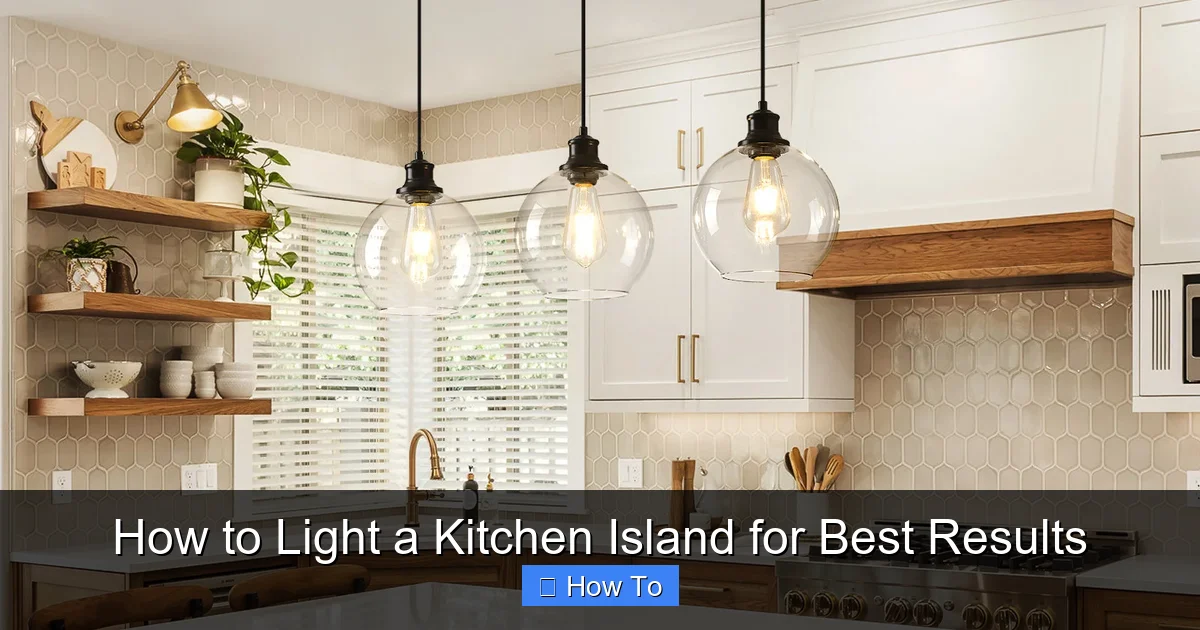
Featured image for this comprehensive guide about how to light a kitchen island
Image source: assets.wfcdn.com
The kitchen island: it’s often the heart of the home. A place where culinary magic happens, homework gets done, coffee is shared, and memorable conversations unfold. But an island is only as functional and inviting as its lighting allows it to be. If you’ve ever squinted while chopping veggies, felt a glare during breakfast, or simply wished your island looked more integrated with your kitchen’s aesthetic, you know that how to light a kitchen island isn’t just an afterthought – it’s a critical design element.
Effective kitchen island lighting goes far beyond merely illuminating a surface. It’s about striking the perfect balance between functionality, ambiance, and style. The right lighting can transform your island from a simple countertop into a vibrant hub, enhancing both its utility and your kitchen’s overall appeal. In this comprehensive guide, we’ll dive deep into everything you need to know about how to light a kitchen island, ensuring you achieve the best possible results for your unique space.
From understanding different lighting layers to selecting the ideal fixtures, determining precise placement, and embracing smart technology, we’ll provide actionable tips and insights. Get ready to illuminate your kitchen island like a pro, creating a space that’s not only beautifully lit but also perfectly suited to your lifestyle.
Quick Answers to Common Questions
What’s the best type of fixture when considering how to light a kitchen island?
Pendant lights are generally the top choice! They provide focused task lighting directly onto your island surface while also serving as stylish decorative elements.
How many lights do I need to effectively light a kitchen island?
For most standard islands, two to three pendants are ideal. Aim to space them about 24-30 inches apart to ensure even, comprehensive illumination.
What’s the right hanging height for island pendant lights?
A good rule of thumb for how to light a kitchen island is to hang pendants approximately 30-36 inches above the countertop. This height prevents head bumps and provides optimal task lighting without glare.
Should I include dimmers when I light a kitchen island?
Yes, absolutely! Dimmers are crucial because they allow you to adjust the light from bright task work to a softer ambient glow, making your island versatile for any occasion.
Beyond pendants, what’s one key factor for how to light a kitchen island well?
Consider the light’s color temperature (warm vs. cool) to match your kitchen’s overall mood. A good lighting plan often involves layering different light sources, not just one type.
📋 Table of Contents
- Understanding the Purpose: More Than Just Illumination
- Choosing the Right Fixture Type for Your Island
- The Art of Placement and Height: Getting It Just Right
- Illuminating Choices: Bulbs, Brightness, and Color Temperature
- Styling Your Island Lighting: Aesthetics and Integration
- Common Kitchen Island Lighting Specifications & Considerations
- Conclusion: Illuminate Your Island, Elevate Your Kitchen
Understanding the Purpose: More Than Just Illumination
Before you even think about fixture types or bulb temperatures, it’s crucial to understand the multifaceted roles your kitchen island plays. Is it primarily a prep station? A dining area? A social gathering spot? Often, it’s all three! Effective kitchen island lighting design considers these various functions, layering different types of light to meet diverse needs.
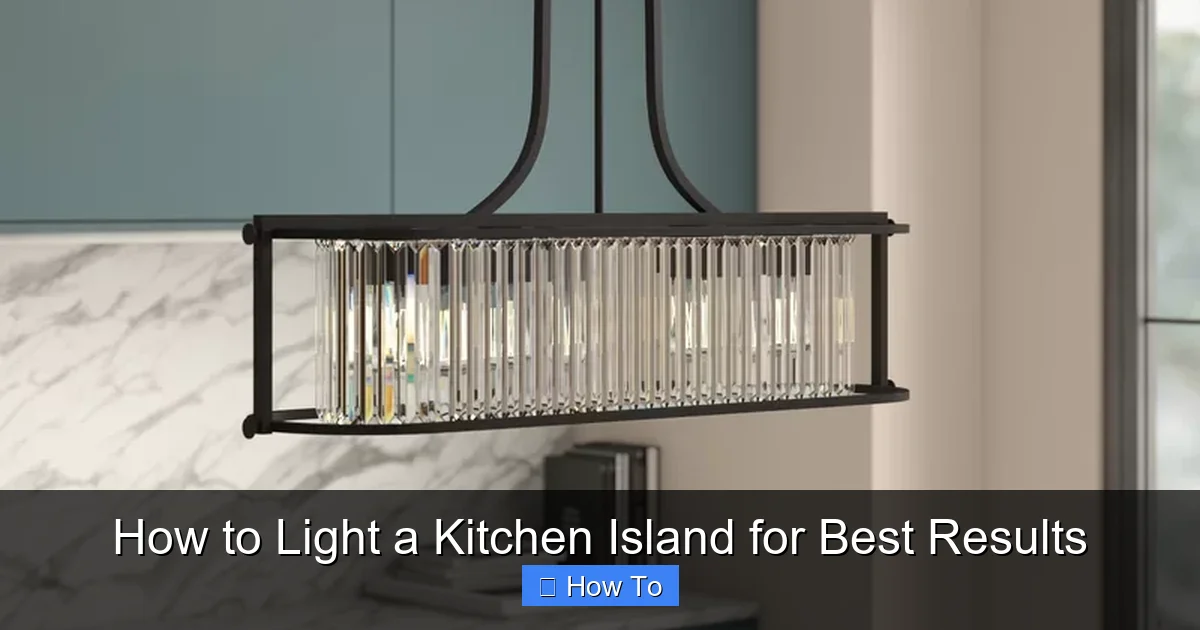
Learn more about how to light a kitchen island – How to Light a Kitchen Island for Best Results
Image source: i.pinimg.com
Task Lighting: The Essential Workhorse
Your island is likely where a significant amount of food preparation occurs. Task lighting for kitchen island is paramount here, providing focused, bright illumination to ensure safety and precision. Without adequate task lighting, slicing, dicing, and reading recipes become challenging and even hazardous. This type of lighting should be direct and strong enough to eliminate shadows cast by your body as you work.
| Lighting Fixture Type | Primary Function | Key Placement / Spacing Detail | Ideal Application & Style |
|---|---|---|---|
| Pendant Lights | Task & Ambient (focused) | Hang 30-36 inches above island surface; spaced 24-30 inches apart. | Direct task lighting for prep/eating; adds decorative style and a focal point. |
| Recessed Lighting | Ambient & Task (general) | Evenly spaced (e.g., 2-4 ft apart) across the island area for uniform light. | Complementary ambient light; unobtrusive design; ideal for low ceilings or minimalist looks. |
| Linear LED Fixture | Task & Ambient (even spread) | Centered lengthwise over island; typically 30-36 inches above surface. | Provides uniform, powerful light for long islands; sleek, modern aesthetic. |
| Track Lighting | Task & Accent (adjustable) | Mounted on ceiling above island; adjustable heads direct light precisely. | Flexible lighting for varying island activities; highlights specific zones; industrial/modern style. |
- Purpose: Food preparation, reading, detailed work.
- Characteristics: Bright, focused, minimizes shadows.
- Typical Sources: Pendants, recessed lights directly above the work surface.
Ambient Lighting: Setting the Mood
While task lighting focuses on utility, ambient lighting kitchen island contributes to the overall warmth and general brightness of the kitchen. It’s the foundational layer of light that creates a welcoming and comfortable atmosphere, integrating your island into the rest of the kitchen. It’s about general visibility and a pleasant glow when your island isn’t being used for intense tasks.
- Purpose: General illumination, creating a comfortable atmosphere.
- Characteristics: Soft, diffused, provides overall brightness.
- Typical Sources: Recessed lights, ceiling flush mounts, overall kitchen ambient lighting.
Accent Lighting: Highlighting Features
Accent lighting kitchen island is all about drama and visual appeal. It’s used to draw attention to specific features, whether it’s the beautiful stone of your countertop, a decorative bowl, or even the texture of the island itself. While less critical for functionality, accent lighting can significantly elevate the aesthetic appeal of your island, making it a true focal point in your kitchen design.
- Purpose: Highlighting decorative elements, adding visual interest.
- Characteristics: Directed, often lower intensity, creates contrast.
- Typical Sources: Small spotlights, strip lighting under a countertop overhang.
Decorative Lighting: The Style Statement
Often overlapping with task or ambient lighting, decorative lighting fixtures themselves serve as a powerful design statement. Kitchen island pendant lights are a prime example, offering both light and an immediate aesthetic impact. They can reinforce your kitchen’s style, add a pop of color, or introduce unique textures. This is where personal style truly shines, turning practical lighting into an integral part of your kitchen’s decor.
- Purpose: Enhancing aesthetics, defining style, providing general light.
- Characteristics: Visually appealing fixtures, integrated into the design theme.
- Typical Sources: Pendant lights, mini-chandeliers.
Choosing the Right Fixture Type for Your Island
Once you understand the different lighting layers, the next step is selecting the appropriate fixtures. The market offers a vast array of options, each with unique characteristics suitable for different island sizes, styles, and functional needs. The best lighting for kitchen island will often involve a combination of fixture types.
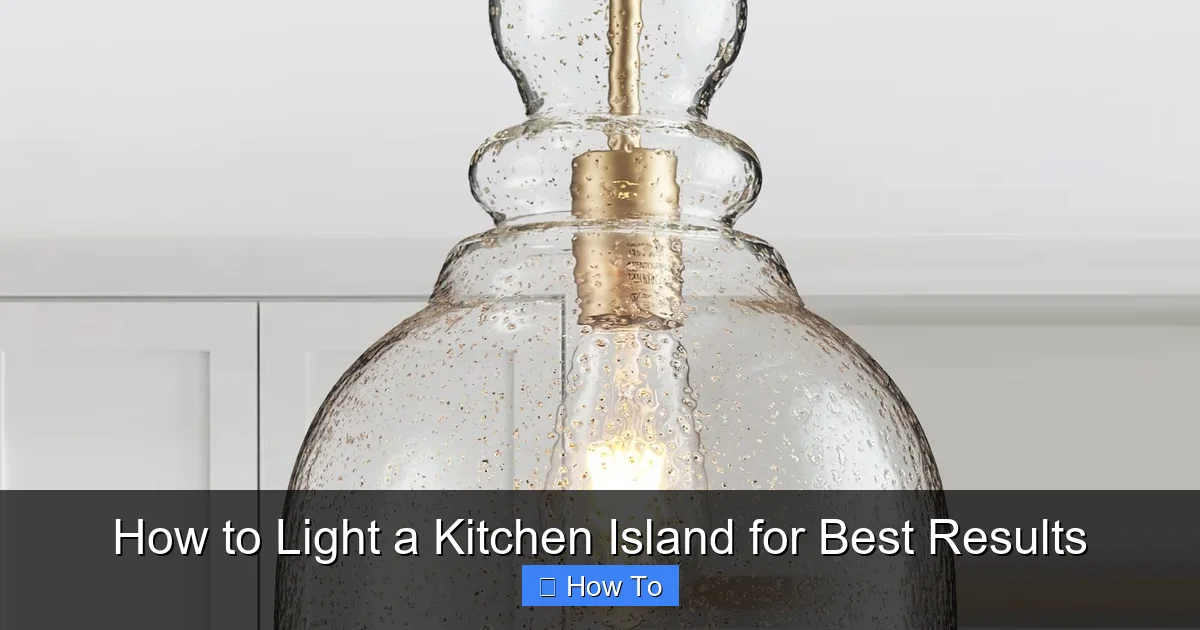
Learn more about how to light a kitchen island – How to Light a Kitchen Island for Best Results
Image source: m.media-amazon.com
Pendant Lights: The Go-To Choice
Kitchen island pendant lights are undeniably the most popular choice for illuminating kitchen islands. They offer focused downlight, making them excellent for task lighting, while also serving as a significant decorative element. They come in countless styles, sizes, and finishes.
- Single Pendants: Best for smaller islands or to create distinct zones on a longer island.
- Multi-Light Pendants: A single fixture with multiple drops, ideal for a cohesive look over medium to large islands.
- Linear Pendants: Perfect for long, rectangular islands, providing even light distribution without multiple ceiling boxes.
- Consideration: Ensure they are appropriately sized and spaced to avoid overcrowding or insufficient light.
Chandeliers: For Grand Statements
For very large kitchen islands, especially in open-concept homes or those aiming for a more luxurious aesthetic, a single, appropriately sized chandelier can be a stunning focal point. It provides excellent ambient lighting and can be paired with recessed task lighting for focused work areas. A chandelier can instantly elevate the grandeur of your kitchen.
Recessed Lighting: Subtle and Functional
Often used in conjunction with pendants, recessed lights (or can lights) offer clean, unobtrusive illumination. They are excellent for providing overall ambient light and can supplement pendant lighting for enhanced task illumination without adding visual clutter. When considering lighting design kitchen island, recessed fixtures offer a clean, seamless look.
Track Lighting: Flexible and Modern
Track lighting systems offer immense flexibility. Multiple heads can be positioned and directed precisely where light is needed, making them adaptable for various island activities. While often associated with modern or industrial aesthetics, track lighting can be surprisingly versatile and effective for kitchen island task lighting.
Under-Cabinet/Strip Lighting: Accent and Task Support
While not directly above the island, strip lighting mounted *under* an island’s countertop overhang can create a beautiful ambient glow, highlighting the island’s structure and acting as a subtle night light. Similarly, LED strip lighting integrated into shelves or toe-kicks can provide unexpected accent or even supplemental task light.
The Art of Placement and Height: Getting It Just Right
Selecting the right fixtures is only half the battle. Proper kitchen island light placement and height are crucial for both functionality and visual appeal. Incorrect placement can lead to glare, inadequate illumination, or obstruct sightlines.
General Height Guidelines: The 30-36 Inch Rule
A widely accepted guideline for pendant lights over a kitchen island is to hang them so the bottom of the fixture is approximately 30-36 inches above the countertop surface. This range typically provides ample task lighting without obstructing views or creating head-bumping hazards. However, adjust based on:
- Ceiling Height: Taller ceilings might allow for slightly higher fixtures to maintain proportion.
- Fixture Size: Larger pendants might need to hang a little higher to avoid overwhelming the space.
- User Height: Consider the height of the people who will be using the island most frequently.
- Sightlines: Ensure the fixtures don’t block the view of a TV, artwork, or conversation with someone on the other side of the island.
Spacing Multiple Pendants: Achieving Balance
For multiple pendants, spacing is key to achieving a balanced look and even light distribution. A common approach is to divide your island into equal sections. If you have two pendants, divide the island into thirds and place the pendants at the one-third and two-thirds marks. For three pendants, divide the island into quarters and place them at the one-quarter, one-half, and three-quarter marks. Always ensure there’s adequate clearance from the ends of the island (at least 6-12 inches).
Tips for Spacing:
- Measure Your Island: Get the exact length.
- Consider Fixture Width: Account for the diameter of your chosen pendants. Wider pendants will need more space between them.
- Visual Test: If possible, use balloons or cutouts of your fixture size taped to the ceiling to visualize placement before drilling.
Considering Island Size: Scale and Proportion
The size of your island dictates the scale of your lighting. A small island might only need one or two modest pendants, or even a single statement mini-chandelier. A very long island, however, could benefit from three or even four pendants, or a single linear fixture designed to span its length. Overly large fixtures on a small island will look cumbersome, while tiny pendants on a grand island will appear lost. The goal is harmonious proportion.
Clearance and Sightlines: Practical Considerations
Beyond aesthetics, practical considerations are vital. Ensure there’s enough space to comfortably move around your island without bumping into fixtures. If your island faces a living room or dining area, confirm that your lighting choices don’t impede conversations or block views. This is where the initial height guidelines become crucial for effective kitchen island lighting.
Illuminating Choices: Bulbs, Brightness, and Color Temperature
The type of bulbs you choose profoundly impacts the quality of light and the overall feel of your kitchen. Understanding lumens, color temperature, and bulb types is essential for optimal kitchen island lighting ideas.
Lumens vs. Watts: Understanding Brightness
Forget watts when judging brightness; focus on lumens. Lumens measure the total amount of visible light produced by a bulb. More lumens mean brighter light. For kitchen island task lighting, you generally want higher lumens to ensure clarity for food prep.
- Task Areas (like an island): Aim for approximately 70-80 lumens per square foot.
- General Kitchen Lighting: Around 50-70 lumens per square foot.
A typical 60-watt incandescent bulb produces about 800 lumens. Look for LED equivalents that match your desired lumen output.
Color Temperature (Kelvin): Setting the Mood
Color temperature, measured in Kelvin (K), describes the warmth or coolness of the light. This is a critical factor in creating the desired ambiance for your kitchen island.
- Warm White (2700K – 3000K): Creates a cozy, inviting atmosphere, similar to traditional incandescent bulbs. Ideal for islands primarily used for socializing.
- Cool White/Bright White (3500K – 4100K): More neutral, offering good clarity without being overly blue. Excellent for general kitchen use and balancing task and ambient needs.
- Daylight (5000K – 6500K): Mimics natural daylight, providing crisp, bright illumination. Best for focused task lighting where precision is paramount, though it can feel stark if not balanced with warmer tones.
For kitchen islands, a common recommendation is to use bulbs in the 3000K to 4000K range for a good balance of warmth and functionality. Consistency in color temperature across all your kitchen lighting is key for a cohesive look.
Bulb Types: Embracing LED Technology
While incandescent and halogen bulbs still exist, LED lighting kitchen island solutions are overwhelmingly superior due to their:
- Energy Efficiency: Consume significantly less power, leading to lower electricity bills.
- Longevity: Last much longer than traditional bulbs, reducing replacement frequency.
- Low Heat Output: Safer and more comfortable, especially in a kitchen environment.
- Versatility: Available in a wide range of brightnesses, color temperatures, and dimmable options.
Investing in quality LED bulbs will pay dividends in the long run for your kitchen island lighting.
Dimmer Switches: The Ultimate Control
Perhaps one of the most impactful upgrades you can make to your kitchen island lighting is installing dimmer switches. Dimmers allow you to adjust the light intensity, transforming your island from a brightly lit workspace to a softly illuminated gathering spot with the flick of a switch. This versatility is invaluable for adapting to different activities and moods throughout the day and evening.
Styling Your Island Lighting: Aesthetics and Integration
Beyond lumens and Kelvin, your kitchen island lighting needs to integrate seamlessly with your overall kitchen design. It’s an opportunity to reinforce your aesthetic and add character.
Matching Your Kitchen Style: Cohesion is Key
Your lighting fixtures should complement your kitchen’s existing style. Are you going for a rustic farmhouse look? Industrial chic? Sleek modern? Traditional elegance? There are fixtures to match every aesthetic.
- Modern/Minimalist: Clean lines, geometric shapes, metal finishes (chrome, matte black), often linear pendants.
- Farmhouse/Rustic: Wrought iron, distressed wood, glass jars, barn-style shades.
- Traditional: Bronze, brass, polished nickel, fabric shades, more ornate designs.
- Transitional: A blend of traditional and modern, often featuring classic shapes with contemporary finishes.
Don’t be afraid to mix materials, but ensure there’s a unifying element (e.g., all metal finishes, or a consistent color palette) to maintain harmony.
Scale and Proportion: Don’t Overwhelm or Underwhelm
We touched on this with placement, but it’s worth reiterating for style. The visual weight of your fixtures should be appropriate for your island’s size and the room’s ceiling height. A common mistake is choosing pendants that are too small and get lost, or too large and dominate the space.
Tip: For a rough guide for pendant width, consider it to be about 1/3 to 1/2 of the island’s width for single pendants, or the combined width of multiple pendants to not exceed 2/3 of the island’s length.
Material and Finish: Adding Texture and Interest
The materials and finishes of your chosen fixtures play a huge role in their visual impact. Consider how they interact with your countertops, cabinetry hardware, and other elements. Common choices include:
- Metals: Polished chrome, brushed nickel, brass, bronze, matte black.
- Glass: Clear, frosted, seeded, smoked – creates different light diffusion effects.
- Wood: For rustic or natural aesthetics.
Mixing metals is a popular trend, but do so intentionally. For instance, if your cabinet hardware is brushed nickel, consider a pendant with matte black accents to create contrast while still having a cohesive design.
Smart Lighting Integration: The Future is Bright
Embrace smart lighting kitchen island technology for ultimate convenience and personalization. Smart bulbs and fixtures can be controlled via apps, voice commands, or integrated into your home automation system. This allows for:
- Remote Control: Turn lights on/off or dim from your phone.
- Scheduling: Automate lighting routines.
- Color Changing: Adjust color temperature or even full-color spectrum for ambiance.
Smart lighting can truly elevate the functionality and modern appeal of your kitchen island lighting.
Common Kitchen Island Lighting Specifications & Considerations
To help visualize and plan your kitchen island lighting project, here’s a quick reference table summarizing key specifications and considerations.
| Aspect | Recommendation / Standard | Consideration |
|---|---|---|
| Fixture Height (bottom of fixture to countertop) | 30-36 inches | Adjust for ceiling height, fixture size, and user height. Maintain clear sightlines. |
| Lumen Output (Task Lighting) | ~70-80 lumens per sq. ft. of island | More lumens for detailed prep work, less for purely ambient. Use dimmers for flexibility. |
| Color Temperature (Kelvin) | 3000K – 4000K | 3000K for warmer, inviting feel. 4000K for brighter, more functional light. Match with overall kitchen. |
| Number of Pendants (for typical 6-8 ft island) | 2-3 pendants | Depends on island length and individual fixture size. Ensure even spacing. |
| Bulb Type | LED (Energy Star certified) | Energy efficiency, longevity, low heat, wide range of options (dimmable, smart). |
| Dimmers | Highly Recommended | Essential for mood control and adapting to various activities. |
| Clearance (edge of island to fixture center) | Min. 6-12 inches | Prevents overcrowding and ensures light is focused over the main surface. |
Conclusion: Illuminate Your Island, Elevate Your Kitchen
Mastering how to light a kitchen island is a nuanced blend of art and science. It requires understanding the distinct roles of task, ambient, accent, and decorative lighting, selecting the perfect fixtures, and meticulously planning their placement and height. By paying attention to details like lumens, color temperature, and embracing the versatility of dimmers and smart technology, you can create a lighting scheme that is both stunningly beautiful and supremely functional.
Your kitchen island is a hub of activity and an aesthetic centerpiece. Don’t let subpar lighting diminish its potential. Whether you’re embarking on a full kitchen renovation or simply looking to upgrade your current setup, the insights shared in this guide will empower you to make informed decisions. Invest in thoughtful kitchen island lighting, and watch as your entire kitchen transforms into a brighter, more efficient, and undeniably more inviting space. Illuminate wisely, live beautifully!
Frequently Asked Questions
What are the best types of lights to use for a kitchen island?
Pendant lights are a very popular choice, offering both focused task lighting and significant aesthetic appeal. For a more subtle look or lower ceilings, recessed lighting or flush mounts can provide excellent general illumination without visual clutter.
How high should pendant lights be hung above a kitchen island?
A good general guideline is to hang the bottom of your pendant lights approximately 30-36 inches above the island countertop. This height ensures effective illumination of the surface, avoids obstructing sightlines, and prevents them from being a head hazard.
How do I determine the right number of lights for my kitchen island?
A common rule of thumb is to use one pendant light for every 2 feet of island length, leaving about 6-12 inches from each end. For example, a 6-foot kitchen island would typically feature three evenly spaced pendants to ensure balanced light distribution.
What’s the ideal brightness level for kitchen island lighting?
Kitchen island lighting should be bright enough for various tasks, typically ranging from 75-100 watts equivalent per fixture, or 300-500 lumens per linear foot of island. Incorporating dimmers is highly recommended to adjust the light output for cooking, entertaining, or casual dining.
Should I use warm or cool light temperatures for my kitchen island?
For a kitchen island, a neutral white light (around 3000K-4000K) is generally preferred as it provides excellent visibility for food prep without feeling too stark or too yellow. This color temperature helps foods appear true-to-color and creates an inviting, functional atmosphere.
Can I combine different lighting styles over my kitchen island?
Absolutely! Combining different lighting styles, such as recessed lights for overall ambient illumination with decorative pendants for focused task lighting, can enhance both functionality and design. Ensure the fixtures complement each other in style and finish for a cohesive look that best lights a kitchen island.