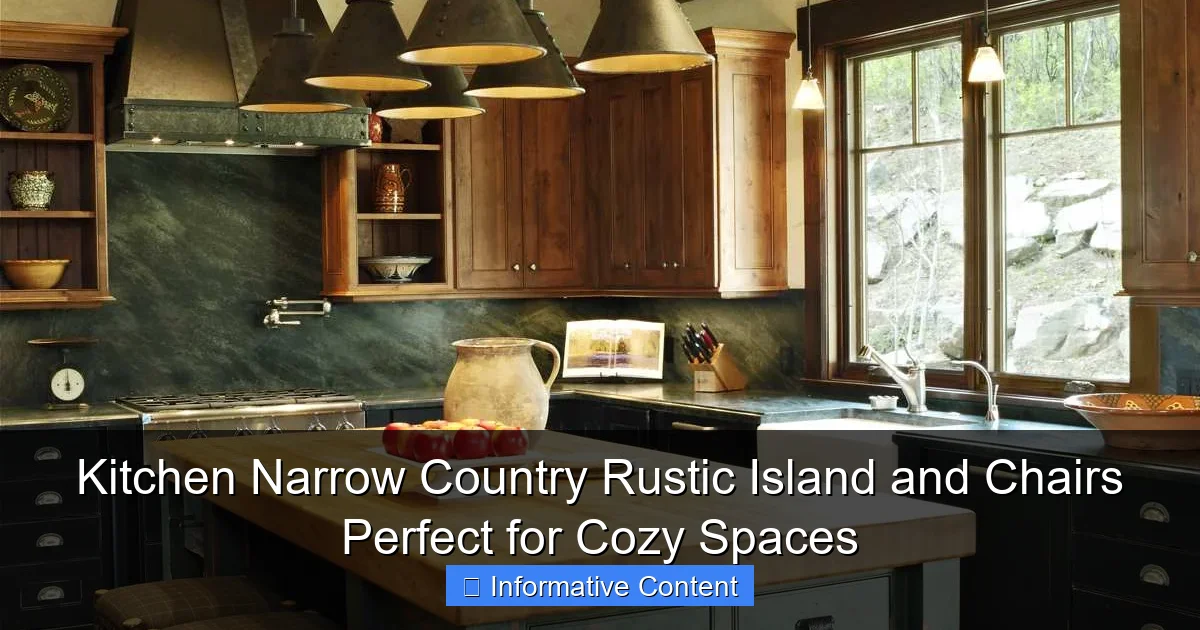
Featured image for kitchen narrow country rustic island and chairs
Image source: thenateshow.com
Maximize cozy charm in compact kitchens with the kitchen narrow country rustic island and chairs—a space-saving, stylish solution blending farmhouse appeal with practical design. Crafted from weathered wood and featuring built-in storage and two matching spindle-back chairs, this set delivers rustic warmth, functional seating, and effortless versatility for small dining nooks or breakfast corners.
Key Takeaways
- Maximize small spaces: Choose narrow islands for efficient kitchen layouts.
- Embrace rustic charm: Opt for weathered wood and vintage finishes.
- Prioritize functionality: Select islands with built-in storage or seating.
- Mix materials wisely: Pair wood islands with metal or upholstered chairs.
- Measure carefully: Ensure at least 36″ clearance around the island.
- Anchor with lighting: Hang pendant lights to define the island space.
- Create cohesion: Match chair style to island for a unified look.
📑 Table of Contents
- Why a Narrow Country Rustic Kitchen Island Might Be Your New Favorite Spot
- What Makes a Country Rustic Kitchen Island “Rustic” and Why It Works
- Why Narrow Is the New Normal (Especially for Small Kitchens)
- Choosing the Right Chairs: Style, Comfort, and Fit
- Styling Your Rustic Island for Maximum Coziness
- Real-World Examples: Narrow Rustic Islands in Action
- Final Thoughts: Is a Narrow Rustic Island Right for You?
Why a Narrow Country Rustic Kitchen Island Might Be Your New Favorite Spot
Let’s be honest—kitchen islands are often the heart of the home. But if you live in a cozy apartment, a small cottage, or a compact suburban kitchen, the idea of a full-sized island might feel like a dream too big for your space. That’s where the kitchen narrow country rustic island and chairs come in. These charming, space-smart setups blend farmhouse warmth with practical design, turning even the tiniest kitchen into a welcoming hub for cooking, eating, and gathering.
I remember visiting my aunt’s 800-square-foot farmhouse last summer. Her kitchen was small—no walk-in pantry, barely enough counter space for two appliances—but the moment I stepped in, I was drawn to a narrow wooden island with two mismatched chairs tucked underneath. It wasn’t fancy. It wasn’t huge. But it felt right. We shared coffee, laughed over old photos, and even prepped a simple dinner right there. It wasn’t about the size—it was about the feeling. That’s the magic of a well-chosen kitchen narrow country rustic island and chairs. It’s not just furniture. It’s a lifestyle upgrade for small spaces.
What Makes a Country Rustic Kitchen Island “Rustic” and Why It Works
When you hear “rustic,” you might picture a barn, a weathered wooden table, or a log cabin. In kitchen design, country rustic means more than just old wood—it’s a vibe. It’s about warmth, simplicity, and a connection to nature. But how does that translate into a kitchen island, especially a narrow one? Let’s break it down.
Materials That Define Rustic Charm
The heart of any rustic island is the material. Here’s what you’ll typically see—and why it matters:
- Reclaimed wood: This is the gold standard. Reclaimed barn wood, salvaged floorboards, or even old fence panels bring history and character. Each knot, crack, and stain tells a story. It’s eco-friendly, durable, and adds instant warmth.
- Solid wood (pine, oak, or walnut): If reclaimed isn’t available, solid wood with a distressed finish mimics the look. Pine is budget-friendly and easy to sand and stain. Oak and walnut offer more durability and a richer tone.
- Metal accents: Black iron or aged brass hardware, brackets, or legs add contrast and industrial edge. Think of a farmhouse sink with iron supports—it’s a subtle but powerful detail.
- Butcher block countertops: A thick, end-grain wood top not only looks rustic but is practical for chopping and prepping. It’s softer than stone, so it’s kinder to knives and dishes.
Design Cues That Say “Country”
Beyond materials, it’s the little things that make a kitchen island feel truly rustic:
- Distressed finishes: Light sanding, wire brushing, or white-washing gives wood that lived-in, weathered look.
- Shaker-style cabinets: Simple, flat-panel doors with minimal detailing keep the focus on the wood grain.
- Open shelving or slat sides: Instead of solid panels, slats or open shelves let light through and show off your favorite mugs, cookbooks, or herbs.
- Farmhouse sink integration: A deep, apron-front sink (like a fireclay model) pairs beautifully with rustic wood and adds vintage charm.
Pro tip: If you’re DIY-inclined, you can refinish an old dresser or sideboard into a narrow island. I once turned a vintage pine chest into a kitchen island by adding casters, a butcher block top, and two open shelves. It cost me $120 and took a weekend. The result? A one-of-a-kind piece that still gets compliments five years later.
Why Narrow Is the New Normal (Especially for Small Kitchens)
Not everyone has a 20-foot kitchen. In fact, the average U.S. kitchen is about 100 to 200 square feet. That’s why narrow kitchen islands are having a moment—and for good reason. A well-designed narrow island can solve space issues without sacrificing function or style.
Space-Saving Dimensions to Consider
“Narrow” doesn’t mean “tiny.” It means smart. Here’s what works:
- Width: 18 to 24 inches is ideal. This fits between standard cabinets (24” apart) and leaves room to walk.
- Length: 36 to 48 inches gives you enough surface for prep and seating.
- Height: 36 inches is standard for counter-height seating. If you want a breakfast bar vibe, go for 42 inches (bar height).
For example, a 24” x 36” island with two stools tucked underneath uses less than 6 square feet of floor space. That’s the size of a small rug. But it adds seating, storage, and counter space—all in one.
Multi-Functional Features That Pack a Punch
A narrow island isn’t just a table. It’s a Swiss Army knife of kitchen design. Here’s how to make it work harder:
- Storage underneath: Add drawers for cutlery, shelves for cookbooks, or a wine rack. Even a small cabinet for trash or recycling helps.
- Integrated power strip or USB ports: Charge your phone or plug in a blender without reaching for outlets.
- Wheels or casters: Make it mobile! Roll it out for extra prep space, then tuck it back when not in use.
- Overhang for seating: A 10- to 12-inch overhang on one side lets you add stools. Just make sure there’s 24 to 30 inches of clearance in front so people can sit and stand easily.
< Pull-out cutting board or tray: Great for meal prep without cluttering the counter.
Real-life example: My friend Sarah lives in a 700-square-foot apartment. Her kitchen is 8 feet wide. She bought a 24” x 42” rustic island with a drop-leaf extension. When she hosts dinner, she raises the leaf for extra counter space. When it’s just her, she folds it down. Two stools fit perfectly underneath. Total cost: $450. It’s her most-used kitchen upgrade.
Choosing the Right Chairs: Style, Comfort, and Fit
Let’s talk chairs. The right pair (or trio) can make or break your kitchen narrow country rustic island and chairs setup. But it’s not just about looks—comfort and fit are just as important.
Matching Chairs to Your Rustic Vibe
You want chairs that complement the island, not compete with it. Here are some rustic-friendly styles:
- Wooden ladder-back chairs: Classic farmhouse look. Often made of pine or oak. Look for ones with a slightly distressed finish to match the island.
- X-back or slat-back chairs: These have a more modern-rustic feel. Great if you want a cleaner line.
- Woven rush or cane seats: These add texture and warmth. Plus, they’re breathable—no sweaty backs on hot days.
- Metal-and-wood combos: Iron legs with a wooden seat blend rustic and industrial. Ideal if your kitchen has black accents.
Comfort and Ergonomics: Don’t Sacrifice Your Back
Chairs should be comfy for 30 minutes of coffee or 2 hours of dinner. Here’s what to check:
- Seat height: For a 36-inch island, choose 24-inch stools. For a 42-inch bar, go with 30-inch stools. Measure from floor to seat.
- Seat depth: 15 to 17 inches is ideal. Too shallow? Your knees will stick out. Too deep? You’ll slide forward.
- Back support: A 12- to 15-inch back is enough for casual dining. If you plan to sit for long meals, look for a taller back or a slight recline.
- Footrests: Essential for bar-height stools. They reduce leg fatigue and keep your posture natural.
Pro Tips for Chair Placement
- Clearance: Leave 24 to 30 inches between the edge of the island and the wall or cabinets. This gives people room to sit and stand.
- Spacing between chairs: Aim for 18 to 24 inches per person. Less than 18 inches feels cramped.
- Tuck them in: When not in use, slide the chairs under the island to save space. A 12-inch overhang is perfect for this.
My mistake: I once bought two gorgeous rustic stools without checking the seat height. They were 28 inches, but my island was only 34 inches tall. My feet dangled like a kid at the adult table. Lesson learned: always measure first.
Styling Your Rustic Island for Maximum Coziness
Now that you have your kitchen narrow country rustic island and chairs, it’s time to style it. This is where you turn a functional piece into a cozy, inviting spot.
Color Palettes That Say “Country Rustic”
Think earthy, natural, and warm. Here are some go-to combos:
- Neutrals: Cream, beige, and soft gray with natural wood tones. Add a pop of sage green or navy blue in textiles.
- Two-tone: Paint the island base white or gray, then use a darker stain (like walnut) for the countertop. This adds depth without overwhelming the space.
- Monochromatic wood: Stick to one wood tone (e.g., all pine) for a clean, cohesive look. Use texture (like a rough-hewn top) to add interest.
Accessories That Add Warmth
Less is more here. A few well-chosen items go a long way:
- Textiles: A linen runner, woven placemats, or a crocheted tablecloth add softness. Avoid anything too busy—rustic is about simplicity.
- Plants: A small potted herb (like rosemary or thyme) or a trailing pothos brings life. Just make sure it gets enough light.
- Lighting: A pendant light above the island (like a mason jar or wrought iron fixture) adds ambiance. Use warm white bulbs (2700K).
- Everyday items on display: A ceramic pitcher, a wooden spoon holder, or a stack of vintage cookbooks make the space feel lived-in.
Seasonal Touches (Without the Clutter)
Want to keep it fresh? Swap out small items with the seasons:
- Spring: Pastel mugs, fresh daffodils, a linen napkin set.
- Fall: Mini pumpkins, a cinnamon-scented candle, a wool runner.
- Winter: Pinecones, a knit table runner, a bowl of oranges.
Just remember: one or two seasonal items are enough. Too many, and it starts to look like a craft store.
Real-World Examples: Narrow Rustic Islands in Action
Theory is great, but real-life examples are better. Let’s look at how people are using kitchen narrow country rustic island and chairs in their homes—and what they love (and what they’d change).
Case Study 1: The Urban Apartment (New York City)
Space: 10’ x 8’ kitchen in a pre-war building.
Island: 24” x 40” reclaimed wood island with open slat sides and a drop-leaf extension. Two iron-and-wood stools.
Features: Wheels, built-in spice rack, USB port.
Owner’s take: “I use it every day. It’s where I eat breakfast, work from home, and prep dinner. The wheels are a lifesaver when I have guests. The only downside? The wood needs oiling every few months to prevent drying.”
Case Study 2: The Farmhouse Kitchen (Vermont)
Space: 12’ x 14’ kitchen with original 1920s cabinets.
Island: 22” x 48” pine island with a butcher block top. Two ladder-back chairs with rush seats.
Features: Deep farmhouse sink, open shelves, towel bar on one end.
Owner’s take: “It fits the house perfectly. The chairs are comfy for long dinners. I wish I’d added more drawer space, though. I keep running out of room for utensils.”
Case Study 3: The Tiny Home (Oregon)
Space: 6’ x 8’ kitchenette in a 300-square-foot home.
Island: 18” x 36” fold-down island (mounted on the wall). Two foldable stools that hang on the side.
Features: Magnetic knife strip, fold-down tray for prep, hidden trash compartment.
Owner’s take: “It’s genius for small spaces. When it’s up, I have a full prep area. When it’s down, I gain 2 feet of walking space. The wood matches my flooring, so it blends in.”
Comparison Table: Popular Narrow Rustic Island Options
| Model | Dimensions | Material | Features | Price Range |
|---|---|---|---|---|
| Farmhouse Drop-Leaf Island (IKEA) | 23.5″ x 35.5″ | Pine, particleboard | Drop-leaf, wheels, open shelf | $250–$300 |
| Rustic Reclaimed Wood Island (Etsy) | 24″ x 42″ | Reclaimed barn wood | Butcher block top, casters, towel bar | $500–$800 |
| Fold-Down Wall-Mounted Island (Amazon) | 18″ x 36″ (folded) | Pine, metal | Wall-mounted, foldable, magnetic strip | $150–$200 |
| Custom Pine Island (Local Carpenter) | 20″ x 40″ | Solid pine | Farmhouse sink, drawers, open shelves | $600–$1,200 |
As you can see, there’s a range of options—from budget-friendly to custom. The key is to match your needs (storage, seating, mobility) with your space and style.
Final Thoughts: Is a Narrow Rustic Island Right for You?
So, should you go for a kitchen narrow country rustic island and chairs? If you value warmth, simplicity, and smart design, the answer is probably yes. It’s not just a piece of furniture—it’s a way to make your kitchen feel more like home.
Think about it: a small space doesn’t mean a cold space. A narrow island brings people together. It’s where you sip coffee in the morning, chat with a friend over wine, or help your kids with homework. The rustic style adds soul. The narrow size makes it accessible, even in the coziest homes.
But here’s the truth: it’s not perfect for everyone. If you cook large meals daily or host big gatherings, a larger island might be better. And if you hate maintaining wood, a laminate or stone top could be more practical. But for most small-space dwellers, the charm and function of a narrow rustic island far outweigh the drawbacks.
My advice? Start small. Try a simple island with two chairs. See how it feels. Move it around. Style it with what you love. You might find, like my aunt and so many others, that this little piece of furniture becomes the heart of your home—no matter how narrow the space.
Frequently Asked Questions
What makes a kitchen narrow country rustic island ideal for small spaces?
A kitchen narrow country rustic island is designed with compact dimensions and smart storage solutions, making it perfect for tight kitchens. Its rustic charm adds warmth while maximizing functionality without overwhelming the space.
Can I fit a rustic island with chairs in a galley-style kitchen?
Yes! A narrow country rustic island with slim-profile chairs can fit seamlessly in a galley kitchen. Opt for stools with backless or foldable designs to save space when not in use.
What materials are best for a country rustic island and chairs set?
Solid wood (like pine or oak) with distressed finishes and wrought iron accents create an authentic country rustic look. These materials ensure durability while adding timeless charm to your kitchen narrow country rustic island.
How do I choose the right chair height for my rustic island?
Measure the island’s height first: standard counters (36″) pair with 24″ chairs, while bar-height (42″) islands need 30″ chairs. Always allow 10-12″ of legroom between the seat and countertop for comfort.
Are rustic island chairs comfortable for long meals?
Many country rustic chairs feature contoured seats, padded cushions, or curved backs for comfort. Look for ergonomic designs that blend cozy farmhouse style with practical support.
How do I maintain the rustic look of my island and chairs over time?
Regularly dust wooden surfaces and use mild cleaners to preserve the finish. Touch up scratches with matching wood wax to keep your kitchen narrow country rustic island looking fresh.