
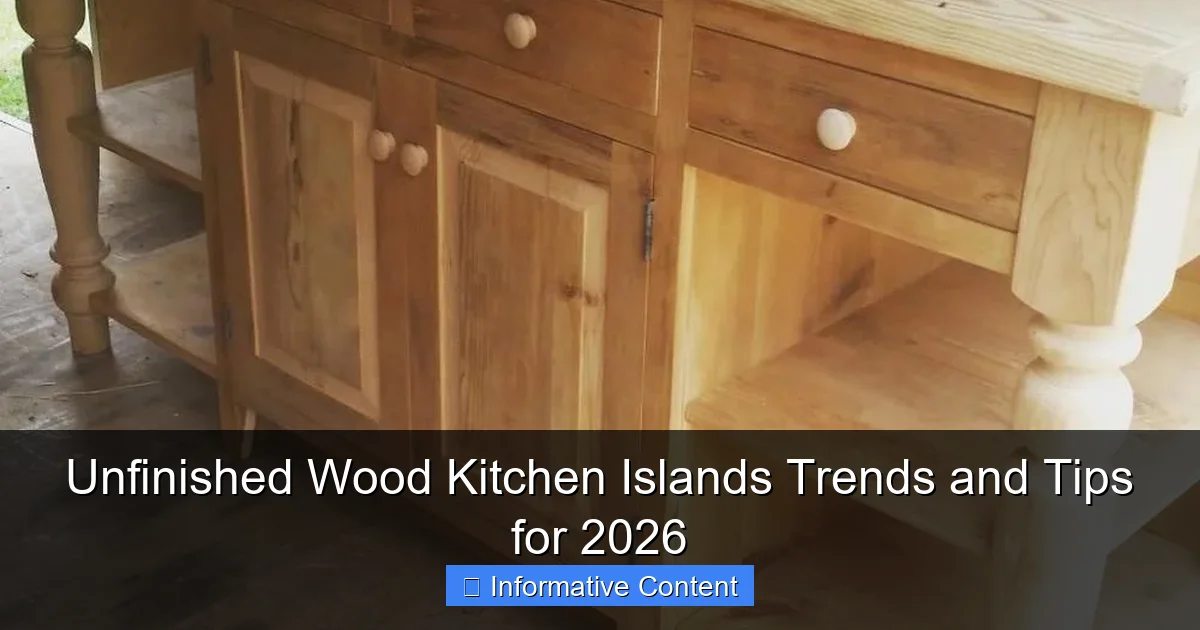
Featured image for unfinished wood kitchen islands
Image source: i.pinimg.com
Unfinished wood kitchen islands are set to dominate 2026 design trends, offering a raw, customizable aesthetic that blends rustic charm with modern versatility. Ideal for DIY enthusiasts and eco-conscious homeowners, these islands allow for personalized stains, paints, or natural sealing to match any kitchen style—from farmhouse to minimalist. Their adaptability and sustainable appeal make them a top choice for renovators seeking both character and long-term value.
Key Takeaways
- Choose sustainably sourced wood for eco-friendly, durable kitchen islands.
- Seal properly to protect unfinished wood from moisture and stains.
- Pair with bold countertops for striking contrast and visual balance.
- Opt for modular designs to customize size and function effortlessly.
- Stain or paint later to match evolving kitchen aesthetics seamlessly.
- Add vintage hardware to enhance rustic charm and character instantly.
📑 Table of Contents
- The Rise of Unfinished Wood Kitchen Islands in 2026
- Why Unfinished Wood Kitchen Islands Are Taking Over
- Top Trends Shaping Unfinished Wood Islands in 2026
- Choosing the Right Wood: A Practical Guide
- DIY vs. Pre-Made: What’s Best for You?
- Maintenance and Care: Keeping Your Island Looking Great
- Cost Comparison: Unfinished Wood vs. Other Materials
- Final Thoughts: Is an Unfinished Wood Island Right for You?
The Rise of Unfinished Wood Kitchen Islands in 2026
Remember when kitchens were all about glossy finishes and stainless steel? Those days are slowly fading as homeowners and designers rediscover the raw, earthy charm of unfinished wood kitchen islands. There’s something undeniably inviting about the way natural wood grain catches the light, the way it feels under your fingertips—unvarnished, unapologetically real. In 2026, we’re not just seeing a trend; we’re witnessing a shift toward authenticity, sustainability, and a desire to bring the outdoors in. Unfinished wood kitchen islands are leading the charge, offering a blank canvas for creativity while grounding the heart of the home in warmth and character.
Why this sudden love affair with raw wood? Maybe it’s our collective craving for simplicity after years of digital overload. Or perhaps it’s the growing awareness of sustainable materials and the environmental impact of over-processing. Whatever the reason, unfinished wood islands are popping up in everything from minimalist Scandinavian kitchens to cozy farmhouse setups. They’re not just a design choice—they’re a statement. And the best part? They’re more versatile than you might think. Whether you’re a DIY enthusiast ready to sand and seal your own island or a busy homeowner looking for a low-maintenance, high-impact upgrade, there’s an unfinished wood island that fits your lifestyle. Let’s dive into the trends shaping this movement and how you can make it work for you in 2026.
Why Unfinished Wood Kitchen Islands Are Taking Over
So, what’s behind the surge in popularity? It’s not just about aesthetics—though the look is undeniably appealing. Unfinished wood kitchen islands offer a unique blend of natural beauty, customization potential, and environmental friendliness that’s hard to match with prefinished alternatives. Let’s break down the real reasons they’re becoming the go-to choice for modern kitchens.
Visual guide about unfinished wood kitchen islands
Image source: i.pinimg.com
The Allure of Natural Texture and Grain
One of the biggest draws of unfinished wood is its raw texture. Unlike laminate or painted finishes, unfinished wood lets the grain, knots, and imperfections shine through. Take, for example, a reclaimed oak island with visible saw marks and subtle color variations. It tells a story—each scratch and swirl a reminder of its past life. This isn’t just a countertop; it’s a piece of history. In a world where mass-produced furniture dominates, unfinished wood offers something rare: individuality. No two islands are exactly alike, and that’s part of the charm.
And it’s not just about looks. The tactile experience matters. Running your hand over unfinished wood feels different—more organic, more connected to nature. It’s a small detail, but in a room where you spend hours cooking, cleaning, and gathering, it makes a difference.
Customization: Your Kitchen, Your Way
Here’s where unfinished wood truly shines: you control the final look. Want a light, beachy vibe? Sand it smooth and apply a clear matte oil. Dreaming of a rich, dark espresso finish? A few coats of walnut stain will do the trick. You can even mix techniques—like whitewashing for a coastal cottage feel or leaving it raw for a modern rustic look. This level of customization is nearly impossible with prefinished islands, which often lock you into a specific color and sheen.
Take Sarah from Portland, for instance. She bought a raw pine island online and transformed it into a two-tone centerpiece—natural wood on the top, painted navy on the base—to match her kitchen’s color scheme. “It cost half as much as a custom piece,” she said, “and it feels more personal.” That’s the power of unfinished wood: it’s a DIY-friendly material that rewards creativity.
Sustainability and Eco-Friendly Appeal
Let’s talk about the planet. Unfinished wood often comes from reclaimed sources or sustainably harvested forests, making it a greener choice than plastic-based laminates or heavily processed materials. And because it’s unfinished, there’s no off-gassing from factory-applied varnishes or paints—great for indoor air quality. Plus, when the island eventually reaches the end of its life, it’s biodegradable (unlike synthetic composites).
Brands like *EcoIsland* and *Reclaimed Wood Co.* now offer FSC-certified unfinished islands, complete with documentation on their sourcing. It’s a small but growing market, and one that resonates with eco-conscious buyers in 2026.
Top Trends Shaping Unfinished Wood Islands in 2026
The unfinished wood movement isn’t static—it’s evolving. Designers and homeowners are pushing the boundaries, experimenting with new shapes, materials, and finishes. Here are the top trends defining the look of unfinished wood kitchen islands this year.
Live-Edge and Organic Shapes
Forget straight lines and perfect symmetry. In 2026, live-edge slabs are stealing the spotlight. These are raw wood pieces that retain the natural curve of the tree’s outer bark, often with dramatic grain patterns. A live-edge island with a river of epoxy filling a split in the wood? Yes, please. It’s nature meets art, and it’s perfect for adding visual interest to an otherwise neutral kitchen.
But it’s not just about aesthetics. The organic shape encourages a more relaxed, informal vibe—ideal for open-concept spaces where the kitchen doubles as a gathering spot. Just keep in mind that live-edge islands can be heavier and require more structural support, so plan accordingly.
Mixed Materials: Wood Meets Metal, Stone, and More
One of the coolest trends is the fusion of unfinished wood with other materials. Think: a raw walnut island with blackened steel legs, or a pine countertop paired with a concrete base. This mix-and-match approach adds depth and contrast, preventing the wood from feeling too “matchy-matchy.”
For example, a client in Austin paired a reclaimed teak island with brass inlays and a hammered copper sink. “It’s like a sculpture,” she told her designer. “Every material plays off the others.” The key is balance—let one material dominate (usually the wood) and use others as accents.
Matte and Natural Finishes Over High-Gloss
Glossy finishes are out. In 2026, it’s all about matte, satin, or natural oils that preserve the wood’s texture. Tung oil, linseed oil, and beeswax are popular choices because they enhance the grain without creating a plastic-like shine. They’re also easy to reapply when the island starts to look dull—just sand lightly and add another coat.
Pro tip: Avoid polyurethane unless you’re going for a very specific look. It tends to yellow over time and can feel too synthetic for the “raw” vibe most people want.
Choosing the Right Wood: A Practical Guide
Not all woods are created equal—especially when it comes to kitchen islands, which face daily wear and tear. Here’s how to pick the right type of wood for your unfinished island, based on durability, cost, and style.
Hardwood vs. Softwood: What’s the Difference?
Hardwoods (like oak, maple, and walnut) come from deciduous trees and are generally more durable. They resist scratches and dents better, making them ideal for high-traffic kitchens. Softwoods (like pine, cedar, and fir) are lighter and easier to work with but can show wear more quickly. That said, softwoods have their place—especially if you love the look of a rustic, lived-in island.
For example, a pine island might show knife marks over time, but some homeowners see that as part of the charm. “It’s like a journal of our meals,” says Mark from Vermont. “Every scratch has a story.”
Top 5 Woods for Unfinished Kitchen Islands
Here’s a quick breakdown of the most popular choices:
- Oak (White or Red): Durable, affordable, and widely available. Great for traditional or modern kitchens. Red oak has a warm tone; white oak is slightly more water-resistant.
- Walnut: Rich, dark color with a luxurious feel. More expensive but worth it for a high-end look. Works well with both light and dark kitchens.
- Maple: Hard, light-colored, and smooth. Resists wear and tear but can be harder to stain evenly.
- Pine: Budget-friendly and easy to customize. Best for casual, farmhouse, or cottage-style kitchens. Requires more maintenance.
- Reclaimed Wood (Barn Wood, Teak, etc.): Unique character and eco-friendly. Can be pricey due to sourcing, but the history and texture are unmatched.
Consider the Grain Pattern and Color
Before you buy, think about how the wood’s grain will interact with your kitchen’s existing elements. Open grain (like oak) adds texture but can trap crumbs—great for a cozy look, not ideal if you’re a neat freak. Closed grain (like maple) is smoother and easier to clean but may feel too “clean” for a rustic space.
Color matters too. Light woods (pine, maple) brighten a dark kitchen, while dark woods (walnut, reclaimed teak) add warmth to a light space. Test samples in your kitchen’s natural light before committing.
DIY vs. Pre-Made: What’s Best for You?
One of the biggest decisions you’ll face is whether to build your own unfinished wood island or buy a pre-made one. Both have pros and cons, and the right choice depends on your skills, budget, and timeline.
The DIY Route: Pros and Cons
Building your own island lets you customize every detail—size, shape, storage, and finish. It’s also usually cheaper, especially if you source materials locally. But it’s not for everyone.
Pros:
- Total creative control
- Lower cost (especially if using reclaimed wood)
- Satisfaction of building something yourself
Cons:
- Time-consuming (plan for 2-4 weekends)
- Requires tools (table saw, sander, clamps)
- Risk of mistakes (crooked cuts, uneven finishes)
For beginners, start small. A simple rectangular island with a single shelf is a great first project. Use a pre-cut countertop (available at home improvement stores) to save time on sanding and leveling.
Pre-Made Islands: Convenience and Quality
If DIY isn’t your thing, pre-made unfinished islands are a solid alternative. Brands like *IKEA*, *Pottery Barn*, and *Etsy* artisans offer ready-to-assemble or fully built options. These come in standard sizes, so you’ll need to measure your space carefully.
Pros:
- No tools or skills required
- Faster installation (often under a day)
- Professional craftsmanship
Cons:
- Less customization
- Higher cost (especially for solid wood)
- May not fit unique kitchen layouts
Pro tip: Look for “unfinished” or “raw wood” in the product description. Some “natural” finishes are actually sealed with a thin coat of varnish—not truly unfinished.
Maintenance and Care: Keeping Your Island Looking Great
Unfinished wood is low-maintenance, but it does require some TLC to stay beautiful. Here’s how to protect your island and keep it looking fresh for years.
Sealing and Finishing Basics
Even if you love the raw look, sealing your island is a must. Unsealed wood absorbs spills, stains, and odors—and can warp or crack over time. The good news? You don’t need to go full-gloss. Here are the best options:
- Food-Safe Oil (Tung or Linseed): Enhances grain, dries matte, and is safe for food prep. Reapply every 6-12 months.
- Beeswax: Adds a soft sheen and is easy to reapply. Best for low-use islands or decorative pieces.
- Water-Based Polyurethane (Satin): More durable than oil but still maintains a natural look. Apply 2-3 coats for protection.
Always sand lightly between coats for a smooth finish. And avoid oil-based polyurethanes—they yellow and feel too synthetic.
Daily Care Tips
To keep your island in top shape:
- Wipe spills immediately with a damp cloth
- Use trivets for hot pans
- Clean with mild soap and water—never harsh chemicals
- Rotate cutting boards to prevent uneven wear
For scratches, try a wax filler or simply sand lightly and re-oil. The beauty of unfinished wood is that imperfections add character, not detract from it.
Long-Term Protection
Every 1-2 years, give your island a refresh. Lightly sand the surface (220-grit sandpaper works well) and apply a new coat of oil or wax. This restores the luster and adds another layer of protection. Think of it like a spa day for your kitchen island.
Cost Comparison: Unfinished Wood vs. Other Materials
How does an unfinished wood island stack up against other popular kitchen countertop materials? Here’s a data-driven look at average costs, durability, and maintenance.
| Material | Avg. Cost (per sq. ft.) | Lifespan (years) | Maintenance Level | Best For |
|---|---|---|---|---|
| Unfinished Wood (Hardwood) | $25 – $60 | 10-20+ | Low-Medium | Rustic, modern, eco-friendly kitchens |
| Unfinished Wood (Pine/Softwood) | $15 – $35 | 5-10 | Medium | Budget-friendly, casual kitchens |
| Granite | $40 – $100 | 30+ | Low | High-end, durable kitchens |
| Quartz | $50 – $120 | 20+ | Low | Modern, low-maintenance kitchens |
| Laminate | $10 – $30 | 10-15 | Low | Budget kitchens, rental properties |
As you can see, unfinished wood offers a sweet spot between cost and longevity—especially if you choose a hardwood. And while it requires a bit more care than granite or quartz, the payoff in warmth and character is unmatched.
Final Thoughts: Is an Unfinished Wood Island Right for You?
By now, you’ve probably realized that an unfinished wood kitchen island isn’t just a trend—it’s a design philosophy. It’s about embracing imperfections, celebrating nature, and creating a space that feels alive. Whether you go DIY or buy pre-made, light or dark, simple or sculptural, there’s an unfinished wood island that fits your story.
Of course, it’s not for everyone. If you need a completely stain-proof, no-maintenance surface, granite or quartz might be better. But if you love the idea of a kitchen that ages gracefully, that tells a story with every scratch and grain, then unfinished wood is worth the effort. In 2026, as we continue to seek authenticity in our homes, these islands offer something rare: a connection to the natural world, right in the heart of our kitchens.
So, what’s next? Start small. Visit a local lumberyard or browse Etsy for inspiration. Test a few finishes on scrap wood. Talk to friends who’ve done it. The journey to your perfect island begins with a single step—and maybe a little sawdust.
Frequently Asked Questions
What are the benefits of choosing unfinished wood kitchen islands in 2026?
Unfinished wood kitchen islands offer a blank canvas for customization, allowing you to stain or paint them to match your evolving decor trends in 2026. Their natural texture and sustainability also appeal to eco-conscious homeowners seeking timeless, adaptable designs.
How do I maintain an unfinished wood kitchen island to ensure longevity?
Regularly clean with a damp cloth and apply a food-safe oil or wax every 3-6 months to prevent drying and cracking. Avoid harsh chemicals to preserve the wood’s natural character and protect against moisture damage.
Can unfinished wood kitchen islands be customized for small kitchens?
Yes! Unfinished wood islands can be tailored to fit compact spaces with features like foldable countertops, built-in storage, or slim profiles. Their neutral tone also creates an airy feel in tight layouts.
Are unfinished wood kitchen islands durable for heavy daily use?
When properly sealed and maintained, unfinished wood islands are highly durable and withstand daily wear. Hardwood options like oak or maple offer superior strength for busy kitchens.
What trends pair well with unfinished wood kitchen islands in 2026?
Pair unfinished wood islands with matte black hardware, organic textures (like rattan or stone), and earthy tones for a 2026 “warm minimalism” look. Open shelving and integrated plants also enhance the natural vibe.
How do I choose the right finish for my unfinished wood kitchen island?
Consider your lifestyle—opt for a matte sealant for rustic charm or a glossy finish for easier cleanup. Test samples on scrap wood to visualize how light and stains interact with the grain.