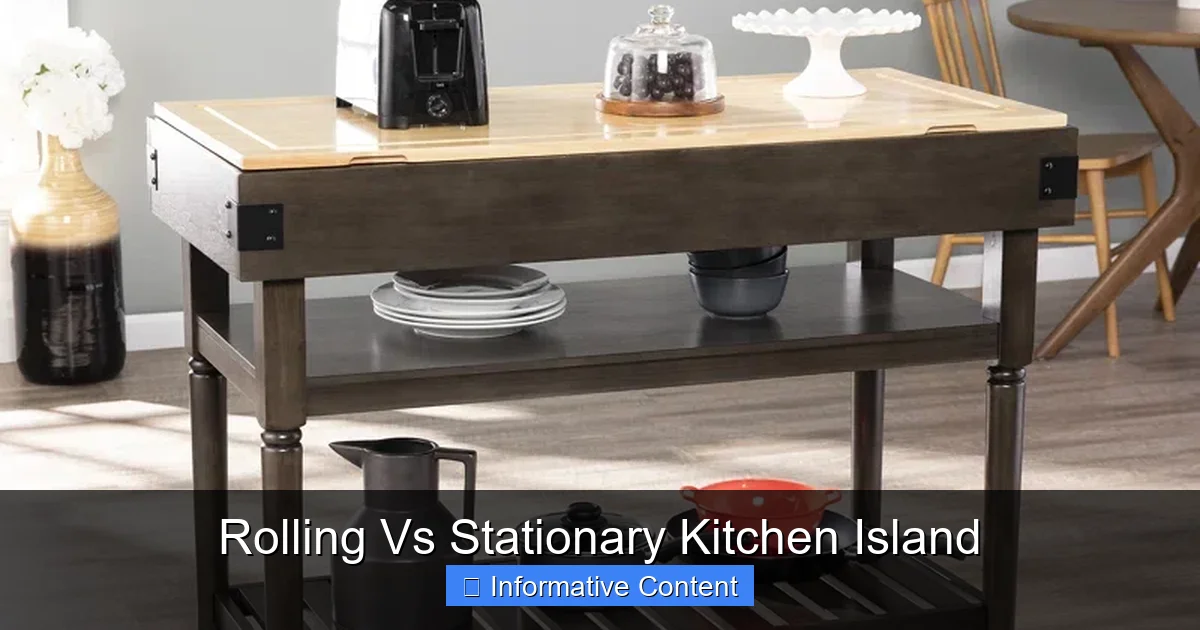
Featured image for rolling vs stationary kitchen island
Image source: i2.wp.com
Choosing between a rolling and stationary kitchen island depends on your need for flexibility versus stability. Rolling islands offer easy mobility and space-saving versatility, making them ideal for small kitchens or those who frequently rearrange, while stationary islands provide a permanent, sturdy workspace perfect for heavy-duty cooking and built-in storage. Your kitchen layout and lifestyle should drive the decision.
Key Takeaways
- Choose rolling islands for flexible layouts and easy reconfiguration during cooking.
- Stationary islands offer superior stability for heavy appliances and frequent use.
- Measure your space before deciding—rolling islands need clearance for movement.
- Prioritize storage with built-in shelves or cabinets in both island types.
- Lockable wheels on rolling islands prevent unwanted movement during food prep.
- Match your style—both types come in customizable designs and materials.
- Consider long-term use: stationary islands add permanent value to kitchen remodels.
📑 Table of Contents
- Rolling Vs Stationary Kitchen Island: Which One is Right for You?
- Understanding the Basics: What Are Rolling and Stationary Kitchen Islands?
- Mobility and Flexibility: The Big Advantage of Rolling Islands
- Stability and Functionality: Why Stationary Islands Win for Serious Cooks
- Space and Layout Considerations: Matching the Island to Your Kitchen
- Aesthetics, Style, and Long-Term Value
- Cost, Installation, and Maintenance: The Practical Side
- Final Thoughts: Making the Right Choice for Your Kitchen
Rolling Vs Stationary Kitchen Island: Which One is Right for You?
Imagine this: You’re hosting a dinner party, and your kitchen is buzzing with energy. The sizzle of garlic in olive oil, the clink of wine glasses, and the laughter of friends fill the air. Suddenly, you need to grab that extra cutting board or a forgotten bottle of olive oil from the pantry. But your kitchen island—your supposed command center—isn’t helping. It’s either stuck in the middle of the room, blocking your path, or too far from where you’re cooking. Sound familiar?
This is where the rolling vs stationary kitchen island debate comes into play. Whether you’re renovating your kitchen or just looking for a functional upgrade, choosing between a mobile (rolling) or fixed (stationary) kitchen island can make or break your cooking experience. These islands aren’t just about extra counter space—they’re about workflow, storage, style, and even social dynamics. In this guide, we’ll dive deep into the pros, cons, and real-life trade-offs of both options, so you can make a decision that fits your lifestyle, not just your square footage.
Understanding the Basics: What Are Rolling and Stationary Kitchen Islands?
Before we compare them, let’s get clear on what we’re talking about. A kitchen island is a freestanding unit in the center of your kitchen that typically includes countertop space, storage, and sometimes appliances like sinks or cooktops. The key difference between rolling and stationary models lies in their mobility.
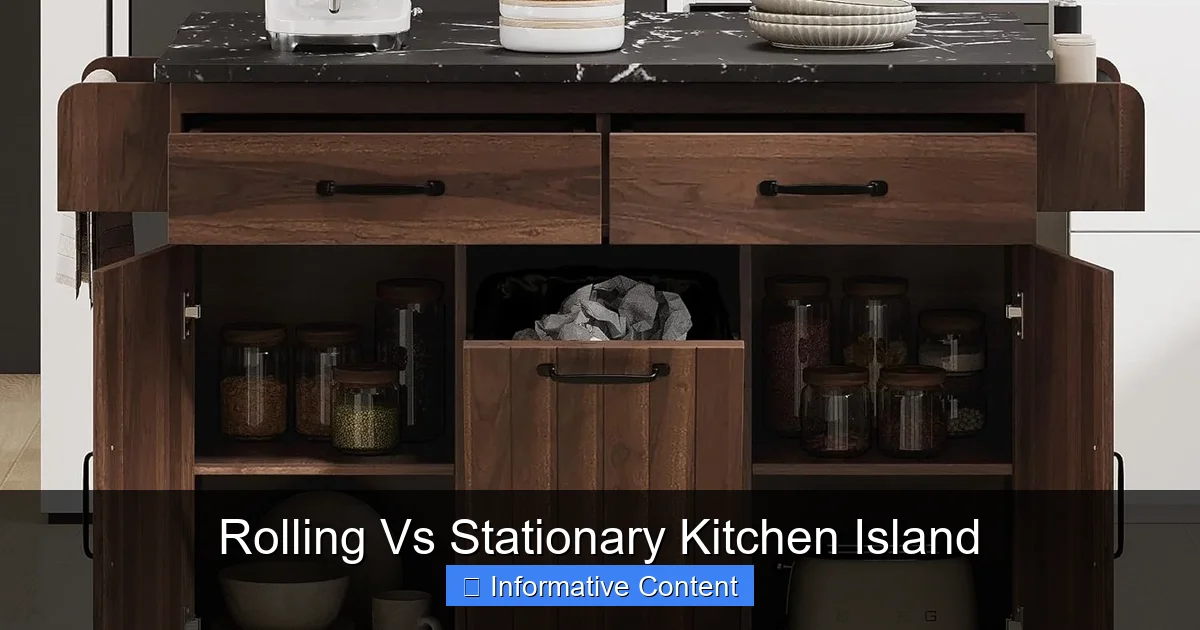
Visual guide about rolling vs stationary kitchen island
Image source: m.media-amazon.com
What Is a Rolling Kitchen Island?
A rolling kitchen island (also called a mobile or portable island) is equipped with wheels or casters, allowing you to move it around your kitchen as needed. These islands are usually smaller in scale and designed for flexibility. Think of them as kitchen sidekicks that come to you when you need extra prep space, a serving station, or even a temporary bar during parties.
- Common sizes: 30”–48” wide, 24”–36” deep
- Wheels: Lockable casters for stability when in use
- Materials: Often wood, metal, or engineered wood with stainless steel accents
- Features: Towel racks, spice racks, open shelves, or small drawers
Example: Sarah, a busy mom in a 900-square-foot apartment, uses her rolling island as a breakfast bar in the morning, moves it to the living room for movie night snacks, and tucks it into a corner when she needs more floor space for yoga.
What Is a Stationary Kitchen Island?
A stationary kitchen island is permanently fixed in one location. It’s often built into the kitchen layout, sometimes connected to plumbing or electrical systems, and designed to be a permanent fixture. These islands are typically larger, more robust, and can support heavier appliances or deeper storage.
- Common sizes: 48”–72” wide, 30”–42” deep
- Structure: Anchored to the floor or integrated with cabinetry
- Materials: Solid wood, granite, quartz, or custom cabinetry
- Features: Deep drawers, wine coolers, cooktops, sinks, or built-in seating
Example: Mark and Lisa, who love cooking together, have a 60-inch stationary island with a built-in induction cooktop and two stools. It’s the heart of their open-concept kitchen and stays put year-round.
Mobility and Flexibility: The Big Advantage of Rolling Islands
If your kitchen feels like a puzzle where every inch counts, a rolling island might be your secret weapon. Mobility is its superpower—and it’s not just about convenience.
Adapting to Your Kitchen’s Flow
Kitchens aren’t static. You might need more space when prepping a holiday meal, or you might want to open up the floor for a dance party. A rolling island lets you reconfigure your kitchen on the fly. Move it to create a U-shaped workspace, tuck it against a wall to open up the room, or wheel it into the dining area for a buffet setup.
“I used to dread hosting because my island blocked the fridge,” says Jen, a home cook in Chicago. “Now, I just roll my island out of the way when I need to grab drinks or snacks. It’s like having a kitchen that breathes.”
Perfect for Small Spaces
Rolling islands are a game-changer in compact kitchens. In a galley kitchen or a studio apartment, every square foot matters. A stationary island might feel too bulky, but a rolling one can be tucked away when not in use. You gain utility without sacrificing openness.
Multi-Functional Use Beyond the Kitchen
One of the coolest things about rolling islands? They don’t have to live in the kitchen. Use them as:
- A mobile bar during parties
- A craft station for kids’ projects
- A coffee cart in your living room
- A temporary work desk during renovations
This versatility makes rolling islands especially appealing for renters or people who like to change up their space often.
When Mobility Becomes a Challenge
That said, mobility isn’t always a win. If your floor isn’t perfectly flat (hello, old homes!), rolling islands can wobble or get stuck on thresholds. Locking casters help, but they’re not foolproof. Also, if you have kids or pets, a rolling island might get nudged out of place at the worst moment—like when you’re chopping onions with a sharp knife.
Stability and Functionality: Why Stationary Islands Win for Serious Cooks
While rolling islands offer flexibility, stationary islands deliver stability, strength, and serious functionality—especially if you’re a passionate home chef or entertain often.
Support for Heavy Appliances
Want a sink? A built-in dishwasher? A cooktop with a powerful range hood? These features require plumbing, electrical connections, and structural support—something a rolling island just can’t provide. Stationary islands are built to handle the weight and complexity of integrated appliances.
“I love that my island has a built-in wine fridge and a second sink,” says David, a home cook who hosts weekly dinner parties. “It’s like having a mini prep kitchen in the middle of the room.”
Deep Storage and Organization
Stationary islands often have deeper drawers, full-extension cabinets, and custom storage solutions. You can fit large pots, baking sheets, stand mixers, or even a trash pull-out. Many include features like:
- Spice drawer organizers
- Cutlery trays
- Lazy Susans
- Appliance garages
These aren’t just convenient—they help you maintain a clutter-free kitchen.
Seating and Social Hub
Stationary islands are ideal for built-in seating. Whether it’s a breakfast bar with two stools or a long overhang for a crowd, a fixed island becomes a natural gathering spot. Kids do homework there, friends chat while you cook, and you can keep an eye on the stove while entertaining.
The Downside: Less Flexibility
The biggest drawback? You’re stuck with it. Once a stationary island is in place, moving it requires major effort—possibly involving contractors, plumbing reroutes, or even floor repairs. If your kitchen layout changes or you move homes, you can’t take it with you easily.
Space and Layout Considerations: Matching the Island to Your Kitchen
Choosing between rolling and stationary isn’t just about preference—it’s about how your kitchen is laid out. Here’s how to match the right island to your space.
Small Kitchens (Under 100 sq ft)
In tight spaces, a stationary island can feel like a roadblock. A rolling island is almost always the better choice. It gives you extra counter space and storage without permanently shrinking your walkways. Just make sure there’s enough clearance to roll it in and out smoothly.
Tip: Measure your narrowest doorway and hallway. Your rolling island must fit through them when you want to move it to another room.
Open-Concept Kitchens
If your kitchen flows into a dining or living area, a stationary island can act as a natural room divider. It defines the kitchen zone while keeping the space open. A rolling island might feel too temporary or out of place here.
Galley and U-Shaped Kitchens
In galley kitchens, a rolling island can create a third work surface, turning it into a C-shaped layout. But be careful—don’t block the primary workflow. In U-shaped kitchens, a stationary island in the center maximizes counter space and symmetry.
Kitchens with Multiple Cooks
Got a family that cooks together? A stationary island with a built-in cooktop or sink lets multiple people work at once without tripping over each other. Rolling islands can get in the way during busy cooking times.
Future-Proofing Your Kitchen
Ask yourself: Will your needs change? If you plan to downsize, move, or rent out your home, a rolling island is easier to adapt or take with you. But if you’re staying long-term and want a kitchen that grows with your lifestyle, a stationary island is a smart investment.
Aesthetics, Style, and Long-Term Value
Let’s talk looks and longevity. Your kitchen island isn’t just functional—it’s a design statement. The choice between rolling and stationary affects your kitchen’s style and resale value.
Design Flexibility
Rolling islands tend to have a more casual, eclectic vibe. Think rustic farmhouse, industrial metal, or vintage-inspired designs. They often come in pre-made styles and finishes, which is great for quick upgrades.
Stationary islands, on the other hand, can be fully customized. You can match your existing cabinetry, choose premium materials like quartz or marble, and design a cohesive look. They’re the centerpiece of a high-end kitchen remodel.
Durability and Build Quality
Stationary islands are built to last. They’re often made with solid wood, reinforced frames, and professional-grade finishes. Rolling islands, while improving in quality, are generally lighter and may not hold up as well under daily heavy use.
Real talk: A $300 rolling island might last 5–7 years with regular use. A $3,000 custom stationary island can last 20+ years with proper care.
Resale Value
Homebuyers love functional, built-in features. A well-designed stationary island with seating, storage, and appliances can boost your home’s value. Rolling islands, while practical, are seen as temporary and don’t add the same perceived value.
Tip: If you’re planning to sell in 5–10 years, consider how the island will look to potential buyers. A sleek, integrated island says “move-in ready” in a way a rolling cart doesn’t.
Cost, Installation, and Maintenance: The Practical Side
Let’s get real about money, effort, and upkeep. Both types of islands come with their own costs and challenges.
Upfront Cost Comparison
Rolling islands are usually more affordable. You can find quality models for $200–$800. Some even come with free shipping and easy assembly.
Stationary islands range from $1,000 for a basic prefab model to $10,000+ for custom designs with plumbing, electrical, and premium materials. Labor costs add another $500–$3,000, depending on complexity.
Installation Effort
Rolling islands? Just unbox, attach the wheels, and go. No tools required for most models. You can have it set up in 15 minutes.
Stationary islands often need professional installation. If it includes a sink, cooktop, or dishwasher, you’ll need a plumber and electrician. Even a simple base cabinet might require anchoring to the floor to prevent tipping.
Maintenance and Cleaning
Rolling islands are easier to clean around—just wheel them out and sweep. But the wheels themselves can collect dust and grime. Check casters every few months and lubricate them if they squeak.
Stationary islands collect dust and spills in one spot, but you can’t easily clean under or behind them. Deep cleaning might require moving small appliances or using a duster on a stick.
Long-Term Upgrades
With a stationary island, you can upgrade features over time—add a wine fridge, change the countertop, or install a new faucet. Rolling islands are harder to modify. Once you buy one, you’re usually stuck with its design.
Data Table: Rolling vs Stationary Kitchen Island at a Glance
| Feature | Rolling Kitchen Island | Stationary Kitchen Island |
|---|---|---|
| Mobility | High (wheels, easy to move) | None (fixed in place) |
| Cost | $200–$800 (average) | $1,000–$10,000+ (including labor) |
| Installation | DIY, under 30 minutes | Professional, 1–3 days |
| Appliances | None (or small add-ons) | Full integration (sink, cooktop, dishwasher) |
| Storage | Moderate (shallow drawers, open shelves) | High (deep drawers, custom organizers) |
| Seating | Portable stools (not built-in) | Built-in seating (overhang for stools) |
| Best For | Small kitchens, renters, multi-use spaces | Large kitchens, serious cooks, long-term homes |
| Resale Value | Low (seen as temporary) | High (adds permanent value) |
Final Thoughts: Making the Right Choice for Your Kitchen
So, which is better—rolling or stationary kitchen island? The truth is, there’s no one-size-fits-all answer. It depends on your space, lifestyle, cooking habits, and future plans.
If you’re short on space, love to entertain, or rent your home, a rolling island gives you freedom and flexibility. It’s like having a kitchen Swiss Army knife—ready when you need it, out of the way when you don’t. Just be mindful of floor conditions and stability.
If you cook daily, host large gatherings, or plan to stay in your home long-term, a stationary island is worth the investment. It offers unmatched functionality, durability, and style. It becomes the heart of your kitchen—a place where meals are made, memories are shared, and life happens.
Think of it this way: A rolling island is like a great pair of sneakers—light, versatile, and always ready to go. A stationary island is like a tailored suit—structured, polished, and built to impress.
Ultimately, the best choice is the one that makes your kitchen work better for you. Measure your space, sketch a layout, and imagine how you’ll use the island day in and day out. Talk to friends who have both types. Test a rolling model in your kitchen for a weekend. Or consult a kitchen designer if you’re going the stationary route.
Whatever you choose, remember: A kitchen island isn’t just a piece of furniture. It’s a tool, a stage, and a sanctuary. Make it one that fits your life—not the other way around.
Frequently Asked Questions
What are the main differences between a rolling vs stationary kitchen island?
A rolling kitchen island offers mobility for flexible layouts, while a stationary island is permanently fixed for stability and built-in functionality. Rolling islands often include casters, whereas stationary ones may feature integrated storage or appliances.
Which is more practical: a rolling kitchen island or a stationary one?
A rolling kitchen island suits small or multi-use spaces where adaptability is key, while a stationary island is better for larger kitchens needing permanent workspace or seating. Your choice depends on how you use your kitchen daily.
Are rolling kitchen islands stable enough for food prep?
Yes, high-quality rolling kitchen islands have lockable casters and sturdy frames to ensure stability during food prep. However, lightweight models may wobble, so opt for thicker materials like solid wood or reinforced metal.
Do stationary kitchen islands add more value to a home than rolling ones?
Stationary kitchen islands typically increase home value because they’re considered built-in features, while rolling islands are seen as temporary. Buyers often prefer the permanence and storage options of fixed islands.
Can a rolling kitchen island double as a dining table or serving cart?
Absolutely! A rolling kitchen island with a countertop overhang or drop-leaf design can easily serve as a breakfast bar or mobile serving station. This versatility makes it ideal for entertaining.
Which type requires more maintenance: rolling or stationary kitchen islands?
Rolling kitchen islands need occasional caster checks to ensure smooth movement, while stationary islands require long-term care like sealing countertops or tightening joints. Both need cleaning, but mobility adds minor upkeep for rolling models.