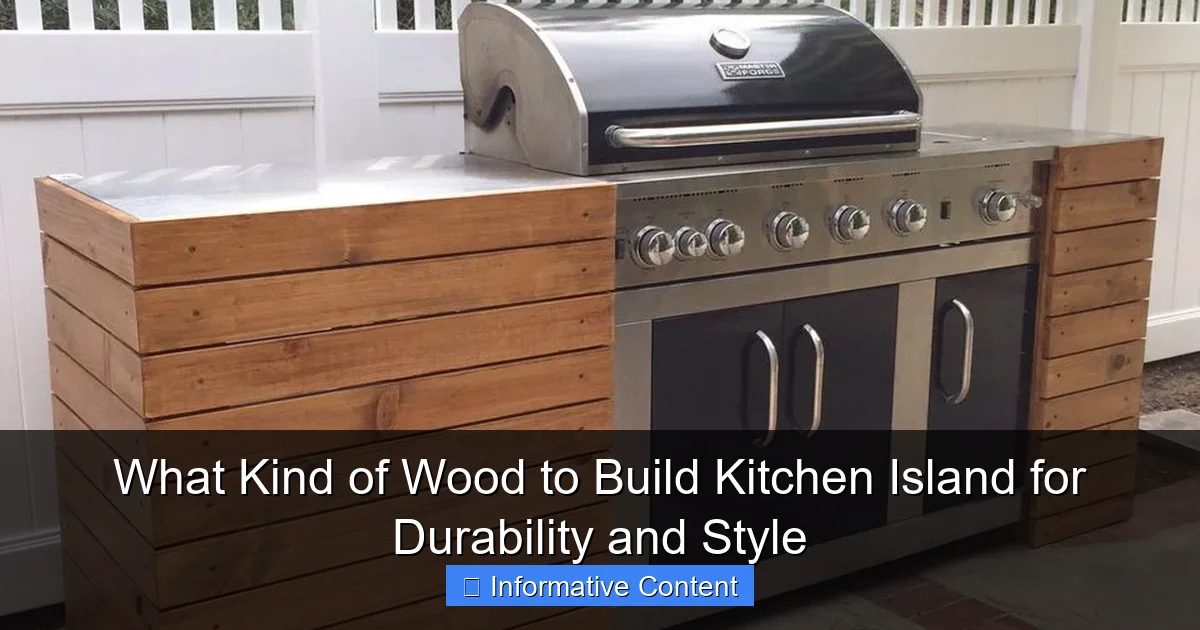
Featured image for what kind of wood to build kitchen island
Image source: i.pinimg.com
Hardwoods like maple, oak, and walnut are the top choices for building a durable, stylish kitchen island due to their strength, resistance to wear, and timeless grain patterns. For a balance of affordability and resilience, cherry and birch offer excellent workability and rich finishes that elevate any kitchen design. Avoid softwoods like pine unless sealed properly, as they dent easily and require more maintenance.
Key Takeaways
- Choose hardwoods: Oak, maple, or walnut for unmatched durability and timeless style.
- Consider grain patterns: Straight grains offer modern appeal; knots add rustic charm.
- Prioritize moisture resistance: Seal wood properly to prevent warping in humid kitchens.
- Balance cost and quality: Hickory is affordable yet durable; cherry ages beautifully.
- Match your aesthetic: Dark woods create drama; light woods brighten small spaces.
- Pre-finished options save time: Factory finishes enhance durability and simplify installation.
📑 Table of Contents
- Why the Right Wood Choice Can Make or Break Your Kitchen Island
- Understanding Wood Types: Hardwood vs. Softwood for Kitchen Islands
- Top 5 Hardwoods for a Durable and Stylish Kitchen Island
- Softwoods That Can Work (With the Right Prep)
- Matching Wood to Your Kitchen Style and Lifestyle
- Wood Finishes and Maintenance: Protecting Your Investment
- Data Table: Wood Comparison for Kitchen Islands
- Final Thoughts: Choosing the Right Wood for Your Dream Island
Why the Right Wood Choice Can Make or Break Your Kitchen Island
Picture this: You’ve just spent weeks planning your dream kitchen. The cabinets are installed, the countertops are gleaming, and now it’s time to add the centerpiece—the kitchen island. It’s where your family gathers for quick breakfasts, where friends lean over for a chat during dinner prep, and where your kids do homework after school. It’s not just a piece of furniture; it’s a hub of activity. But here’s the thing—what it’s made of matters more than you might think. The kind of wood you choose for your kitchen island will shape not only its style but also how it handles spills, scratches, heat, and the test of time.
Choosing the right wood isn’t just about picking something that looks nice. It’s about finding a balance between durability, maintenance, cost, and aesthetic appeal. I learned this the hard way when I built my first island using a softwood that looked great at first—until my toddler spilled juice on it and left a permanent ring. Within a year, the surface looked worn and tired. That’s why I’m sharing everything I’ve learned since: the best woods for kitchen islands, what to avoid, and how to pick a material that fits your lifestyle. Whether you’re a home cook, a busy parent, or a design enthusiast, this guide will help you build a kitchen island that’s both beautiful and built to last.
Understanding Wood Types: Hardwood vs. Softwood for Kitchen Islands
Before we dive into specific wood species, let’s get clear on the basics: hardwood and softwood. These terms don’t actually refer to how hard the wood feels—they describe the tree type. Hardwoods come from deciduous trees (like oak or maple) that lose their leaves in winter, while softwoods come from conifers (like pine or fir) that stay green year-round. For kitchen islands, the distinction matters because it affects durability, grain pattern, and how the wood responds to daily use.

Visual guide about what kind of wood to build kitchen island
Image source: i.pinimg.com
Hardwood: The Durability Champion
Hardwoods are the go-to choice for kitchen islands because they’re naturally denser and more resistant to dents, scratches, and wear. They hold up well under heavy use—perfect for a space where you’ll be chopping, setting hot pans, and cleaning frequently. Plus, many hardwoods have beautiful, tight grain patterns that add elegance and character. The downside? They’re usually more expensive than softwoods and can be heavier, which might affect installation if you’re not anchoring the island to the floor.
- Pros: Long-lasting, scratch-resistant, elegant grain, holds up to moisture and heat better
- Cons: Higher cost, heavier, may require professional installation
Example: A solid maple island with a food-safe oil finish can handle years of daily use while still looking warm and inviting.
Softwood: The Budget-Friendly Option (With Caveats)
Softwoods like pine, fir, and cedar are more affordable and easier to work with, especially for DIYers. They’re also lighter, making them simpler to move or reconfigure. But here’s the catch: they’re more prone to dents, scratches, and warping—especially in high-moisture environments like kitchens. If you’re set on softwood, you’ll need to invest in a high-quality finish (like polyurethane or epoxy) to protect the surface. And even then, expect more maintenance over time.
- Pros: Lower cost, easier to cut and shape, lighter weight, great for rustic or farmhouse styles
- Cons: Less durable, scratches easily, may warp if not sealed properly, requires more upkeep
Tip: If you love the look of pine but want durability, consider a knotty pine with a thick epoxy topcoat. It gives you the charm of softwood with a much tougher surface.
Engineered Wood: The Middle Ground
Not ready to commit to solid hardwood or softwood? Engineered wood—like plywood or MDF (medium-density fiberboard)—offers a practical compromise. It’s stable, affordable, and can be stained or painted to mimic pricier woods. However, it lacks the natural grain and warmth of real wood. It’s also more vulnerable to water damage unless sealed extremely well. Best for painted islands or as a base for a wood veneer.
Best for: Budget builds, painted finishes, or when you want a very uniform look without wood grain.
Top 5 Hardwoods for a Durable and Stylish Kitchen Island
If you’re aiming for longevity and timeless style, these hardwoods are your best bets. Each has unique qualities that make it ideal for different tastes and needs.
1. Maple: The Workhorse of the Kitchen
Maple is a favorite in kitchens for good reason. It’s one of the hardest domestic hardwoods, with a fine, even grain that resists scratches and dents. It’s also highly resistant to moisture, making it ideal for areas near sinks or dishwashers. Maple comes in two main types: sugar maple (hard maple) and red maple (slightly softer). For kitchen islands, go with sugar maple.
- Janka Hardness: 1,450 lbf (very hard)
- Color: Light cream to pale brown; ages to a warm honey tone
- Best finish: Oil (tung or linseed) for a natural look, or water-based polyurethane for high traffic
Tip: Maple can have subtle mineral streaks or bird’s-eye patterns—some people love the character, others find it distracting. Ask to see samples before buying.
2. Oak: Classic, Strong, and Full of Character
Oak is a classic choice, especially for traditional or rustic kitchens. It has an open, prominent grain that adds visual interest. There are two main types: red oak and white oak. White oak is more water-resistant and slightly harder, making it better for kitchens. Red oak is more affordable and has a pinkish hue.
- Janka Hardness: Red oak: 1,290 lbf; White oak: 1,360 lbf
- Color: Red oak: warm reddish-brown; White oak: light tan to medium brown
- Best finish: Oil or wax for a natural feel, or oil-based polyurethane for durability
Pro tip: Oak takes stains very well. If you want a dark island, oak can achieve a rich walnut-like color without the walnut price tag.
3. Walnut: The Luxury Choice
Walnut is the go-to for high-end kitchens. It’s softer than maple or oak (Janka: 1,010 lbf), but its rich, chocolate-brown color and smooth grain make it a showstopper. It’s also more stable than many hardwoods, meaning it’s less likely to warp or crack over time. Walnut works beautifully in modern, mid-century, or Scandinavian designs.
- Color: Deep brown with purple or gray undertones; lighter sapwood may need to be avoided or blended
- Best finish: Oil-based finishes enhance its depth; avoid dark stains—they can make it look muddy
Note: Walnut is more expensive and can have inconsistent coloring (especially in lower grades). Buy from a reputable supplier and ask for “select” or “furniture-grade” boards.
4. Cherry: Elegant and Ages Gracefully
Cherry wood is beloved for its smooth grain and rich, warm color. It starts out light but deepens to a beautiful reddish-brown over time with exposure to sunlight—a process called oxidation. This makes it ideal for kitchens with natural light. Cherry is moderately hard (Janka: 950 lbf) and less prone to dents than walnut.
- Color: Light pinkish-brown when new; deepens to warm red-brown with age
- Best finish: Oil or oil-based polyurethane; avoid dark stains to preserve its natural aging
Caution: Cherry can have small knots or gum pockets. These are normal but may affect appearance. Choose “clear” or “select” grade for a smoother look.
5. Hickory: The Tough, Rustic Option
Hickory is one of the hardest domestic woods (Janka: 1,820 lbf)—even harder than maple. It’s extremely durable, making it great for families with kids or heavy kitchen use. Hickory has a bold, varied grain with dramatic color differences between heartwood (dark brown) and sapwood (pale). This gives it a rustic, farmhouse feel.
- Color: High contrast—dark streaks on a light background
- Best finish: Oil to highlight grain, or clear polyurethane for maximum protection
Tip: Hickory can be tricky to stain evenly due to its color variation. If you want a uniform look, consider painting it or using a gel stain.
Softwoods That Can Work (With the Right Prep)
Don’t write off softwoods entirely. With the right treatment, they can be a smart, budget-friendly choice—especially if you love a rustic, farmhouse, or cottage-style kitchen.
Pine: Affordable and Full of Charm
Pine is one of the most popular softwoods for kitchen islands. It’s affordable, easy to work with, and has a warm, inviting look. But it’s also soft (Janka: 380 lbf), so it scratches and dents easily. The key is protection. Use a high-build finish like epoxy or multiple coats of polyurethane. A thick epoxy topcoat can make pine nearly as durable as hardwood.
- Best for: Rustic, farmhouse, or painted islands
- Finish tip: Apply 4–6 coats of water-based polyurethane, sanding between coats, for a glass-smooth, scratch-resistant surface
Real-life example: A friend built a pine island with a white epoxy topcoat. After 5 years and two kids, it still looks pristine—just wipe it down with a damp cloth.
Fir (Douglas Fir): Stronger Than You Think
Fir is often used in construction, but it’s also a great choice for kitchen islands. It’s harder than pine (Janka: 660 lbf) and has a straight, uniform grain. It’s often used for modern or industrial-style islands. Fir is prone to checking (small cracks) if not dried properly, so make sure your wood is kiln-dried.
- Color: Light brown with a reddish tint; can be stained or painted
- Best finish: Oil for a natural look, or paint for a clean, modern finish
Tip: Fir is commonly sold as “construction lumber,” but look for “clear” or “select” grades for furniture-quality boards.
Cedar: Aromatic and Naturally Resistant
Cedar is known for its natural oils, which repel insects and resist rot. It’s not the hardest wood (Janka: 900 lbf), but its durability in damp conditions makes it a good choice for kitchens. Cedar has a distinct, pleasant aroma and a reddish-brown color with a straight grain.
- Best for: Rustic, cabin, or coastal-style kitchens
- Finish tip: Use oil or wax to preserve the scent and color; avoid heavy polyurethane, which can dull its aroma
Note: Cedar is softer than most hardwoods, so avoid using it for high-traffic areas unless sealed well.
Matching Wood to Your Kitchen Style and Lifestyle
The best wood for your island isn’t just about durability—it’s about how it fits your home’s design, your daily routine, and your maintenance preferences.
For Modern and Minimalist Kitchens
Think clean lines, neutral colors, and sleek surfaces. Maple and walnut are top choices. Maple offers a bright, uniform look, while walnut adds warmth and sophistication. Both work well with minimalist hardware and open shelving.
- Tip: Use a matte or satin finish to reduce glare and keep the look modern
For Rustic or Farmhouse Kitchens
Embrace natural grain, knots, and character. Hickory, knotty pine, and reclaimed wood shine here. Reclaimed barn wood adds history and charm, but make sure it’s properly treated for kitchen use.
- Pro tip: Pair a pine island with a butcher block countertop for extra functionality
For Families with Kids and Pets
Durability is key. Maple, white oak, and hickory are your best bets. Avoid softwoods unless you’re willing to reseal or refinish regularly. Consider adding a protective edge (like a metal trim) to prevent chipping.
- Real-world advice: One mom I know used maple with a food-safe epoxy coating. Her kids eat, craft, and do homework there—no stains, no scratches
For Entertainers and Cooks
If your island is a prep space, choose a wood that handles spills, heat, and frequent cleaning. Maple and cherry are excellent. Both are smooth, easy to clean, and resist moisture. Add a cutting board insert to protect the surface during meal prep.
Wood Finishes and Maintenance: Protecting Your Investment
The wood you choose is only half the story—the finish is what keeps it looking great for years. A poor finish can ruin even the best wood.
Oil Finishes: Natural and Easy to Repair
Oils like tung or linseed penetrate the wood, enhancing the grain and giving a soft, natural feel. They’re easy to touch up—just reapply oil to scratched areas. But they offer less protection than film finishes.
- Best for: Low-traffic areas, walnut, cherry, or if you love a natural look
- Maintenance: Reapply every 6–12 months
Polyurethane: Tough and Long-Lasting
Polyurethane creates a hard, plastic-like layer that resists scratches, water, and heat. Water-based is clearer and dries faster; oil-based is more durable but yellows over time.
- Best for: High-traffic islands, maple, oak, pine (with multiple coats)
- Application tip: Sand between coats for a smooth finish
Epoxy: Maximum Protection
Epoxy creates a thick, glass-like surface that’s nearly indestructible. It’s perfect for pine or softwoods that need extra protection. But it can look too shiny or artificial if overdone.
- Best for: Painted pine islands, outdoor kitchens, or if you want a “forever” finish
Data Table: Wood Comparison for Kitchen Islands
| Wood Type | Janka Hardness (lbf) | Best For | Cost (Relative) | Maintenance Level |
|---|---|---|---|---|
| Maple | 1,450 | High durability, modern style | $$$ | Low |
| White Oak | 1,360 | Traditional, water-resistant | $$$ | Low |
| Walnut | 1,010 | Luxury, modern elegance | $$$$ | Medium |
| Cherry | 950 | Warm, aging beauty | $$$$ | Medium |
| Hickory | 1,820 | Rustic, heavy use | $$$ | Low |
| Pine | 380 | Farmhouse, budget builds | $ | High |
| Fir | 660 | Modern, industrial | $$ | Medium |
Final Thoughts: Choosing the Right Wood for Your Dream Island
Building a kitchen island is a big decision—and the wood you choose will define how it looks, feels, and functions for years to come. There’s no one-size-fits-all answer. If you want durability and ease, go with maple or white oak. If you love warmth and luxury, walnut or cherry are stunning. And if you’re on a budget but love rustic charm, pine with a thick epoxy finish can be a game-changer.
Remember: the best wood is the one that fits your lifestyle, design, and maintenance tolerance. Don’t be afraid to mix materials—like a hardwood frame with a softwood top, or a painted base with a stained countertop. And always, always invest in a good finish. It’s the difference between a kitchen island that fades and one that becomes the heart of your home.
When you’re ready to build, take samples home, test finishes, and talk to local woodworkers. Your dream island is worth the effort—and with the right wood, it’ll be beautiful and strong for decades.
Frequently Asked Questions
What kind of wood is best for building a kitchen island that lasts?
Hardwoods like oak, maple, and walnut are top choices for kitchen islands due to their durability and resistance to wear. These woods handle heavy use while maintaining their appearance, making them ideal for high-traffic areas.
Which wood offers the best balance of durability and style for a kitchen island?
Maple is a standout option because it’s hard, scratch-resistant, and has a light, modern grain that suits various design styles. For a richer look, walnut provides elegance with excellent strength.
Can I use softwood like pine for a kitchen island?
Pine is affordable and easy to work with but is softer and more prone to dents and scratches. If you choose pine, apply a durable finish to protect it, but expect more maintenance over time.
What kind of wood to build kitchen island if I want a rustic look?
Reclaimed wood or barn wood adds instant rustic charm and character to a kitchen island. These materials often feature unique textures and patinas, perfect for farmhouse or vintage-style kitchens.
Is engineered wood a good choice for kitchen islands?
Engineered wood (like plywood or MDF with veneers) is cost-effective and stable but less durable than solid hardwood. It works well for painted islands but may not withstand heavy use as long as solid wood.
How do I pick wood for a kitchen island that matches my cabinetry?
Match the wood species and stain of your cabinets for a cohesive look, or contrast them (e.g., dark walnut island with white cabinets) for visual interest. Always test stain samples under your kitchen lighting.