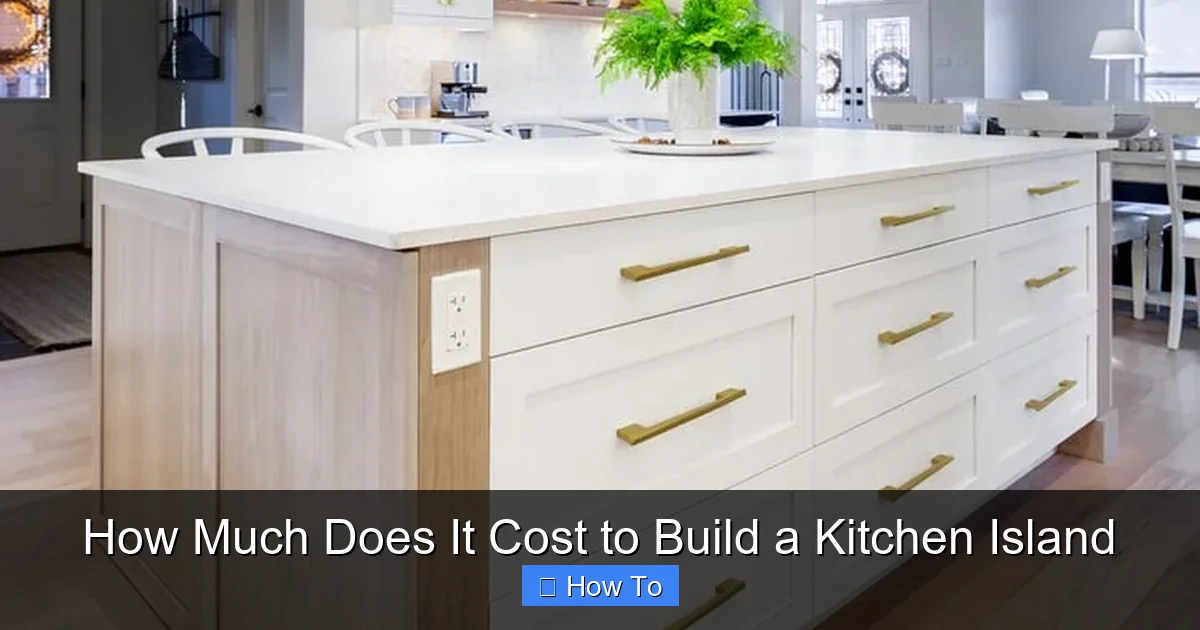
Featured image for this comprehensive guide about how much does it cost to build a kitchen island
Image source: deslaurier.com
How Much Does It Cost to Build a Kitchen Island
The kitchen island has evolved from a simple work surface into the undisputed heart of many homes. It’s where families gather for breakfast, where homework gets done, where friends chat over appetizers, and where culinary masterpieces come to life. More than just a functional addition, a well-designed kitchen island can transform your space, enhance workflow, and significantly boost your home’s value and aesthetic appeal.
But before you start pinning dream designs to your Pinterest board, a crucial question arises: how much does it cost to build a kitchen island? The answer, like most home improvement projects, isn’t a simple one-size-fits-all figure. From a basic, movable cart to a sprawling, custom-built culinary command center complete with plumbing and electrical, the investment can vary wildly. Understanding the various factors that influence the kitchen island cost is key to planning your budget effectively and bringing your vision to life without breaking the bank.
In this comprehensive guide, we’ll break down all the components that contribute to the overall cost to build a kitchen island. We’ll explore material choices, labor expenses, potential upgrades, and even the hidden costs you might not have considered. Whether you’re dreaming of a DIY project or planning a full professional installation, you’ll gain actionable insights to help you estimate your budget and make informed decisions.
Quick Answers to Common Questions
How much does it typically cost to build a kitchen island from scratch?
Generally, expect to pay anywhere from $1,000 for a basic DIY project to $10,000+ for a professionally installed, custom island with high-end features. The final price tag largely depends on your choices and design.
What are the main things that affect how much it costs to build a kitchen island?
The biggest cost drivers are the size of the island, the materials you choose for the countertop and base, and any added features like sinks, cooktops, or electrical outlets. Custom designs and premium finishes will naturally push the price up.
Can I build a kitchen island affordably if I’m on a tight budget?
Absolutely! If you’re willing to DIY, you can significantly reduce how much it costs to build a kitchen island by using stock cabinets, a butcher block countertop, and doing the installation yourself. Simple, functional designs are key to keeping expenses low.
Do extra features like a sink or appliances significantly increase how much it costs to build a kitchen island?
Yes, adding plumbing for a sink or electrical for a cooktop, dishwasher, or outlets will significantly increase the overall cost. These often require professional installation, additional piping, wiring, and potentially permits.
Is the majority of the expense for materials or labor when building a kitchen island?
For a professional installation, labor can account for a substantial portion, often 30-50% of the total how much it costs to build a kitchen island. If you DIY, your costs will be primarily for materials, with your time being the main labor investment.
📋 Table of Contents
- The Kitchen Island Investment: An Overview of Costs
- Deconstructing the Price Tag: Key Cost Factors
- DIY vs. Professional Installation: Weighing Your Options
- Material Matters: How Choices Impact Your Budget
- Beyond the Basics: Add-Ons and Upgrades that Increase Cost
- Navigating Unexpected Costs and Maximizing Your ROI
- Conclusion: Your Dream Kitchen Island Awaits
The Kitchen Island Investment: An Overview of Costs
Before diving into the nitty-gritty, let’s establish some broad cost ranges for building a kitchen island. These figures can fluctuate significantly based on geographic location, material choices, size, features, and whether you opt for DIY or professional installation. Generally, you can expect the cost to build a kitchen island to fall into these categories:
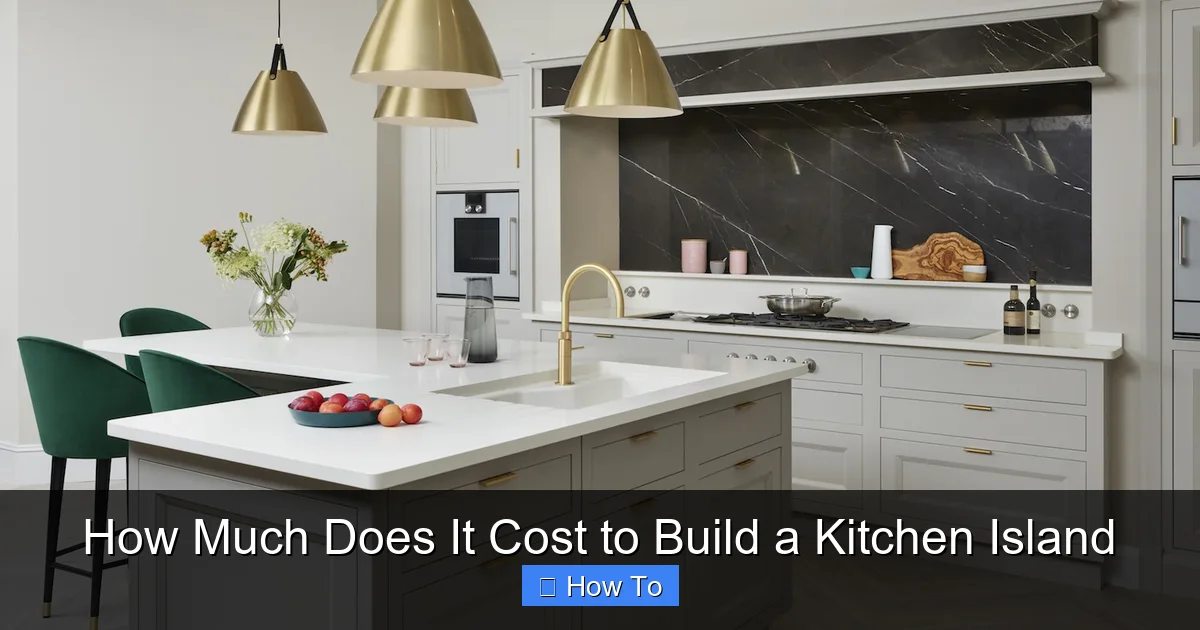
Learn more about how much does it cost to build a kitchen island – How Much Does It Cost to Build a Kitchen Island
Image source: cdn.mos.cms.futurecdn.net
- Basic, Pre-Made Kitchen Island (DIY Friendly): For a simple, mobile cart-style island with minimal features, you might spend anywhere from $100 to $1,000. These are often flat-pack furniture items or small, ready-to-assemble units.
- Standard, Fixed Kitchen Island (Cabinetry Based): A more permanent fixture, often built from stock cabinetry with a standard countertop, will likely range from $1,500 to $5,000. This assumes basic installation and no major plumbing or electrical work.
- Custom-Built Kitchen Island (Mid-Range): If you’re looking for specific dimensions, unique finishes, and perhaps some built-in storage or a small appliance, the custom kitchen island cost could be between $5,000 and $10,000. This usually includes professional design and installation.
- High-End, Fully Loaded Kitchen Island: For a large, bespoke island with premium materials (e.g., quartz, marble, high-end wood), integrated appliances (sink, dishwasher, wine fridge), extensive plumbing, electrical outlets, and specialized lighting, prepare for an investment upwards of $10,000 to $25,000+. These are often focal points in luxury kitchens.
These ranges provide a starting point. Let’s explore what drives these numbers up or down.
| Island Type / Method | Estimated Materials Cost | Estimated Total Project Cost (Installed) | Key Cost Drivers / Notes |
|---|---|---|---|
| **DIY Basic Island** (e.g., stock cabinets, simple countertop) |
$200 – $800 | $200 – $800 | Minimal features, basic materials, no labor cost (DIY). |
| **DIY Custom Island** (e.g., custom framing, advanced features) |
$800 – $2,500 | $800 – $2,500 | Better materials, potentially includes plumbing/electrical, DIY labor. |
| **Prefabricated / Modular Island** (e.g., IKEA, store-bought units) |
$500 – $2,000 | $700 – $3,000 | Limited customization, includes assembly/basic installation if not DIY. |
| **Semi-Custom Island** (Contractor built with standard options) |
(Included in Total) | $2,500 – $7,000 | Professional installation, moderate material choices, basic utilities. |
| **Fully Custom Island** (Designer specified, high-end materials) |
(Included in Total) | $7,000 – $15,000+ | Unique design, premium materials, integrated appliances, complex features. |
Deconstructing the Price Tag: Key Cost Factors
Understanding the individual components that contribute to the overall kitchen island budget is crucial. Here’s a breakdown of the primary elements:
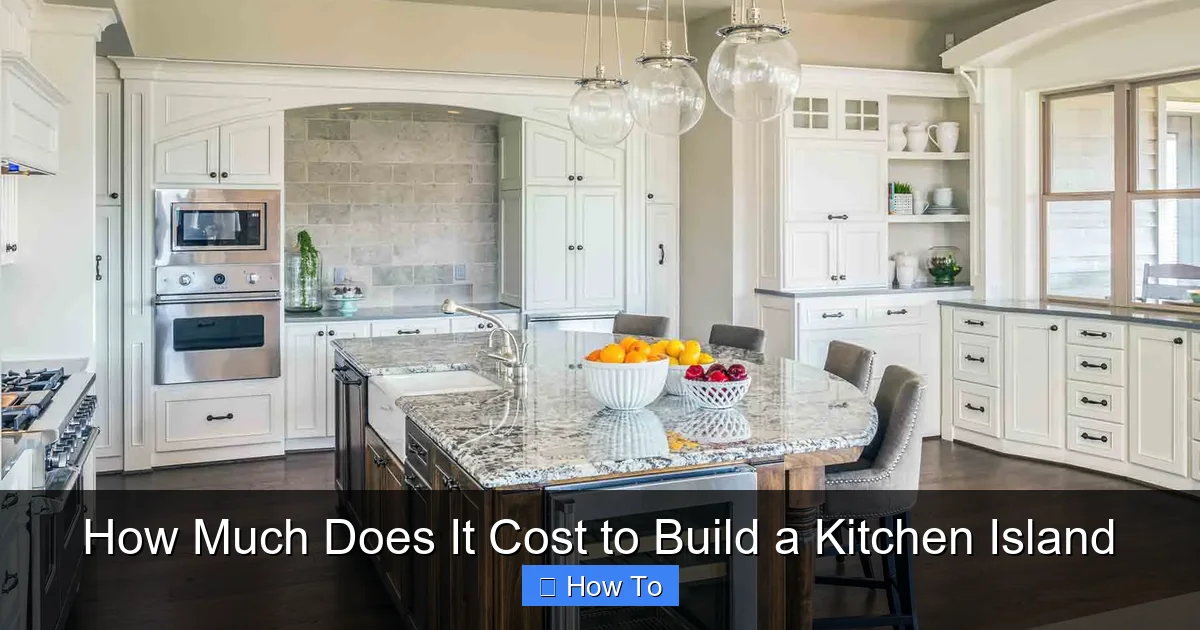
Learn more about how much does it cost to build a kitchen island – How Much Does It Cost to Build a Kitchen Island
Image source: static.homeguide.com
Materials for the Island Structure
The base of your island will largely dictate its initial cost. Options include:
- Stock Cabinetry: Using standard kitchen base cabinets is often the most economical choice. Prices vary by quality, from particleboard to solid wood. A single base cabinet might cost $100 – $500, while a set for an island could be $500 – $2,500+.
- Semi-Custom Cabinetry: Offers more options for sizes, finishes, and features than stock, providing a good balance between cost and personalization. Expect to pay $2,000 – $7,000 for island cabinetry.
- Custom Cabinetry: Built specifically to your exact specifications, offering unlimited design possibilities but at a premium price. Custom cabinetry for an island can easily run $3,000 – $15,000+ depending on size, wood species, and detailing.
- Open Shelving/Framework: For a more minimalist or industrial look, an island built with open shelving or a metal frame can be less expensive, especially if you DIY parts of it.
Countertop Material and Fabrication
The countertop is arguably the most visible and heavily used part of your island, and its material choice significantly impacts the kitchen island cost. Fabrication and installation costs are also substantial.
- Laminate: $20 – $60 per square foot. Most affordable, wide range of patterns.
- Butcher Block (Wood): $40 – $100 per square foot. Warm, natural, requires sealing.
- Tile: $15 – $50 per square foot (material only). Labor-intensive installation.
- Solid Surface (e.g., Corian): $50 – $120 per square foot. Seamless, non-porous.
- Granite: $50 – $150 per square foot. Durable, natural stone, unique patterns.
- Quartz: $60 – $150 per square foot. Engineered stone, non-porous, wide color range.
- Marble: $75 – $200 per square foot. Luxurious, classic, porous, prone to etching.
- Concrete: $70 – $150 per square foot. Industrial look, custom poured or pre-cast.
- Stainless Steel: $80 – $200 per square foot. Professional, durable, modern.
Plumbing and Electrical Work
Adding a sink, dishwasher, garbage disposal, or even just electrical outlets to your island will require professional tradespeople, significantly increasing your kitchen island budget.
- Electrical: Running new wiring for outlets, task lighting, or appliances typically costs $200 – $800, but could be more if your main panel needs upgrading or if walls need extensive opening.
- Plumbing: Installing a sink, connecting a dishwasher, or running water lines can range from $400 – $2,000+, depending on how far the lines need to be run from existing connections and if new drain lines are required.
Appliances and Features
Built-in appliances and specialized features can quickly inflate the cost to build a kitchen island:
- Sink and Faucet: $150 – $1,000+ (material only).
- Dishwasher: $400 – $1,500+.
- Cooktop/Range: $500 – $3,000+.
- Wine Fridge/Beverage Cooler: $300 – $1,500+.
- Microwave Drawer: $400 – $1,200+.
- Pop-up outlets/Charging stations: $100 – $300 per unit.
DIY vs. Professional Installation: Weighing Your Options
One of the biggest factors influencing the total cost to build a kitchen island is whether you tackle the project yourself or hire professionals.
DIY Kitchen Island Cost
If you’re handy with tools and have experience with basic carpentry and home renovations, building a kitchen island yourself can save a substantial amount on labor costs. A DIY approach generally means:
- Pros: Significant cost savings (potentially 30-50% off total project cost), complete control over materials and design, sense of accomplishment.
- Cons: Requires time, skills, tools, and can lead to costly mistakes if not done correctly. Complex installations (plumbing, electrical) should still be handled by licensed professionals for safety and code compliance. Your DIY kitchen island cost will primarily be materials.
- Typical DIY Savings: For a basic to mid-range island, you might save $1,000 – $5,000+ in labor fees.
Even if you DIY the cabinetry, you might still need professional help for countertop fabrication and installation, which is a specialized skill.
Professional Kitchen Island Installation Cost
Hiring a contractor, carpenter, plumber, and electrician ensures a high-quality, safe, and code-compliant installation. This is especially recommended for islands with integrated plumbing, electrical, or complex designs.
- Pros: Expert execution, peace of mind, adherence to building codes, warranty on work, faster completion.
- Cons: Higher overall cost due to labor fees.
- Labor Costs:
- General Contractor/Carpenter: Expect to pay $50 – $150 per hour, or a flat fee for the project, which could be $500 – $3,000+ for carpentry work alone.
- Plumber: $75 – $200 per hour, or $400 – $2,000+ for island work.
- Electrician: $60 – $150 per hour, or $200 – $800+ for island work.
When obtaining quotes from professionals, ensure they provide a detailed breakdown of materials, labor, and any potential unforeseen expenses. This will give you a clearer picture of your exact kitchen island prices.
Material Matters: How Choices Impact Your Budget
As touched upon earlier, the materials you select for your island’s components play a critical role in the final how much does a kitchen island cost equation. Let’s delve a bit deeper.
Countertop Materials
This is often the most significant material cost. Beyond the per-square-foot price, consider fabrication and installation complexity:
- High-End: Marble, high-grade quartz, exotic granite, concrete, or stainless steel offer supreme durability and aesthetic appeal but come with a hefty price tag. For a large island, this could mean $1,000 – $5,000+ just for the slab and fabrication.
- Mid-Range: Standard granite, mid-grade quartz, solid surface, or quality butcher block provide excellent value and performance at a moderate cost, typically $500 – $2,000.
- Budget-Friendly: Laminate, basic tile, or simpler wood tops are the most economical choices, often coming in at $100 – $500.
Remember that larger islands will require more material and potentially more complex cuts, increasing the cost.
Cabinetry and Finishes
The choice here determines not just the look but also the longevity and functionality of your island.
- Cabinet Type: Stock cabinets are the cheapest, followed by semi-custom, and then fully custom. The material of the cabinet boxes (particleboard, MDF, plywood, solid wood) also affects price. Plywood is generally preferred for durability over particleboard.
- Door Styles and Finishes: Simple slab doors or shaker styles in painted MDF are more economical. Intricate raised-panel doors, exotic wood veneers, or custom glazes will increase the kitchen island cost.
- Hardware: Don’t forget cabinet pulls and knobs! While seemingly small, high-end hardware can add hundreds of dollars to your budget. Basic options are inexpensive.
Flooring and Base Trim
If your island requires new flooring underneath or custom base trim to match your existing kitchen, factor these into your budget.
- Flooring Patch/Extension: If you’re removing an old island or building a new one where there was no flooring, you might need to extend or patch your existing kitchen floor. This can cost $50 – $500+ depending on the material and labor.
- Base Trim/Molding: Matching existing baseboards or adding decorative trim around the island base adds a finishing touch and might cost $50 – $200.
Beyond the Basics: Add-Ons and Upgrades that Increase Cost
A basic island serves its purpose, but many homeowners opt for additional features that enhance utility and luxury. These upgrades contribute significantly to the total cost to build a kitchen island.
Integrated Appliances
As mentioned, a second sink, a wine cooler, a microwave drawer, or a dedicated dishwasher in the island all require not just the appliance cost but also associated plumbing and electrical work. For example, installing a small prep sink and faucet can easily add $500 – $1,500 to your budget, including materials and labor.
Specialized Storage Solutions
Beyond standard shelves, many islands incorporate clever storage:
- Pull-out Trash Cans: Convenient and hides unsightly bins. Cost: $100 – $400.
- Drawer Organizers/Dividers: Custom solutions for cutlery, spices, or pots. Cost: $50 – $200 per drawer.
- Spice Racks/Pull-out Pantries: Maximizes narrow spaces. Cost: $150 – $500.
- Bookcases/Display Shelves: For an island that faces a living area. Cost: Adds to custom cabinetry expense.
Seating and Overhangs
If your island is designed for seating, you’ll need to consider the countertop overhang and suitable stools.
- Countertop Overhang: Requires specific structural support, especially for stone or heavy materials. This might involve additional bracing or a thicker countertop, slightly increasing fabrication and installation costs.
- Bar Stools/Chairs: These are often purchased separately, but factor them into your overall kitchen island budget. Good quality stools can range from $50 – $300+ each.
Lighting and Smart Features
Proper lighting above your island is both functional and aesthetic.
- Pendant Lights: A popular choice, adding style and task lighting. Cost: $50 – $500+ per fixture, plus electrical installation ($100 – $300 per fixture).
- Recessed Lighting: Provides ambient light. Cost: $50 – $200 per light, plus installation.
- Under-Cabinet Lighting: Adds accent light and functionality. Cost: $100 – $400 for materials and installation.
- Smart Home Integration: USB charging ports, integrated wireless chargers, or smart outlets can add convenience. Cost: $50 – $300+ per feature.
Navigating Unexpected Costs and Maximizing Your ROI
Even with careful planning, unforeseen expenses can arise. Here’s how to prepare and ensure your investment pays off.
The Importance of a Contingency Fund
Always budget an additional 10-20% of your total estimated kitchen island budget for contingencies. This covers unexpected issues like discovering outdated wiring, needing to reinforce flooring, or minor design changes. It’s better to have it and not need it than to be caught off guard.
Permits and Inspections
If your island project involves plumbing, electrical, or structural changes, you will likely need permits from your local municipality. These costs vary but can range from $50 to several hundred dollars. Failing to obtain necessary permits can lead to fines, difficulties selling your home, or even safety hazards. Your contractor should handle this, but ensure it’s included in the quote.
Disposal of Old Materials
If you’re replacing an existing island, factor in the cost of demolition and debris removal, which can be $100 – $500, depending on the size and material.
Maximizing Your Return on Investment (ROI)
A well-designed and functional kitchen island can significantly enhance your home’s appeal and resale value. Kitchen renovations generally offer a strong ROI, and an island is a key component.
- Functionality Over Flash: Prioritize practical features that genuinely improve your kitchen’s usability.
- Cohesive Design: Ensure the island complements the overall style of your kitchen and home. A jarring design might detract rather than add value.
- Quality Materials: Investing in durable, attractive materials for countertops and cabinetry will last longer and look better, appealing more to future buyers.
- Professional Installation: For complex islands, professional work ensures safety, longevity, and a polished finish that buyers appreciate.
Estimated Cost Breakdown Table
To give you a clearer picture, here’s an estimated cost breakdown for various kitchen island types. These are averages and will vary.
| Component/Island Type | DIY Basic Island (Materials Only) | Standard Fixed Island (Pro Install) | Custom High-End Island (Pro Install) |
|---|---|---|---|
| Island Structure (Cabinetry) | $300 – $1,000 | $1,000 – $3,000 | $3,000 – $10,000+ |
| Countertop (Material & Fabrication) | $100 – $500 | $400 – $1,500 | $1,500 – $5,000+ |
| Plumbing & Electrical (Material & Labor) | N/A (often not included in basic DIY) | $600 – $2,000 | $1,500 – $4,000+ |
| Appliances (e.g., sink, microwave) | N/A | $200 – $800 | $1,000 – $5,000+ |
| Labor (Installation) | N/A (DIY) | $500 – $2,500 | $2,000 – $8,000+ |
| Permits & Contingency | $50 – $200 | $200 – $800 | $500 – $2,000+ |
| Total Estimated Cost Range | $450 – $1,700 | $2,900 – $10,600 | $9,500 – $34,000+ |
Conclusion: Your Dream Kitchen Island Awaits
The journey to determining how much does it cost to build a kitchen island is multifaceted, influenced by a myriad of choices, from the most basic materials to the most luxurious features. While the initial ranges might seem daunting, breaking down the project into its core components makes the planning process far more manageable.
Remember that your kitchen island is more than just an expense; it’s an investment in your home’s functionality, beauty, and overall value. By carefully considering your needs, researching material costs, evaluating the DIY vs. professional route, and budgeting for contingencies, you can create a stunning and practical focal point that truly transforms your kitchen without overspending. Whether your ideal island is a simple, budget-friendly cart or a sprawling, custom masterpiece, careful planning is the key to achieving your vision. Happy building!
Frequently Asked Questions
What is the average cost to build a kitchen island?
The cost to build a kitchen island can vary widely, typically ranging from $500 for a basic DIY project to $5,000 or more for a professionally installed, custom design with high-end features. On average, most homeowners spend between $1,500 and $3,500 when hiring a contractor for a standard kitchen island without major utility hookups.
How does DIY compare to hiring a professional to build a kitchen island?
Building a kitchen island yourself can significantly reduce costs, primarily by eliminating labor expenses, but it requires significant time, skill, and access to tools. Hiring a professional for your kitchen island project includes the cost of their expertise, time, and typically a warranty, resulting in a higher overall price but often a more polished finish and less stress.
What factors most influence the total cost of building a kitchen island?
Several key factors drive the cost of building a kitchen island, including its size, materials chosen for the base and countertop, and any integrated features. Adding elements like a sink, cooktop, electrical outlets, or custom cabinetry will substantially increase the total project cost.
How much should I budget for materials when building a kitchen island?
Material costs for a kitchen island can range from a few hundred dollars for basic lumber and a laminate countertop to several thousand for premium hardwoods, granite, or quartz surfaces. The choice of cabinetry style, hardware, and any internal storage solutions also plays a significant role in your material budget.
Do utilities like plumbing or electrical outlets significantly increase the cost to build a kitchen island?
Yes, integrating utilities such as plumbing for a sink or dishwasher, or electrical wiring for outlets, a cooktop, or lighting, adds considerable expense to building a kitchen island. These additions require professional installation by licensed plumbers and electricians, potentially involving permits and higher labor costs to run new lines.
Is building a kitchen island a good way to save money compared to buying a pre-made one?
For individuals with strong DIY skills and tools, building a custom kitchen island can be a cost-effective alternative to purchasing a pre-made or semi-custom unit. However, if you lack experience or need to buy many tools, the initial savings might be offset by potential mistakes, the value of your time, and the ultimate quality compared to a professionally manufactured island.